Short answer
Subterranean termites in the Bay Area swarm mainly on warm days after rain, which puts most flights between late winter and spring. Drywood termites swarm later, through the warmer months, often toward evening. Colonies feed year-round regardless, so a swarm is a timing signal rather than the moment damage starts.
The useful thing to understand is that swarming is reproduction, not feeding. A colony has to be several years old before it produces winged reproductives, and it keeps eating the whole time. So a swarm tells you a mature colony is close, not that something started this week.
What actually triggers a flight
Three conditions line up: soil moisture, a warm spell and usually a rise in humidity. In this climate that combination lands most reliably in the days after the first proper rains of the season, then again during warm breaks through spring.
- Subterranean swarmers fly in daylight, typically on a warm afternoon following rain
- Drywood swarmers fly later in the year and often toward dusk, in warm, still conditions
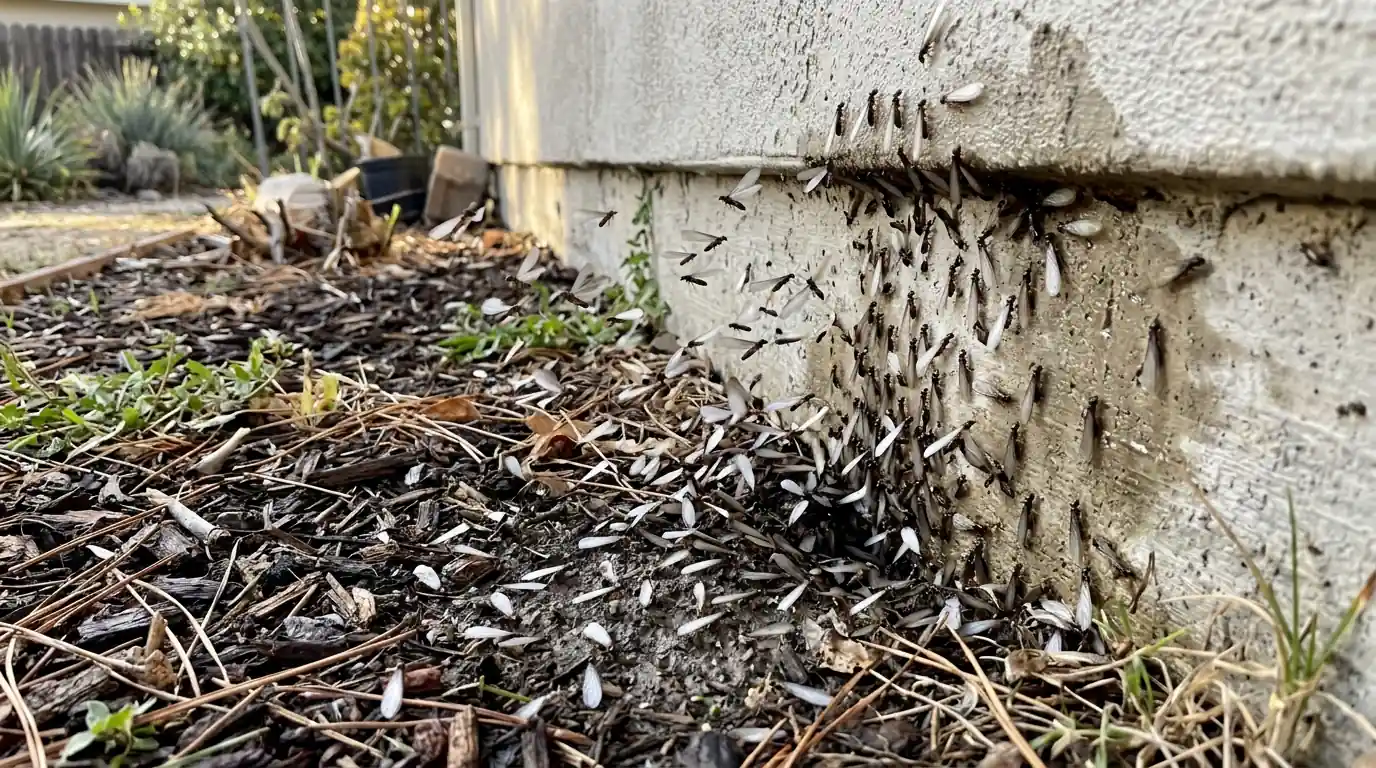
- Both head for light indoors, which is why you find them and their shed wings at windows and sliders
Roughly how the year runs
Treat this as a pattern rather than a schedule, because a dry winter or a late warm spell moves everything.
Seasonal pattern in this area
- Late winter into spring: subterranean swarms after rain, the heaviest call period of the year
- Spring: inspection season, as people find wings on sills and book before summer
- Summer into early autumn: drywood swarms, usually evening flights in warm weather
- Autumn: quieter for swarms, good timing for inspections and for correcting moisture before the rains
- Year-round: colonies keep feeding, so damage accumulates in every month of that list
Reading your own evidence
Four wings of equal length, a straight waist and beaded antennae mean termite; unequal wing pairs, a pinched waist and elbowed antennae mean flying ant. Shed wings in a neat pile at a window are close to diagnostic on their own, because termites drop them soon after landing.
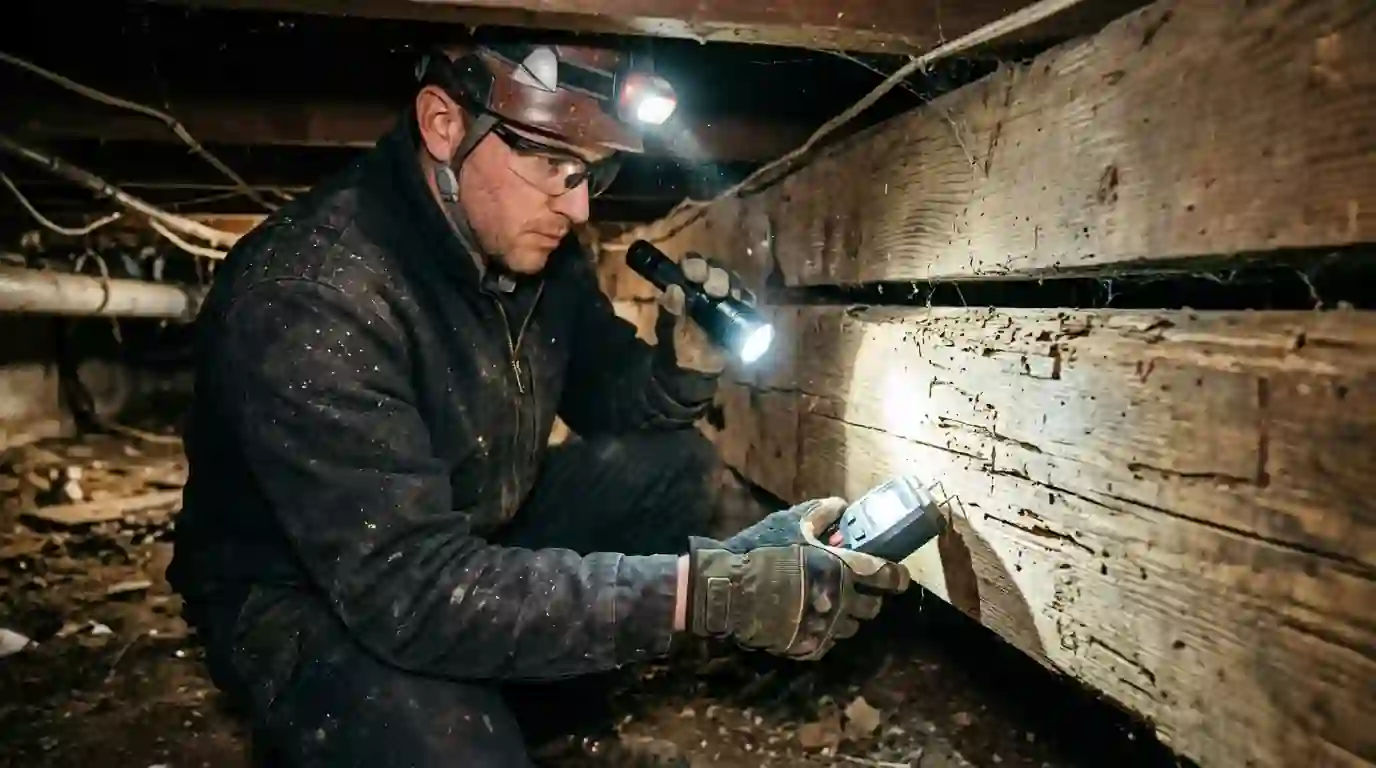
Where the wings are matters as much as what they are. A pile at one specific window, slider or wall crack points at the opening they emerged from, which is where an inspection starts rather than where it guesses.
Why the season matters less than people think
A swarm is the most visible termite event and the least urgent one. Swarmers cannot damage anything; they are looking for somewhere to start a new colony and most of them die trying. The colony that produced them has been feeding for years and will keep going through summer, autumn and winter.
That is the argument for booking an inspection on a quiet month rather than waiting for a swarm. Spring inspection calendars here fill fast in the weeks after the first warm rains, and a house checked in October gets the same answer as one checked in March, usually sooner.
What the species tells you about timing
Subterranean colonies live in soil and respond to it, which is why their flights track rainfall so closely and why their season is compressed into a few weeks of the year here. Drywood colonies live inside the wood, insulated from all of that, so their timing is looser and tied more to warmth than to moisture.
There is a practical consequence. If you find swarmers indoors in February after rain, subterranean is the first assumption and the crawl space is where the inspection concentrates. If they turn up on a warm August evening, drywood moves to the front and the attic and framing get the attention. Saving a few specimens settles it either way.
What to do if you see one
Vacuum them up, save half a dozen or a handful of shed wings in a sealed bag, note which window or crack they came from, and do not spray. Repellent residue complicates later treatment and the swarm ends on its own within hours.
Then book the inspection on the evidence rather than on the panic, and if you want the hour-by-hour version, the swarmer guide covers it. Species identification from the specimens decides whether you are dealing with a soil colony or one living inside the framing, and those are different treatments entirely.