Short answer
Wasp and hornet removal in San Jose starts with locating the actual nest, because killing the insects flying around it changes nothing by tomorrow. Paper wasp nests under eaves, yellow jacket colonies in ground holes and wall voids, and hornet nests in trees all get treated and removed. Anyone in the household with a sting allergy moves the call to the front.
The urgency on these calls is real and we treat it that way. A mature yellow jacket colony can hold thousands of workers, they sting repeatedly, and unlike honey bees they become more aggressive as summer goes on and food gets scarce. A nest over a doorway or beside a kid's play area is not something to live alongside.
The method depends on what you have, which is why identification comes before anything else. Paper wasps build the open, umbrella-shaped combs you can see. Yellow jackets hide colonies underground or inside wall voids with only a small entrance showing. And if the insects are fuzzy, amber and streaming into a wall, you may have honey bees, which are a completely different job.
How a nest call runs
Describe what you are seeing
Nest shape, location and insect appearance usually identify the species on the phone.
Locate the nest
Visible nests are straightforward; ground and wall colonies get traced by watching the traffic.
Time the treatment
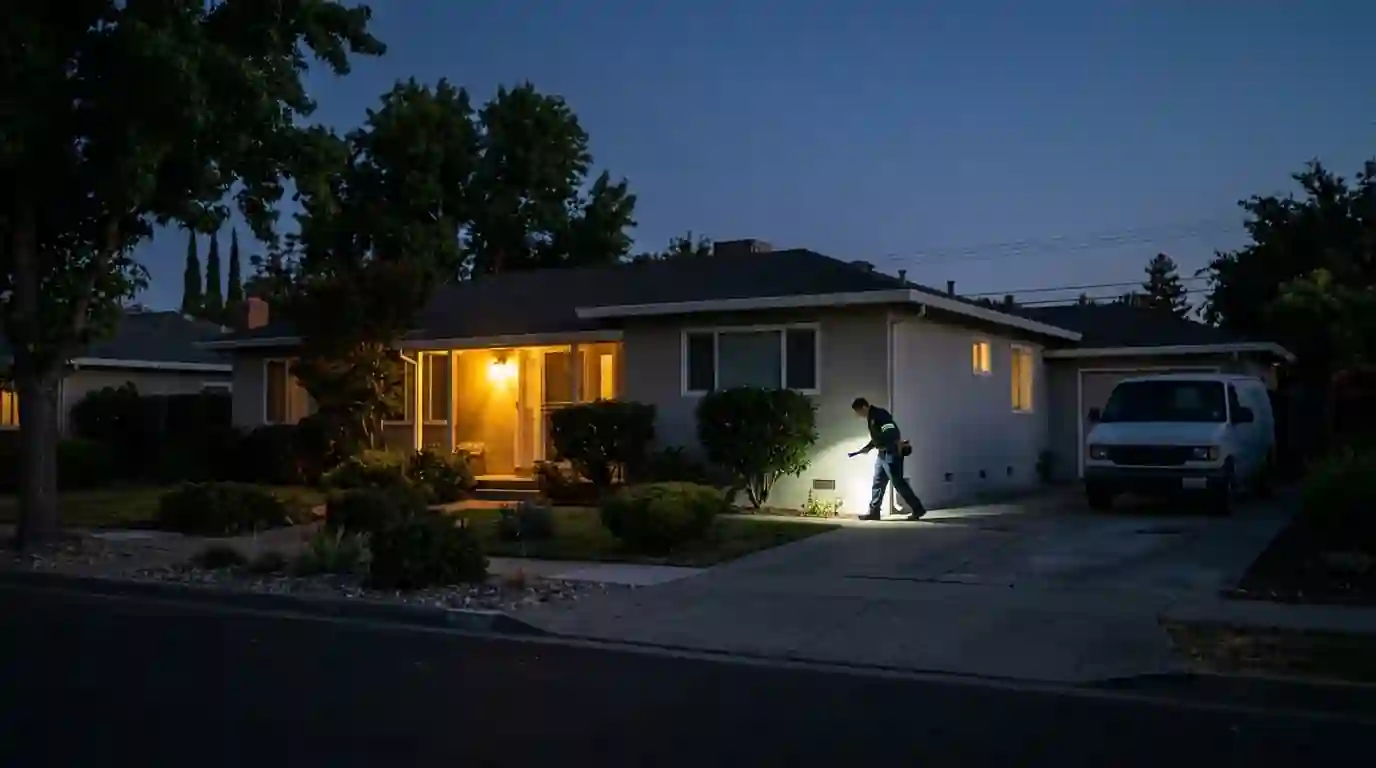
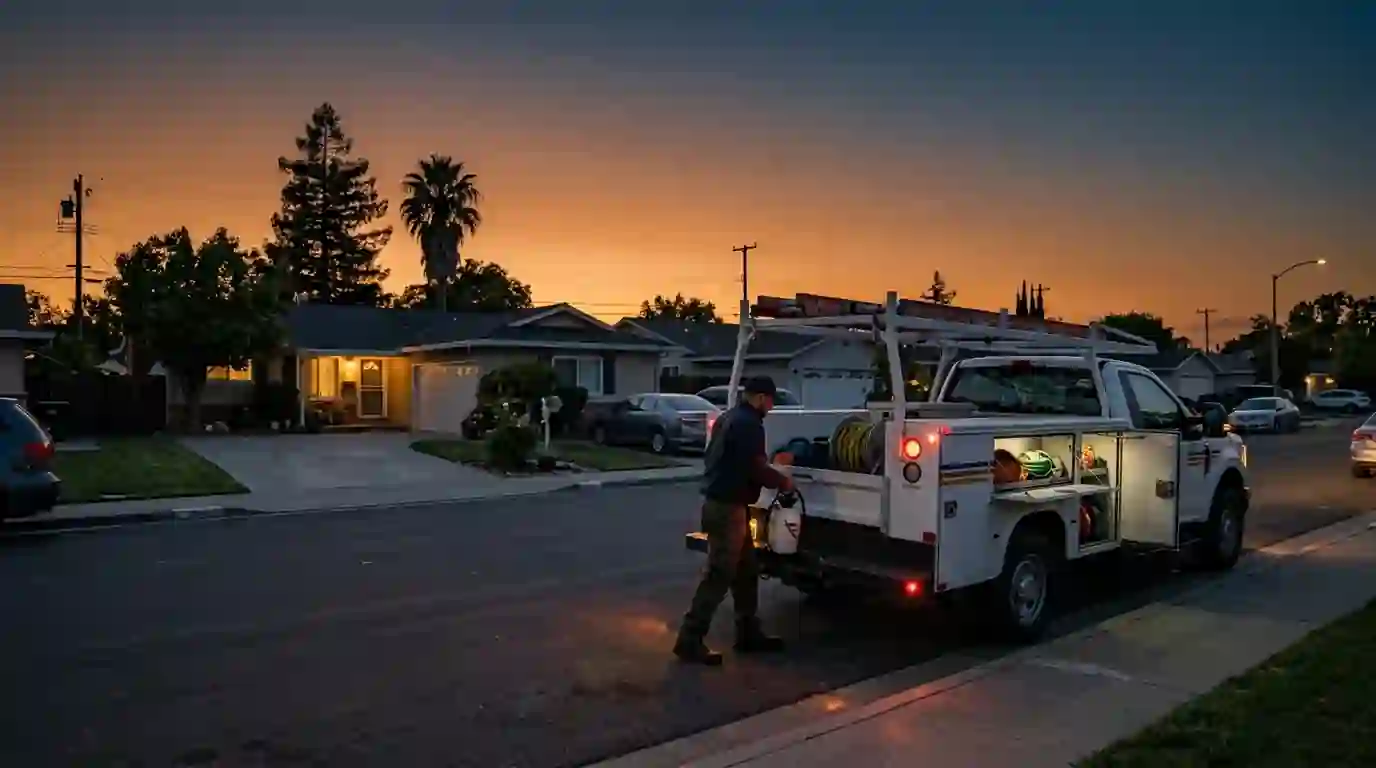
Dusk and dawn visits catch the colony home, which is what makes removal complete.
Treat and remove
The nest comes down or the ground colony gets treated at the entrance, then verified.
Check the surroundings
Eave runs, sheds and fence lines get scanned, since nests cluster in the same protected spots.
Paper wasp nests
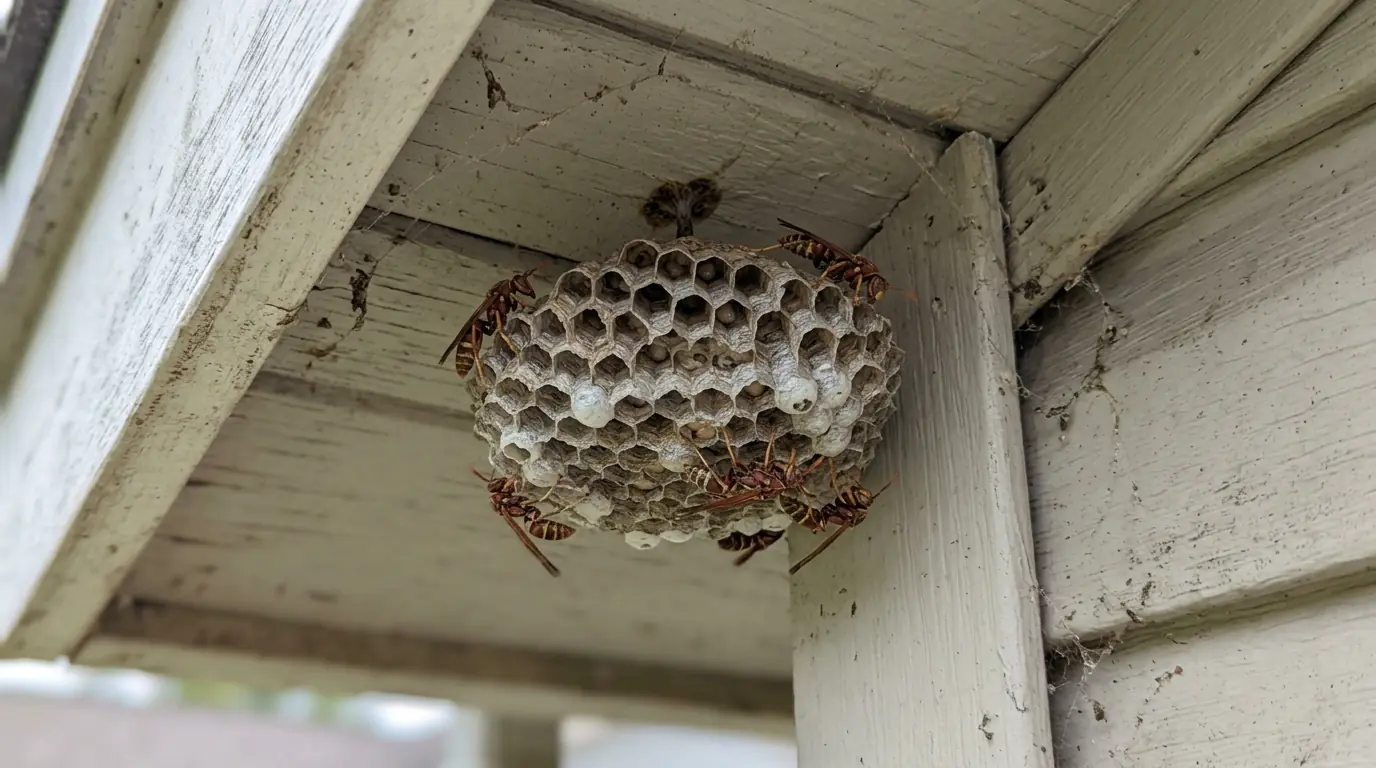
The visible ones: gray, umbrella-shaped combs hanging under eaves, in patio corners, inside BBQ covers, behind shutters. Paper wasp colonies are smaller and calmer than yellow jackets, but a nest at head height by the back door still means somebody gets stung. Treatment is direct, the nest comes down rather than being left to dry out in place, and we check the surrounding eave line, since one nest usually means two or three more nearby in the same protected run.
Yellow jacket ground nests
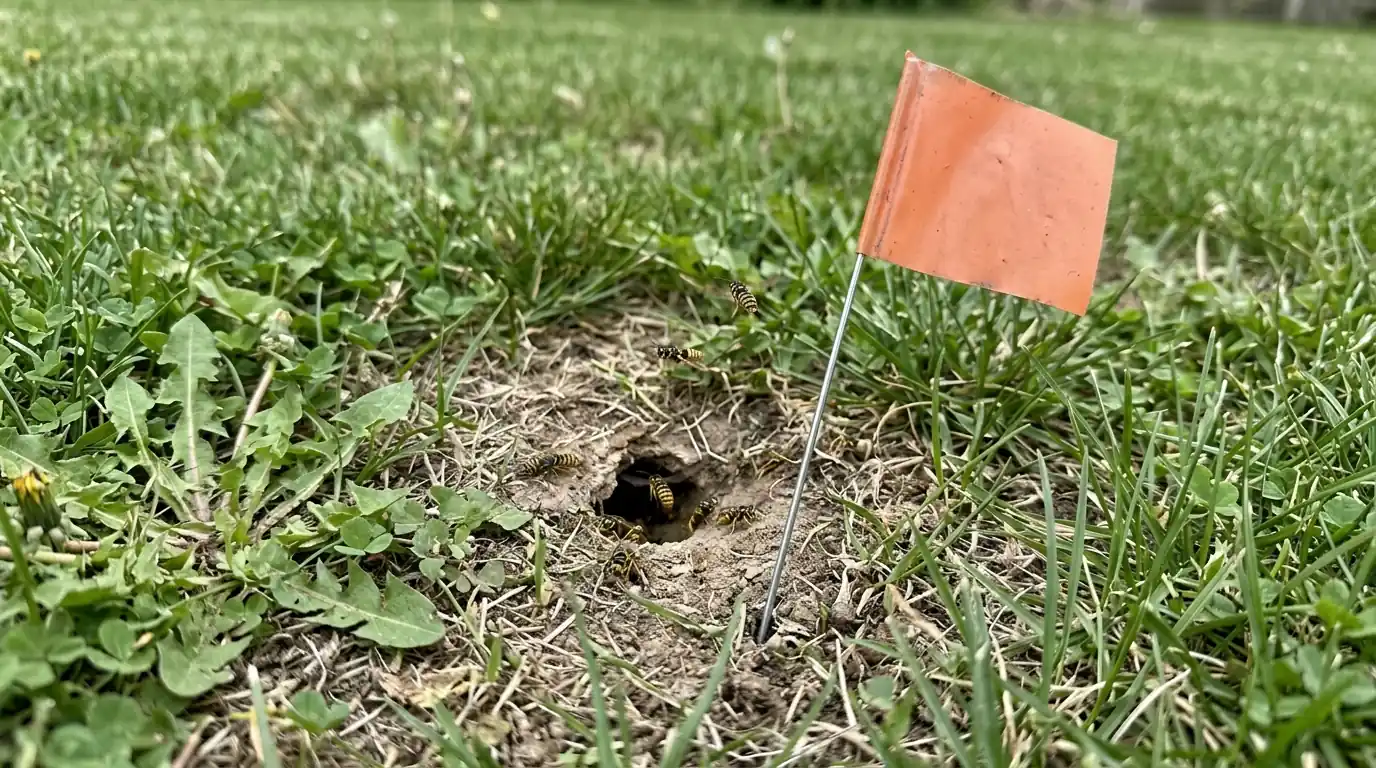
The worst version of this call. A small hole in a lawn, a slope or a gap at the foundation with steady traffic in and out means a colony living below, and these are the nests that send people to urgent care after a lawnmower passes over them. Treatment goes into the nest entrance directly, usually at dusk or dawn when the colony is home and least active, and the site gets marked and re-checked, because a partially treated ground colony is more dangerous than an untreated one.
Hornet nests
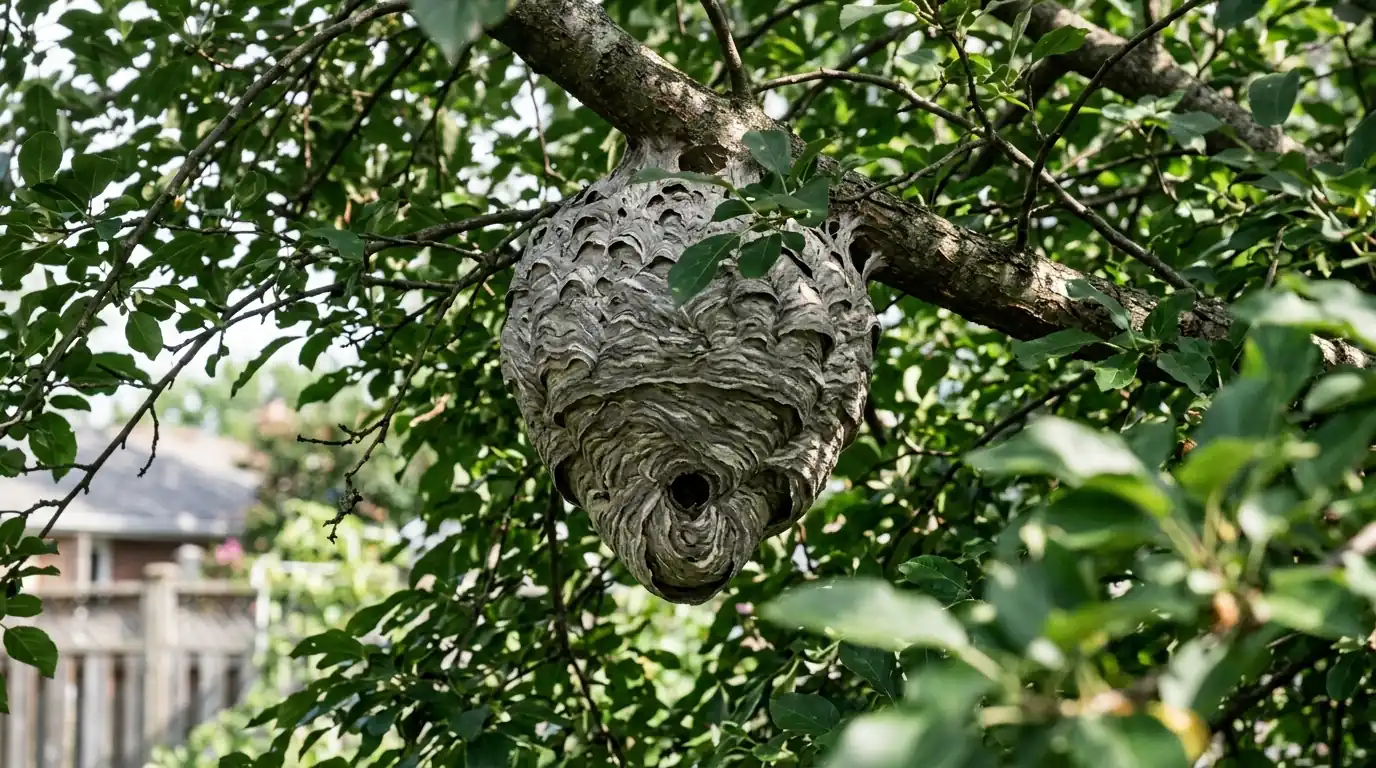
The large enclosed paper nests in trees, hedges and attic spaces, sometimes the size of a basketball by late summer. Those colonies defend aggressively and at distance, which is the main reason not to try this with a can from the hardware store. Treatment happens at low-activity hours with the right protective gear, and the nest is removed afterward rather than left hanging, both because it is unsightly and because an abandoned nest in a sheltered spot tells next year's queens the location works.
Nest over the doorway and somebody allergic in the house? Call now.
Call (669) 369-0489What we see around San Jose
San Jose's long dry summers make this a season rather than an incident. Colonies build through spring and peak in late summer and early fall, which is exactly when yellow jackets switch from hunting insects to scavenging sugar and protein, and start showing up at patios, garbage cans and backyard barbecues in numbers. That late-season aggression is why August and September calls here feel so much worse than the same nest would have in June.
What a nest removal costs depends on
Price tracks what kind of nest it is and how hard it is to reach, both of which we can usually estimate from your description.
| What moves the price | How it moves it |
|---|---|
| Nest type | An accessible paper wasp nest is a short visit; a ground or wall colony takes longer. |
| Location and height | Second-story eaves, tall trees and attic nests need ladders and more time. |
| Hidden colonies | Wall voids and ground nests require tracing the entrance and sometimes multiple visits. |
| Number of nests | Eave runs often hold several, and each one is treated separately. |
| Timing | After-hours and urgent same-day visits are scheduled around the colony's activity. |
| Removal and cleanup | Taking the nest down and clearing the residue is included rather than left for you. |
You get the price before work starts. A photo of the nest from a safe distance usually gets you an accurate number on the first call.
More on this in Pest Watch: how to prepare for a bed bug treatment.