Short answer
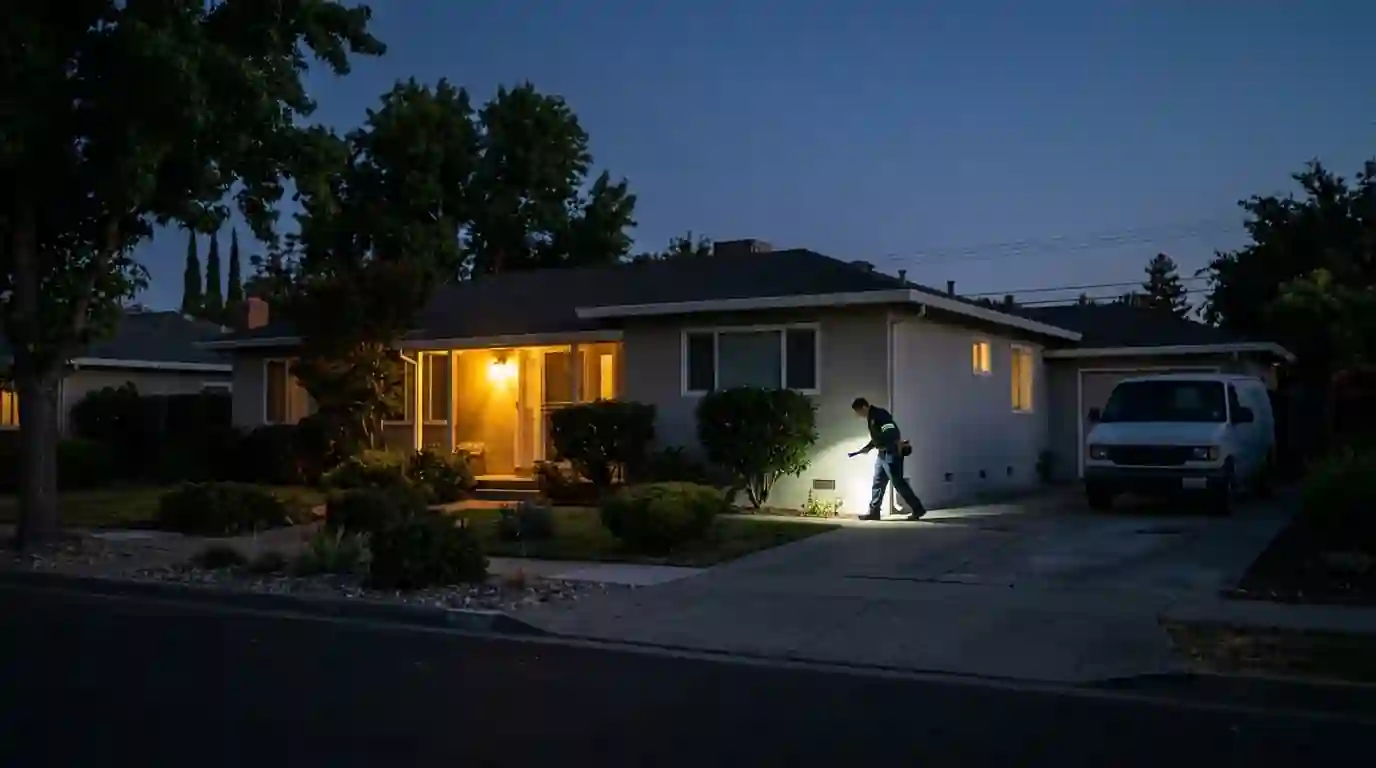
Tree squirrels in a San Jose attic are a daytime problem: you hear them morning and late afternoon, not at 2am. They chew their own entry through fascia, vents and roof edges, so removal has to be paired with a rebuilt opening, and in spring the nest has to be checked for young before anything is closed.
The timing is what separates this from a rat call. Squirrels are diurnal, so the noise comes in bursts after sunrise and again before dusk, and it is heavier and more deliberate than the quick scurrying of a roof rat. The damage is different too: squirrels gnaw large, ragged openings and will chew wiring with enthusiasm.
The structural side is the expensive part. A squirrel entry is usually a hole it made rather than a gap it found, which means fascia, soffit or vent material has to be rebuilt rather than screened over. Closing it properly is the same discipline as rodent exclusion, with heavier materials.
From daytime noise to a closed roofline
Confirm the species
Daytime noise, hole shape and droppings separate squirrels from roof rats quickly.
Watch the roofline
Observation counts animals and finds every opening in use, not just the obvious one.
Check for young
Season and nest signs decide whether this is one animal or a family.
Remove
Humane removal handled in line with California rules for the species.
Rebuild and screen
Chewed material gets replaced and the opening closed with material they cannot work.
Attic removal
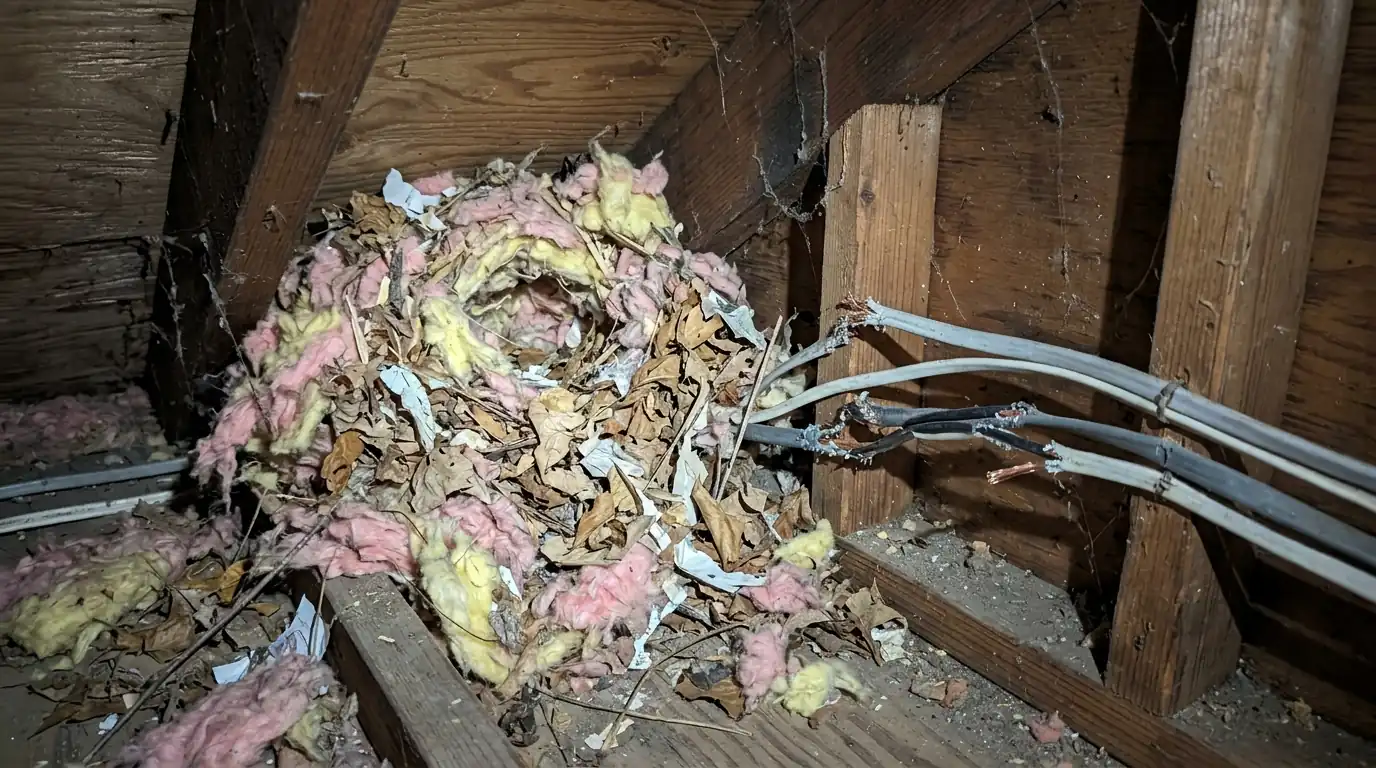
Removal starts with watching the roofline to count animals and find every opening, because squirrels commonly maintain a second route. Spring and late summer both bring litters, so the nest gets checked before anything is sealed; a mother sealed out will chew a new hole within hours, and young sealed in die in the ceiling. Where young are present the work is timed so the family leaves together, which takes longer and is the only version worth doing.
Entry repair
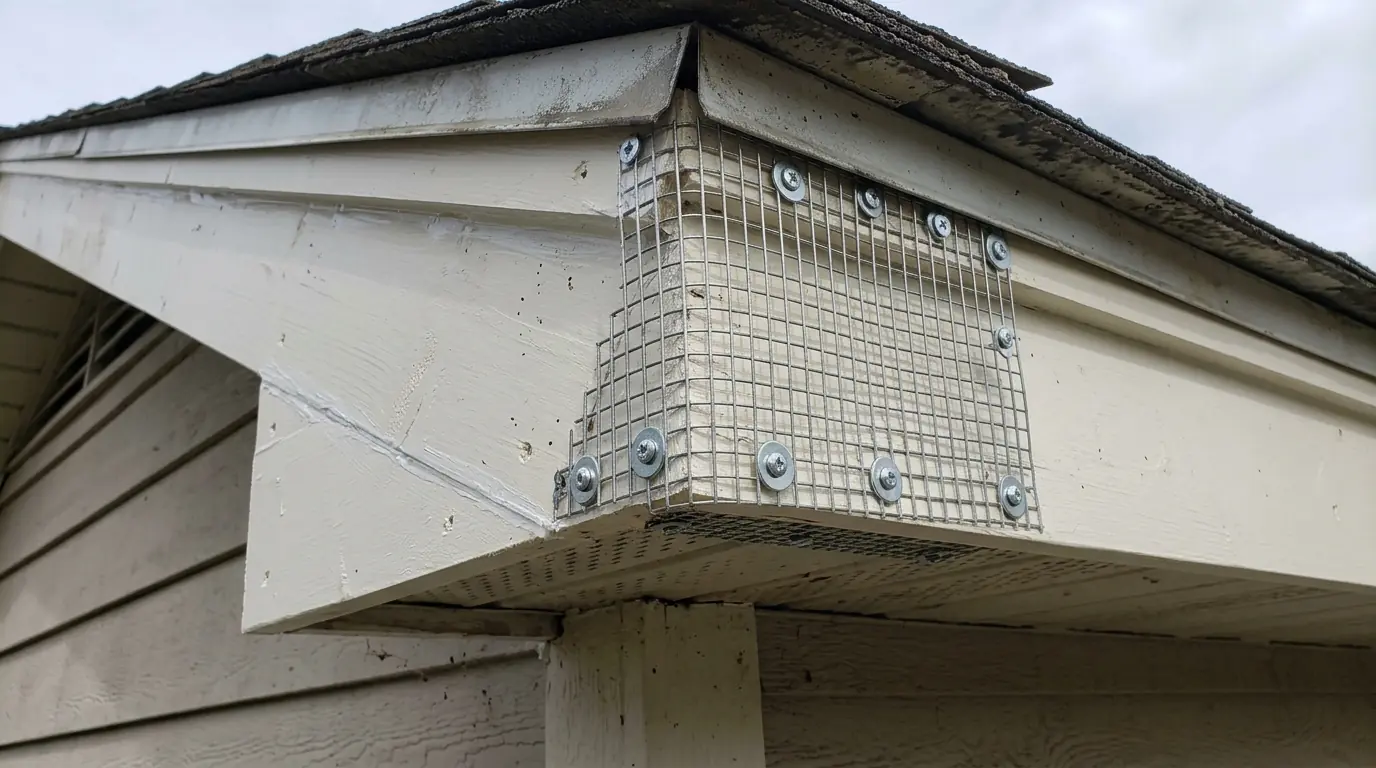
The hole is the job. Chewed fascia and soffit get rebuilt with sound material, vents get heavy galvanized screening fastened rather than pushed in, and the surrounding edges get checked, since squirrels work the weak line next to a repair. We also look at branches within jumping distance of the roof, because a tree limb six feet from the eave is the reason the animal was up there in the first place.
How long it takes
A lone adult is usually resolved within a few days, with the repair following as soon as the attic is confirmed empty. Litters add time by design: the young have to be mobile enough to leave with the mother. The repair itself is typically a half day, longer when chewed fascia or soffit needs rebuilding before anything can be anchored to it, which is common on jobs that sat for a season.
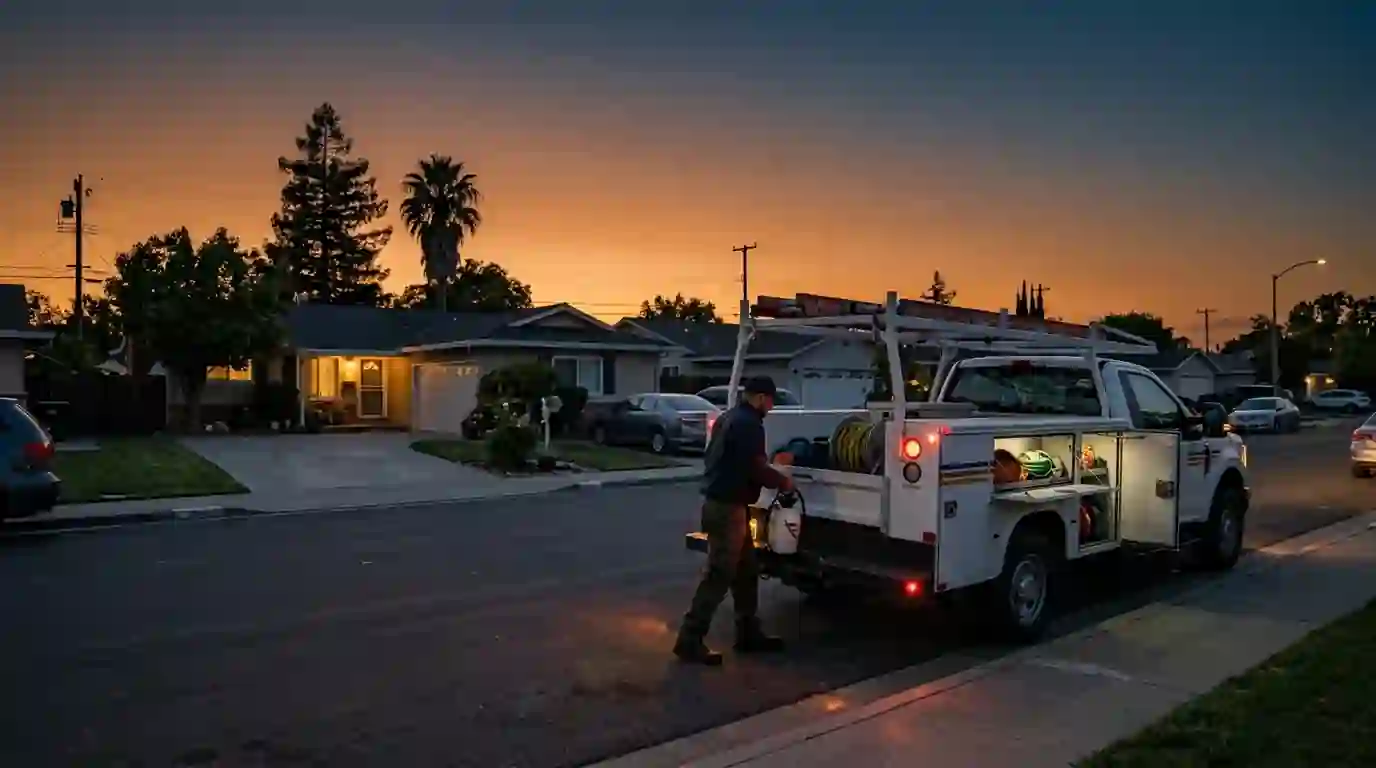
Hearing it at breakfast rather than midnight? That is a squirrel.
Call (669) 369-0489What we see around San Jose
Mature street trees across San Jose put branches within easy jumping distance of a lot of rooflines, and eastern fox squirrels have spread through those neighborhoods for decades. The result is the same pattern we see with roof rats, canopy to roof to attic, with the difference that squirrels make their own door. Any home with limbs reaching the eave is a candidate, which is why trimming comes up on every one of these jobs.
What a squirrel job costs depends on
Removal is the smaller half; the repair work is what moves most quotes.
| What moves the price | How it moves it |
|---|---|
| Number of animals | A lone adult differs from a mother with a litter that has to leave together. |
| Entry damage | Chewed fascia and soffit often need rebuilding before screening can be anchored. |
| Roof access | Two-story rooflines, tile and steep pitches slow every stage of the work. |
| Number of openings | Second routes are common, and each one gets closed properly. |
| Attic condition | Shredded insulation and chewed wiring add cleanup and an electrician's attention. |
| Tree contact | Limbs reaching the roof keep the pressure on, and trimming is a separate trade. |
Removal and the entry rebuild are quoted together, because removal alone leaves an open hole in your roofline.
Related reading: pest-proofing before the rains.