Short answer
Subterranean termites under a San Jose home nest in the soil and commute into the framing through mud tubes, so the treatment targets the ground, not just the wood. A liquid soil barrier or a bait station system are the two proven routes; in California these treatments commonly run $345 to $1,900. The inspection decides which fits your foundation, and you get both priced.
These are the termites that do most of the structural damage in California, and the ones your crawl space hides best. The colony lives in the soil, sometimes under the neighbor's yard, and workers travel protected inside pencil-wide mud tubes up foundation walls and piers. Knock a tube open and find live, cream-colored workers inside, and the question is settled.
Because the colony is in the ground, spraying the wood misses the point. Both real treatments work through the soil itself, and which one fits depends on your foundation type, landscaping and whether a slab or porch blocks the trenching line. We walk that with you before quoting either.
What a subterranean job costs in practice
California subterranean treatments commonly land between $345 and $1,900, a wide band because the foundation decides the work. Here's what moves your number inside it.
| What moves the price | How it moves it |
|---|---|
| Linear footage | Barriers price by the perimeter; a sprawling ranch costs more than a compact two-story. |
| Hardscape over the line | Every slab, porch and walkway across the trench line means drilling instead of trenching. |
| Method chosen | Baiting trades a lower install against ongoing monitoring visits. |
| Crawl space access | Tight clearances slow interior treatment points. |
| Active vs preventive | Treating a confirmed infestation includes verification work a pre-treatment doesn't. |
| Repairs found | Damaged sills and piers are quoted separately once the termites are stopped. |
The state ranges are published planning figures, not our quote. Your written price follows the foundation walk.
Soil barrier treatment
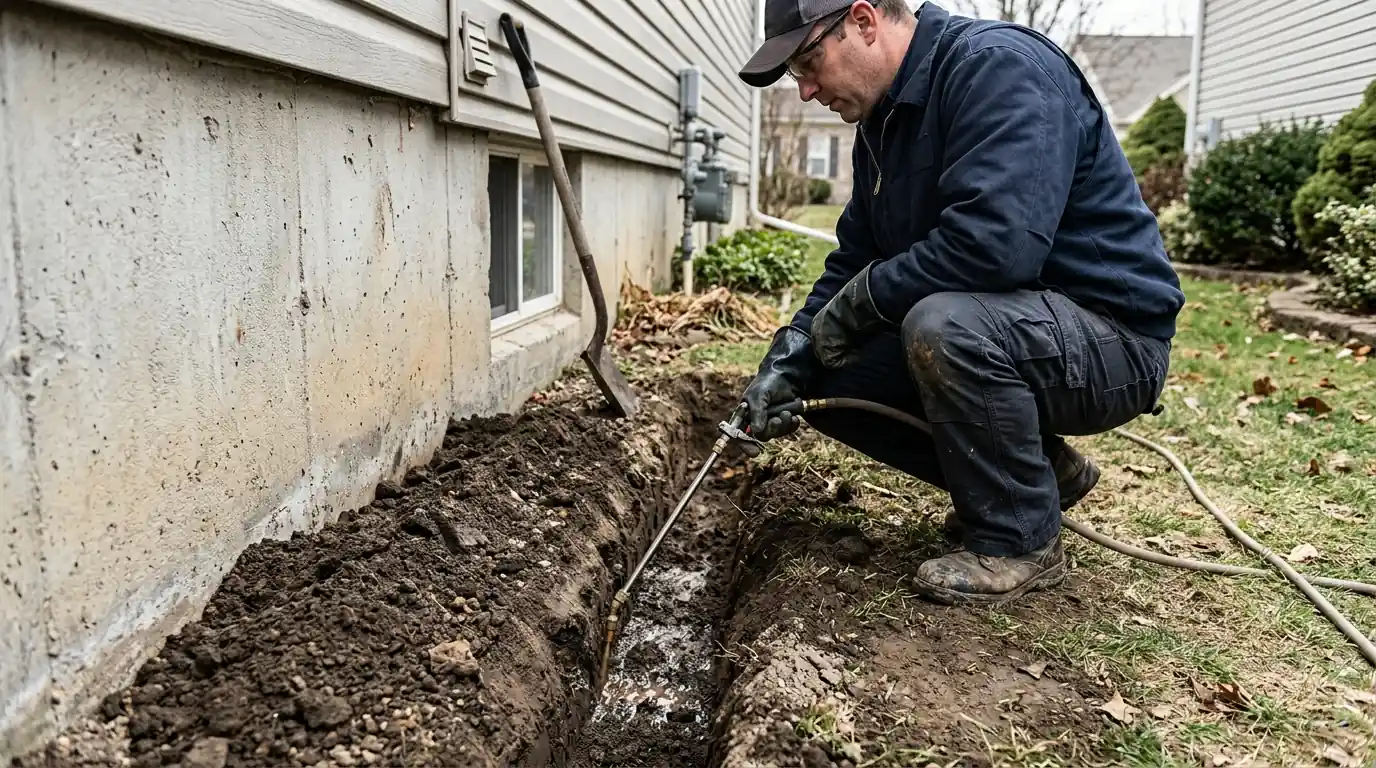
A continuous treated zone goes into the soil against the foundation: trenching along accessible edges, rod injection where hardscape sits over the line, and drilling where a slab or porch demands it. Modern non-repellent materials let workers pass through, pick up the dose and spread it through the colony rather than just fencing it off. California soil barriers price at roughly $5 to $12 per linear foot of foundation, which is why home size moves the quote more than anything.
Bait station systems
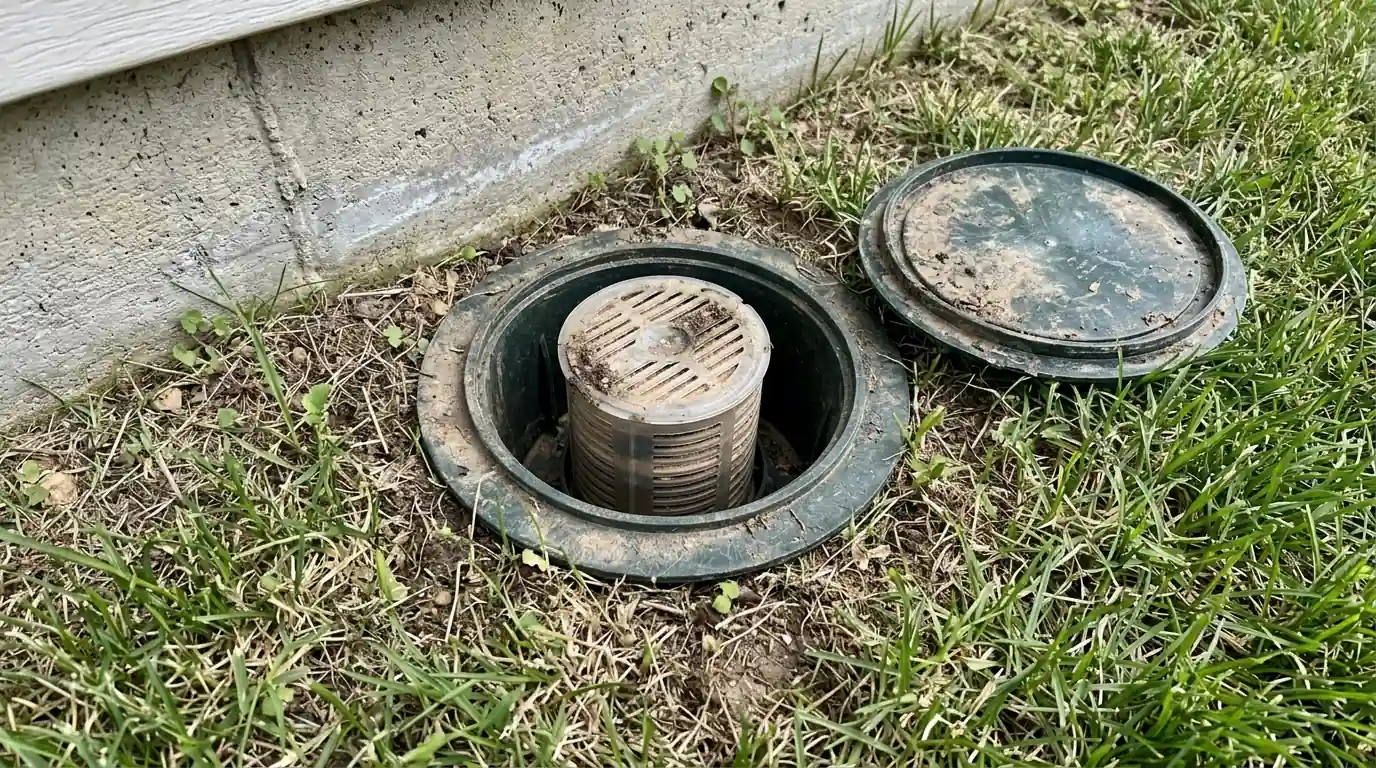
In-ground stations go around the structure on a measured spacing, loaded with a growth inhibitor the workers carry home and feed to the colony until it collapses. Baiting shines where trenching can't go: finished landscapes, wells and drainage concerns, or homes where a full perimeter is blocked by additions. The tradeoff is time, months rather than days, and the stations need scheduled monitoring, which is a service relationship rather than a one-time job.
Barrier or bait: how the choice actually falls
Both end colonies. They differ in speed, disruption and what your lot allows, and the foundation walk usually makes the call obvious.
| Liquid barrier | Bait system | |
|---|---|---|
| Speed | Protection starts the day it goes in | Colony decline over weeks to months |
| Disruption | Trenching, and drilling through slabs where needed | Discreet stations, no trenching |
| Cost shape | Priced by the linear feet treated, commonly $5 to $12 per foot in California | Install plus scheduled monitoring visits |
| Best fit | Accessible perimeters and active, time-sensitive infestations | Blocked perimeters, sensitive landscaping, long-term prevention |
From mud tube to settled treatment
Full inspection
Crawl space, foundation lines, garage expansion joints and plumbing penetrations, every tube documented.
Confirm the species
Open tubes and live workers separate subterraneans from drywood frass; both get ruled in or out.
Foundation walk
We measure the perimeter, note slabs and landscaping, and see what each method would involve here.
Treat
Barrier jobs usually finish in a day; bait systems go in with their monitoring schedule set.
Verify
Broken tubes get flagged and rechecked; rebuilt tubes mean activity, dry crumbling ones mean it stopped.
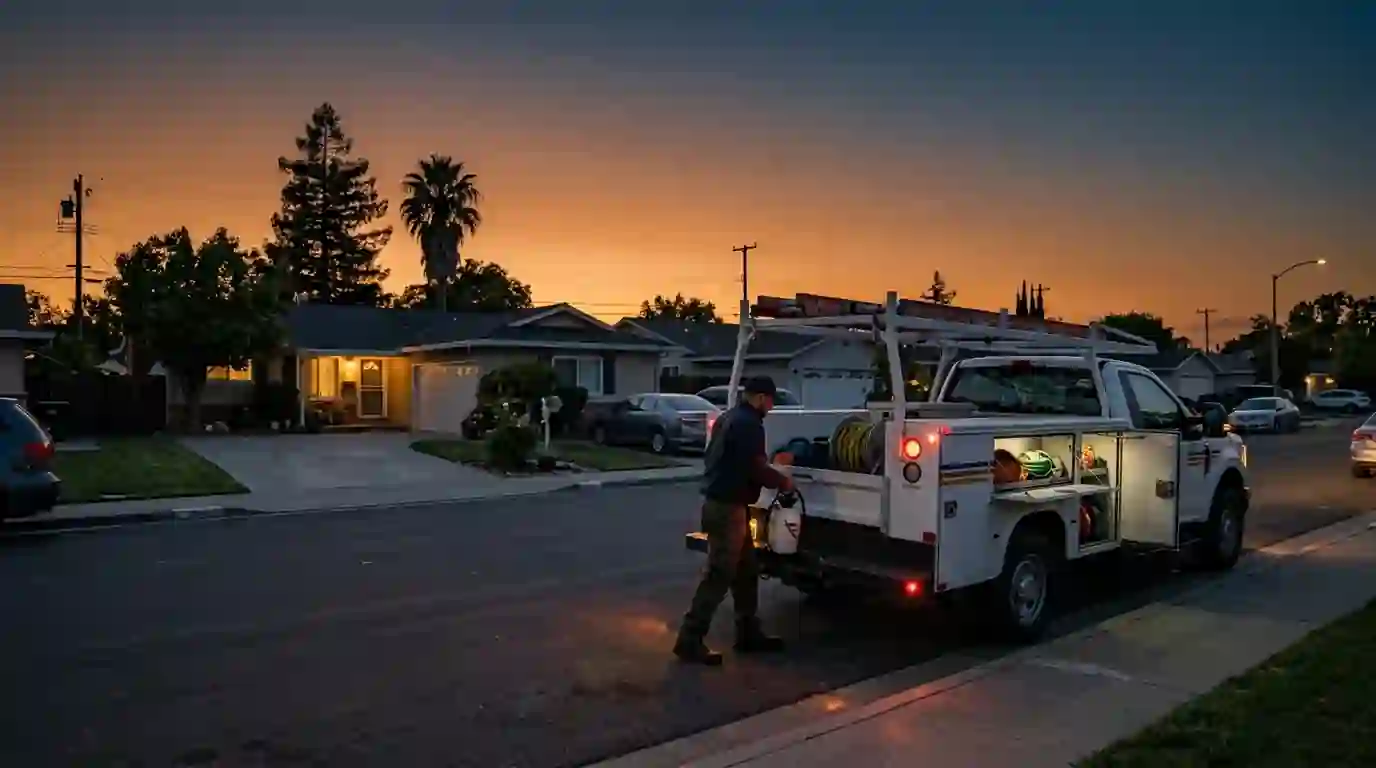
Found a tube with live workers in it? That colony is feeding now.
Call (669) 369-0489What we see around San Jose
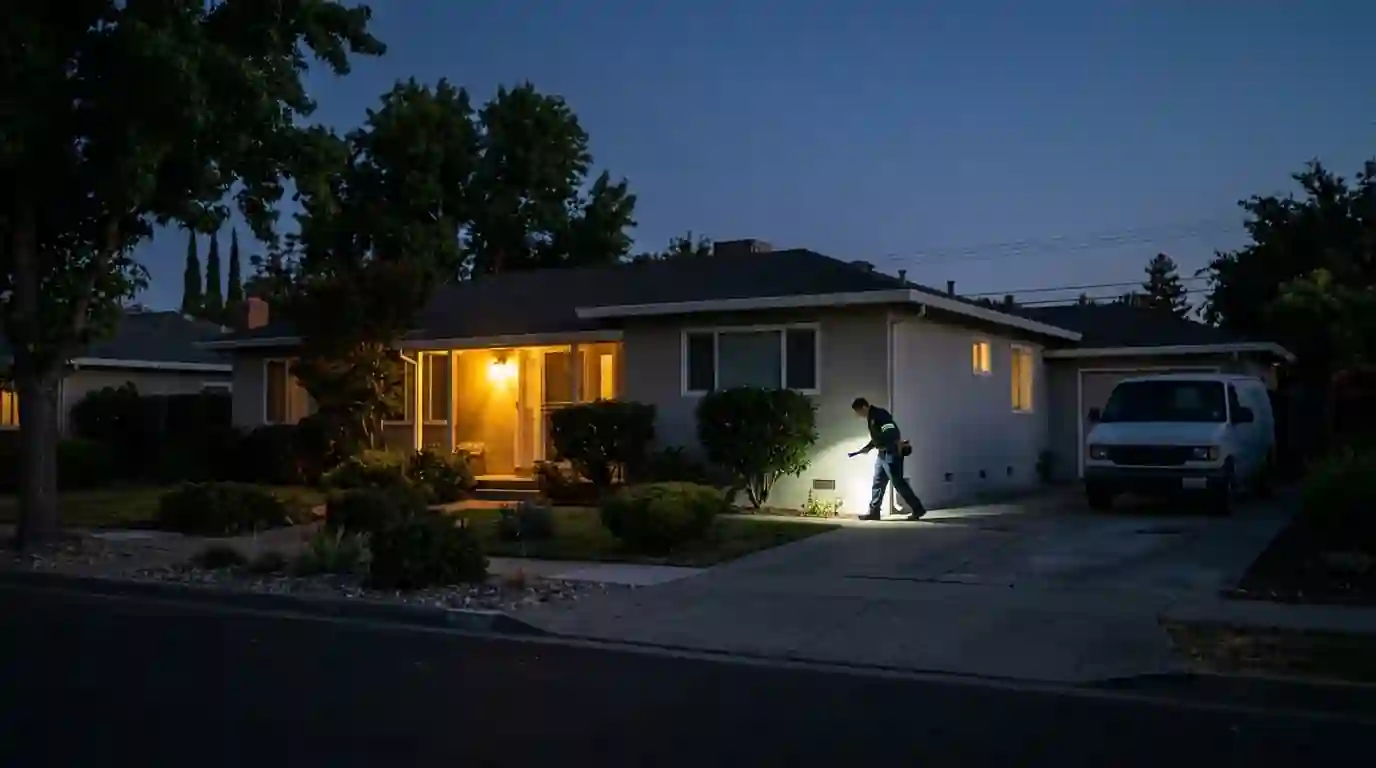
San Jose's older neighborhoods carry the classic setup for this pest. In Willow Glen and Naglee Park, pre-war homes sit with framing close to soil, short clearances and decades-old additions, exactly the geometry subterranean colonies exploit, and those streets produce a steady share of our tube findings. Newer slab construction isn't immune; it just moves the entry points to plumbing penetrations and expansion joints, which is where we drill and probe on those homes.
More on this in Pest Watch: what a termite inspection costs.