
Short answer
Pantry pests in a San Jose kitchen, Indian meal moths and flour or grain beetles, breed inside stored food and almost always arrive in a package from the store. The fix is finding and discarding the infested item, treating cracks and shelf voids rather than anything edible, and monitoring to confirm it is really over rather than hoping.
Nothing about this reflects on your housekeeping. Pantry pests are introduced in packaged goods, often weeks before you see anything, because the eggs are already inside the flour, the birdseed or the bulk grain when it comes home. They develop quietly until adults start flying, which is usually the first anyone notices.
The work is detective work. One infested bag can seed an entire cupboard, and larvae crawl surprising distances to pupate, so they end up in shelf corners, under lids and at the ceiling line well away from the source. Treatment never touches food; it targets the cracks, hinges and voids where larvae and pupae sit, and the source item simply goes in the outdoor bin.
What drives the cost here
These are usually smaller jobs than other pest work, priced by how much storage has to be inspected and whether monitoring follow-up is needed.
| What moves the price | How it moves it |
|---|---|
| Storage volume | A single cupboard is quicker than a walk-in pantry plus garage shelving. |
| Spread | Pests found in several rooms or in both kitchen and garage widen the inspection. |
| Monitoring period | Follow-up visits to read pheromone traps add to a basic single visit. |
| Infestation age | Older infestations mean larvae pupating further from the source and more searching. |
| Shelving type | Fixed shelving with deep voids takes more careful treatment than removable units. |
| Pet food and birdseed | Bulk animal feed is a frequent source and expands the areas worth checking. |
The visit is priced up front, and the honest version includes telling you when a thorough clean-out on your own would have handled it.
Indian meal moths
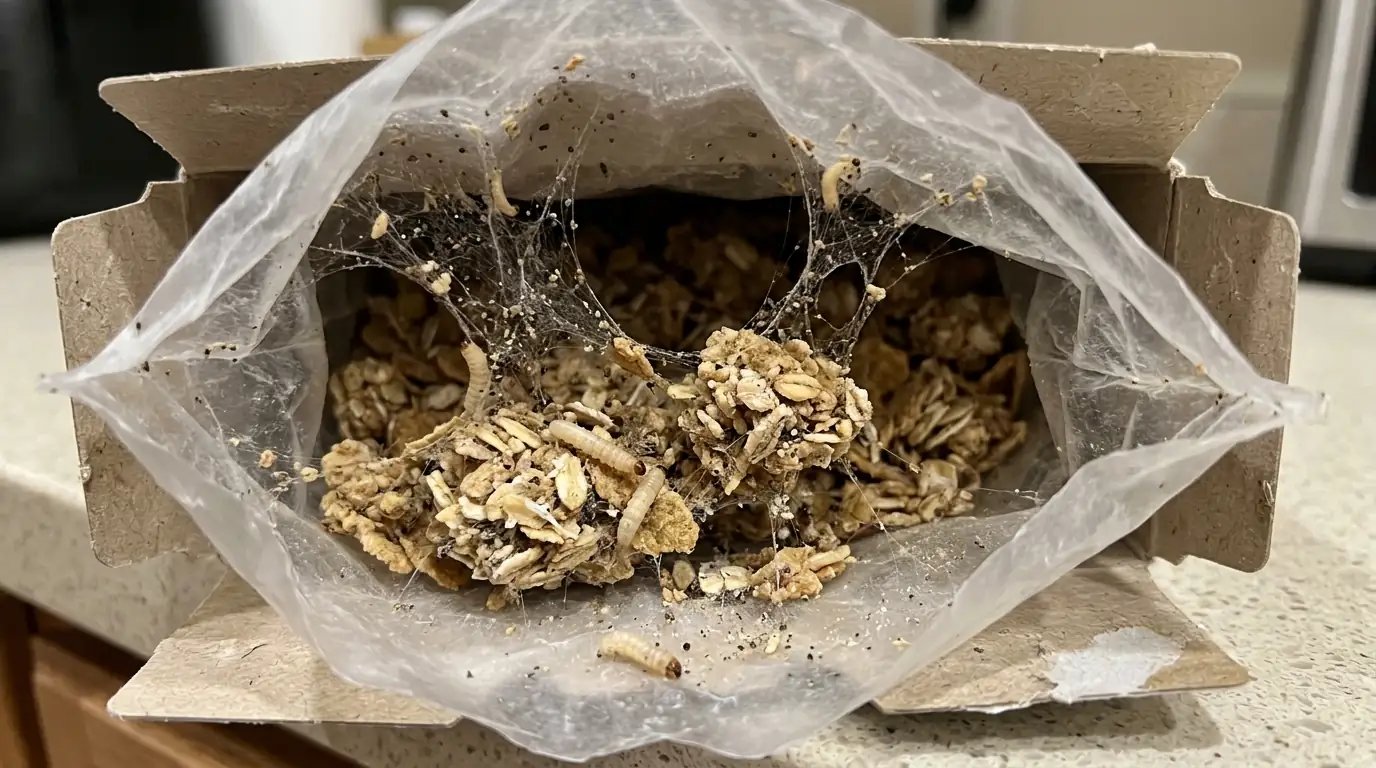
The most common pantry pest we find, and the one that makes people call. Small moths with distinctly two-toned wings, bronze at the tips and pale at the base, flying in a lazy zigzag around the kitchen at dusk. The larvae spin silk webbing that clumps grain, pasta and cereal together, and they are notorious for crawling well away from the source to pupate, often along the top edge of the cupboard or inside the lid groove. Pheromone traps help confirm whether the problem is really finished.
Flour and grain beetles
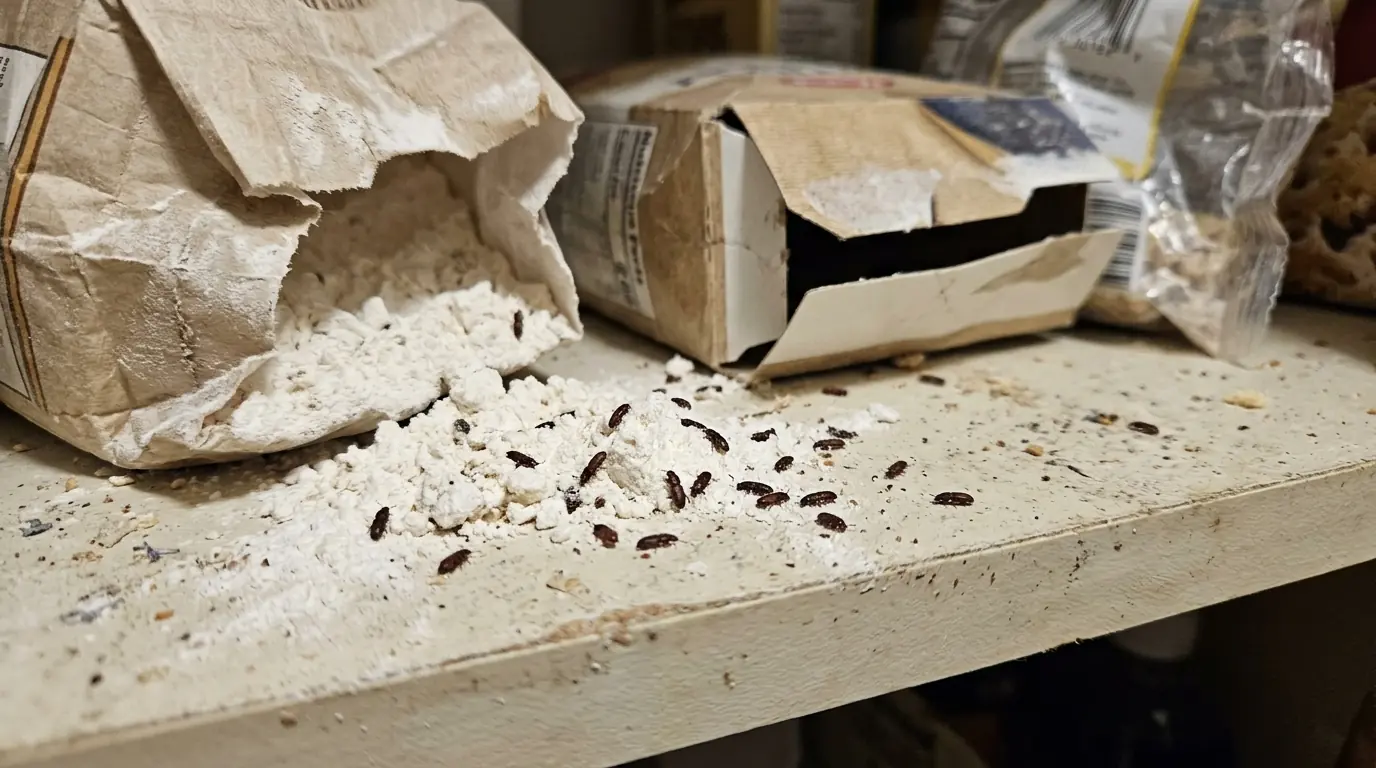
Smaller, darker and easy to miss, these beetles work flour, cornmeal, spices, pet food and birdseed, sometimes in packages that look perfectly fine until you sift them. Where moths announce themselves by flying, beetles are usually found by looking, which is why the inspection goes through containers rather than scanning the room. They slip through packaging seams easily, so one infested bag commonly spreads to several neighbors on the same shelf before anyone notices.
What the visit covers
Most of the value here is the inspection and the instructions. Treatment is deliberately narrow.
- Package-by-package inspection of grains, flour, cereal, pet food, birdseed and spices
- Check of the usual hiding spots: shelf corners, lid grooves, cupboard top edges
- Identification of the source item so it leaves the house rather than being sprayed
- Crack, hinge and void treatment on the shelving itself, never on food or food surfaces
- Pheromone monitors placed to confirm the problem is actually over
- Container and storage advice that prevents the next introduction
- A note on which items are safe to keep and which should go
How a pantry problem gets cleared
Find the source
Every dry good gets checked, because treating around an infested bag accomplishes nothing.
Clear and clean
Infested items go to the outdoor bin, shelves get emptied and vacuumed including the corners.
Treat the voids
Cracks, hinges and shelf edges get targeted treatment with food surfaces kept clear.
Monitor
Pheromone traps show whether adults are still emerging over the following weeks.
Confirm and prevent
Zero catches means it is done, and the storage changes keep it that way.
What we see around San Jose
Two local habits drive most of the calls we take in San Jose. Bulk buying is popular here, and a large sack of flour, rice or dog food sitting open for months is the ideal environment for an introduced population to build unnoticed. Garage storage is the other: warm garages hold stored pet food and birdseed, and pantry pests found in the kitchen often trace back to a bag out there rather than anything on the kitchen shelf.
If you want the background: pest-proofing before the rains.