Short answer
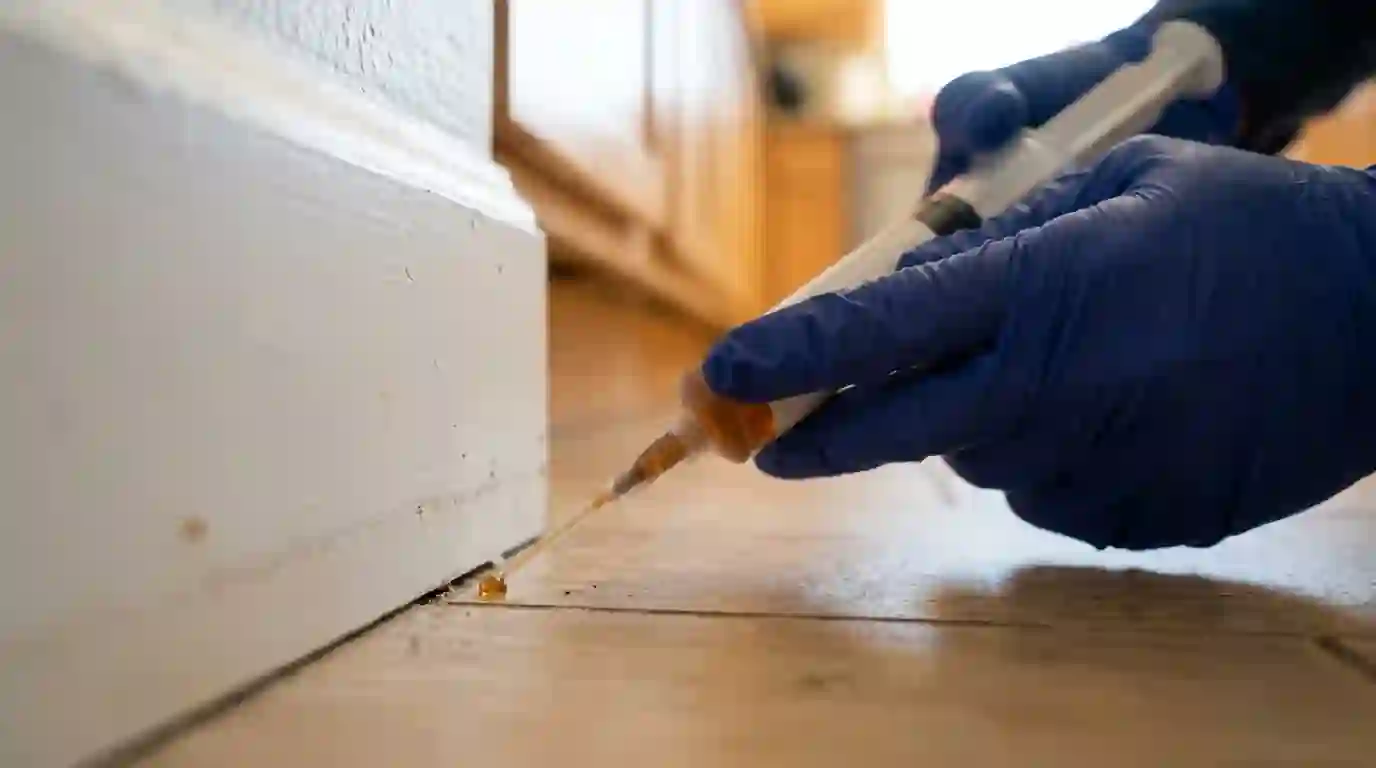
Repellent sprays kill the roaches they contact and drive the rest deeper into wall voids, equipment housings and sometimes neighboring units. German cockroaches breed every few weeks, so a thinned population rebuilds quickly. Gel bait works with their behavior instead: they feed, return to harborage and die there, carrying the effect through the population.
This is the single most common reason a roach problem drags on for months. The products sold for it are built to repel, the pest responds by relocating, and the person applying them gets a visible result that does not last.
What a spray actually does
- Kills on contact. The roaches you see die, which feels like progress and accounts for a small fraction of the population.
- Repels the rest. Treated surfaces become places to avoid, so harborage shifts deeper into voids, motor housings and wall cavities.
- Spreads the problem. In attached housing, pressure pushed out of one unit frequently turns up next door.
- Blocks baiting later. Residue on surfaces makes roaches avoid the exact spots where bait would otherwise be placed, which is why we ask people to stop spraying before a visit.
There is also the arithmetic. A German cockroach female carries an egg case holding dozens of nymphs, and generations overlap every few weeks. Killing adults without reaching the harborage and the next generation leaves the population intact in the places you cannot see.
How baiting works instead
Gel bait is placed in pea-sized dots inside the voids roaches actually occupy: hinge pockets of cabinet doors, the void behind a drawer rail, the gap under the sink lip, motor housings on appliances. Dozens of placements, not a spray pass.
Roaches feed, return to harborage and die there, and the effect moves through the population by contact and by secondary feeding. An insect growth regulator goes in alongside so anything that hatches afterward cannot reproduce, which closes the loop that spraying leaves open.

Why monitors matter
Sticky monitors placed in harborage turn a roach problem into numbers. Counts falling between visits is evidence; the absence of sightings is not, because German roaches are nocturnal and hide by default. Monitors also show where the population is concentrated, which tells a technician where to add placements next time.
That is the practical difference between a program and a visit. Two to four services for most German roach jobs, each one reading the monitors and adjusting, closing only on two consecutive clean reads.
Sanitation is a lever, not the cause
Food debris, grease and standing water all speed a population up by giving it alternatives to the bait, which is why a cleaned kitchen makes baiting work faster. What sanitation does not do is explain how they arrived, because German roaches come in on objects rather than through poor housekeeping.
The practical version: fix the drip under the sink, keep crumbs off the floor behind the appliances, and do not deep-clean the treated voids a technician just baited. Those three cover most of what a householder can usefully contribute.
The other species are a different problem
Large reddish-brown American roaches and dark Oriental roaches are not breeding in your kitchen voids. They live in drains, sewers, crawl spaces and damp landscaping, and come in through floor drains, gaps under doors and crawl space vents. One or two a week is a traffic problem, and the fix is finding the route and closing it rather than baiting a kitchen.
What to do before a visit
- Stop spraying, including store products; residue is the main thing that interferes with baiting
- Clear under the sink and the cabinets that need reaching
- Fix any dripping tap or leak, since water is the one thing they cannot do without
- Leave the monitors where they are placed, because the counts are the point