Short answer
Carpenter bees drill perfectly round holes about half an inch wide into bare, unfinished wood: fascia, rafter tails, deck rails, fence caps and pergolas. Treatment goes into the gallery first and the hole gets sealed afterward, because sealing an untreated tunnel traps bees that simply chew a new exit nearby.
These are the big bees that hover aggressively around a deck in spring and turn out to be mostly bluff; males cannot sting at all. The damage is the real issue. Females bore into wood and excavate galleries along the grain, reusing and extending them year after year, which turns a single hole into a honeycombed rail over several seasons.
They strongly prefer bare, weathered or stained softwood over painted surfaces, which is why the same fascia run or the same deck rail gets hit repeatedly while the painted trim beside it is untouched. That preference is also the long-term fix, and it is the one piece of advice on this page worth more than the treatment.
What drives the cost
Price follows the number of galleries and how hard they are to reach, which a quick look settles.
| What moves the price | How it moves it |
|---|---|
| Number of galleries | Each entrance gets treated individually, and runs often hold more than you see. |
| Height and access | Second-story fascia and tall pergolas need ladder work and more time. |
| Return visit for sealing | Sealing after activity stops is a second, shorter visit on most jobs. |
| Surface area affected | A single rail differs from a full fascia run plus a deck and a pergola. |
| Woodpecker damage | Birds opening galleries add repair scope beyond the bee work itself. |
| Finish work | Filling and sealing is included; repainting a whole run is a separate trade. |
The quote comes after we see the runs, and it includes the sealing visit rather than leaving that for later.
Eave and fascia treatment
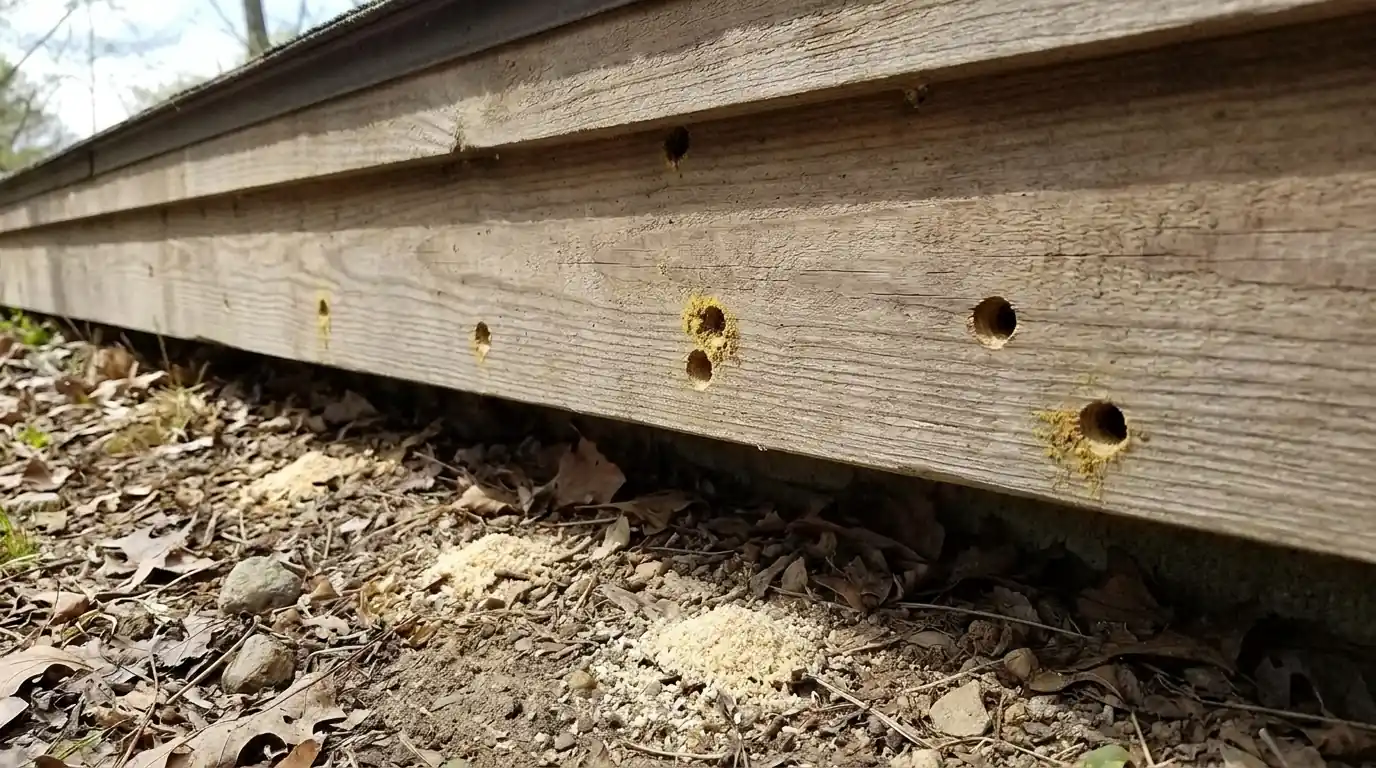
The structural version: fascia boards, rafter tails, barge boards and pergola beams, usually on the sunny side of the house. Each gallery entrance gets treated so the material reaches down the tunnel where larvae are developing, then sealed once activity has stopped. We work the whole run rather than the holes you noticed, because galleries branch and a second entrance a foot away is common. Woodpeckers opening up a fascia are a reliable sign there are more tunnels than you can see.
Hole sealing
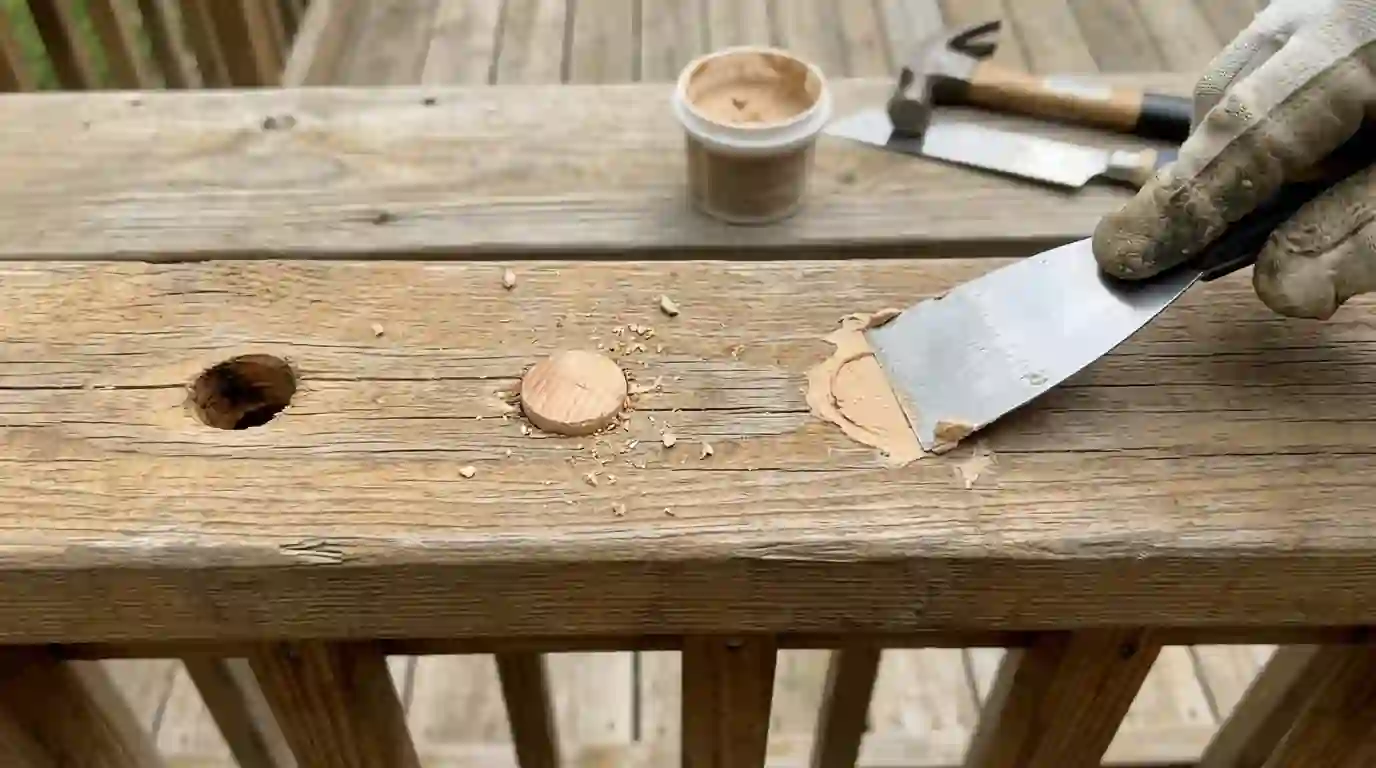
Sealing is the last step, never the first. An untreated gallery that gets plugged simply gets chewed open from the inside or exited through a fresh hole an inch away, so the sequence matters. Once activity stops, holes get filled with wood filler or dowel and the surface gets sealed properly. The durable fix on top of that is finish: painted or sealed wood is far less attractive to them, and the bare-wood runs are where every repeat call comes from.
How carpenter bee work is sequenced
Map the galleries
The whole run gets checked, since branching tunnels and second entrances are normal.
Treat the tunnels
Material goes into each gallery so it reaches larvae developing along the grain.
Wait for activity to stop
Sealing happens after, not before, so nothing chews its way back out.
Fill and seal
Holes get filled and the surface sealed to remove the bare wood invitation.
Advise on finish
The runs still bare get flagged, because paint and sealant are the real prevention.
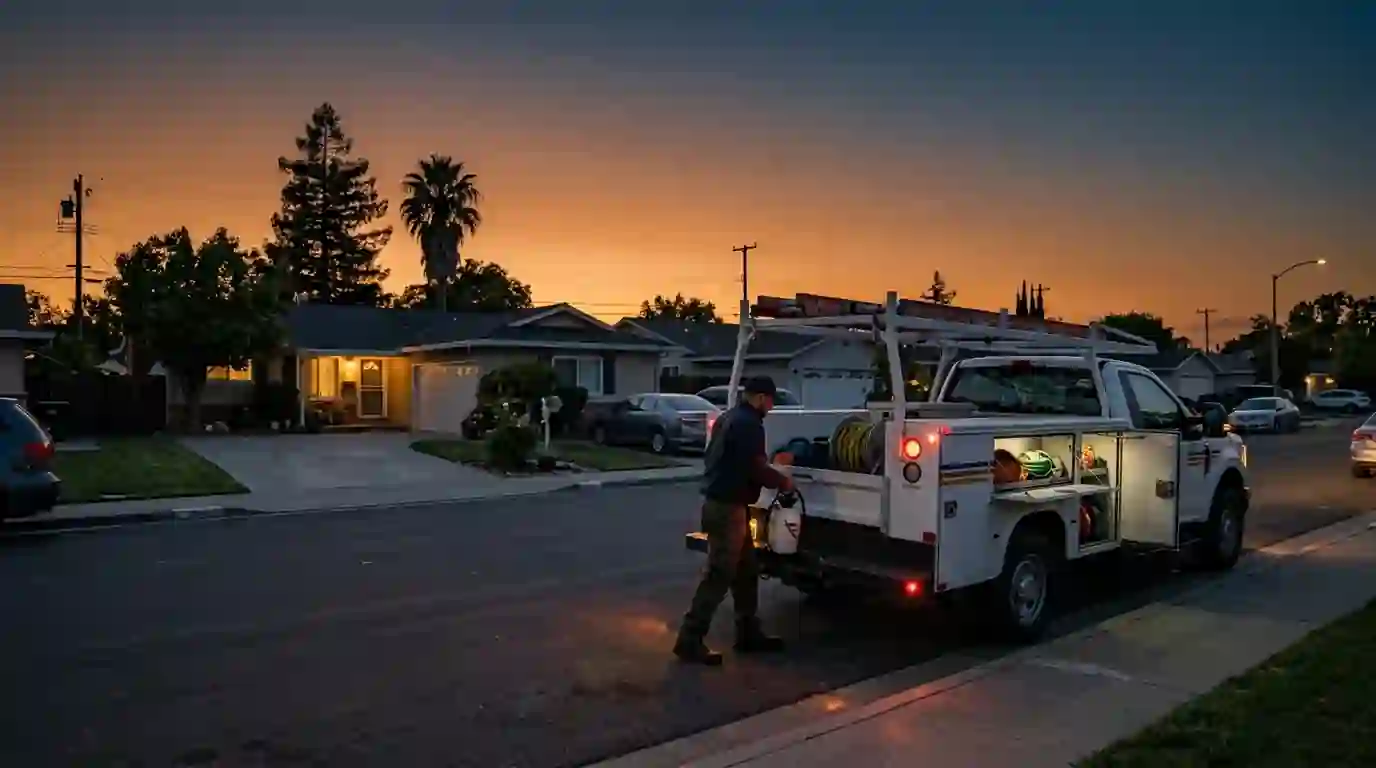
Sawdust piling under the deck rail each spring? Treat before sealing.
Call (669) 369-0489What we see around San Jose
Spring is when the phone rings for this in San Jose, as overwintered adults emerge and start working the same boards they used last year. The local pattern is predictable: south and west-facing fascia, redwood and cedar decks left unsealed, pergolas and fence caps. Homes that keep those surfaces finished rarely see them twice, which is why the advice at the end of a visit is usually worth more than the treatment itself.
Worth reading alongside this: pest control around pets and kids.