Short answer
Bee removal in San Jose starts with identification, because honey bees, bumble bees and yellowjackets all get called bees and only one of them is a relocation candidate. A swarm resting in the open can often be collected live the same day. A colony established inside a wall needs the comb and honey removed too, or the residue draws pests and stains through the drywall for years.
Honey bees in the open are usually a swarm: a cluster that has left a hive and is resting while scouts look for a permanent home. Swarms are temporary, generally docile, and the easiest version of this call, because they can often be collected whole and moved rather than treated.
Bees that have been going in and out of the same wall void, eave or chimney for weeks are an established colony, and that job is a removal plus a cleanup. Comb and honey left in a sealed cavity ferment, stain, and attract ants and other scavengers to the wall for seasons afterward, which is why simply sealing the entrance makes the problem worse.
From the call to a closed-up wall
Identify what you have
Honey bee, bumble bee or yellowjacket, and swarm or established colony, decided before anything else.
Assess access
Height, location and whether the colony is inside a structure determine the method.
Remove
Live collection for swarms and accessible colonies wherever conditions allow it.
Clear the comb
Structural jobs get all comb and honey removed, not just the bees.
Seal the entry
The cavity gets cleaned and the opening closed so the next scout finds nothing.
Swarm removal
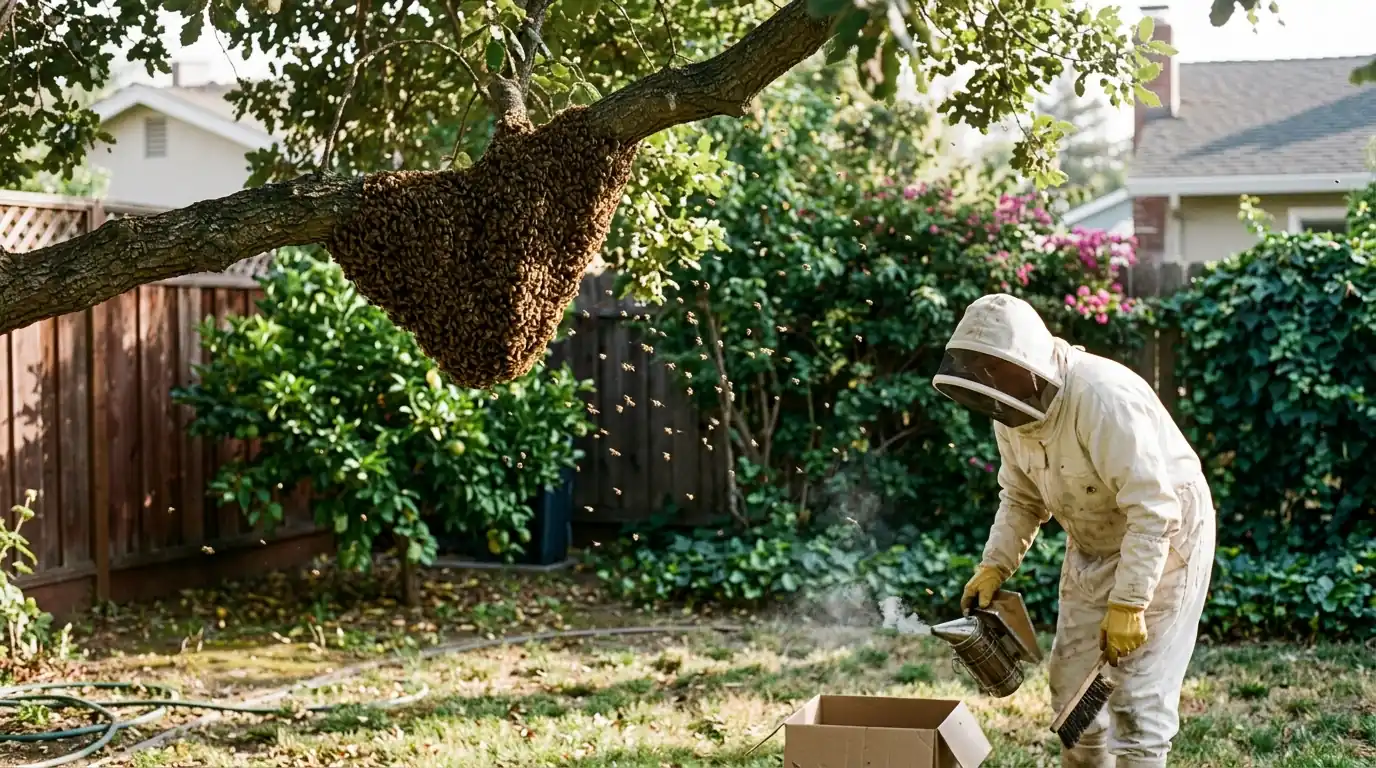
A swarm clustered on a branch, fence post, car mirror or eave is the best-case call. The bees have no comb, no brood and nothing to defend, which makes them generally calm and makes live collection realistic. Timing matters: a swarm may move on within a day or two on its own, but it may also move into your wall, so the call is worth making immediately rather than waiting to see. We assess, collect where the position allows, and tell you plainly when a swarm is high or awkwardly placed enough to change the approach.
Hive and comb removal
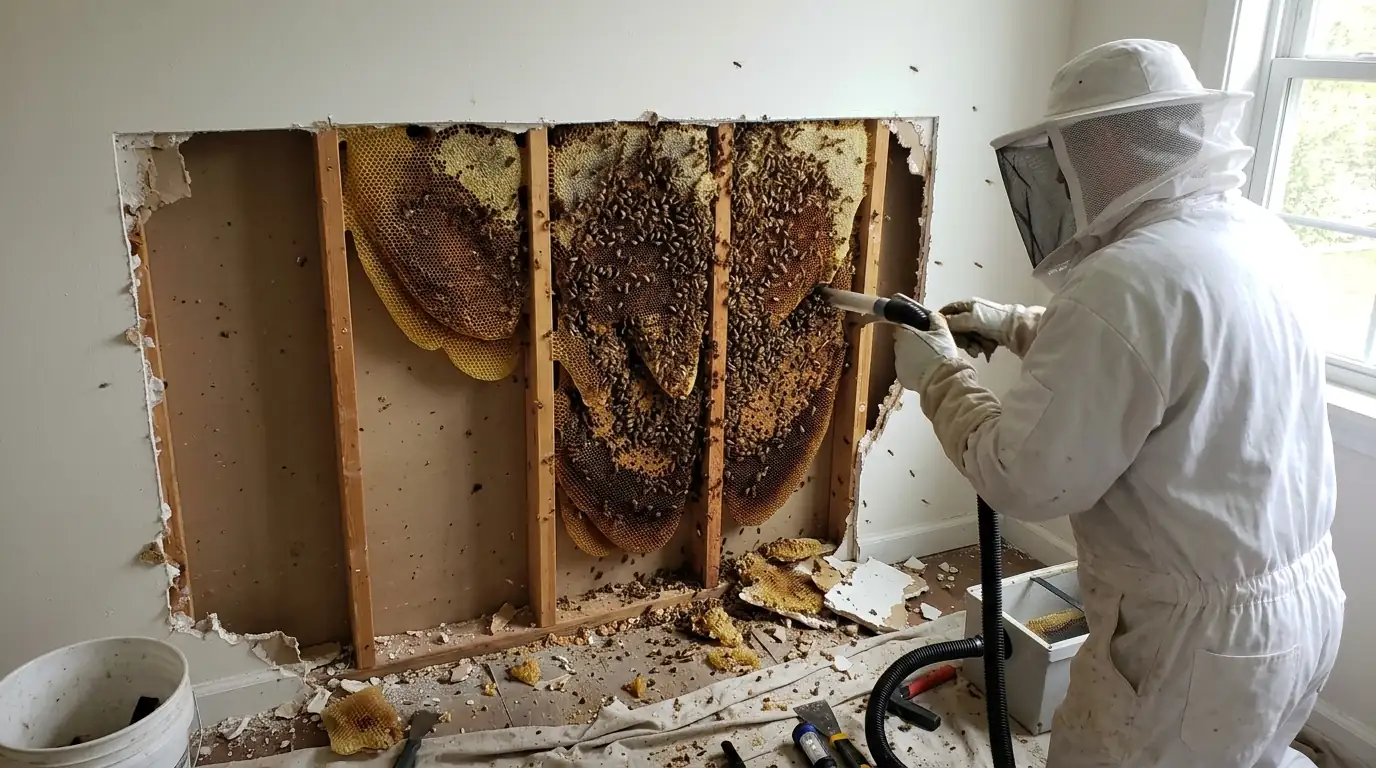
An established colony inside a structure means opening the cavity. Bees enter through a knot hole, a gap in stucco or a soffit vent and build comb across the void; the only complete fix is accessing that space, removing the colony and taking out every piece of comb and honey. Left behind, the wax melts in summer heat and the honey soaks through drywall and framing, drawing ants, roaches and rodents for years. After removal the cavity gets cleaned and the entry sealed so scouts from the next swarm find it closed.
How quickly this can be handled
Swarms are same-day work whenever we can reach them, because a swarm sitting on your fence tonight may be inside your wall tomorrow. Structural removals take longer to schedule and longer to perform, typically a half to full day, since they involve opening and then closing a wall or soffit. If anyone on the property has a known sting allergy, say so on the first call and the job moves up the list regardless of type.
Swarm on the property right now? Call before they pick a wall.
Call (669) 369-0489What we see around San Jose
Swarm season in San Jose runs with the spring bloom, and the calls cluster in a few warm weeks when colonies split and scouts go looking. Older homes with stucco gaps, open eave vents and unscreened attic vents are the structures that end up hosting them, which is the same list of openings that invites roof rats and drywood termites. If a swarm picked your eave once, the practical fix after removal is closing the openings so it is not the obvious choice next spring too.
What drives the cost of a bee job
A swarm collection and a structural removal are different categories of work, and access is what moves each of them.
| What moves the price | How it moves it |
|---|---|
| Swarm or colony | An exposed swarm is a short visit; an established in-wall colony is a construction job. |
| Height and access | Ladder work, second stories and chimneys all add time and equipment. |
| Cavity opening | Removing stucco, siding or drywall and closing it back up is real labor. |
| Comb volume | A colony in place for months has far more comb and honey to clear. |
| Sealing scope | Closing one knot hole differs from screening a whole eave line. |
| Repair work | We close what we open; finish carpentry and stucco matching may be a separate trade. |
The visit is quoted after we see the location, because a photo of the entry usually changes the estimate in one direction or the other.
Related reading: how to prepare for a bed bug treatment.