Short answer
Fly control in San Jose starts with species, because each one breeds somewhere different: drain flies in the biofilm inside a drain line, fruit flies in fermenting residue, house flies in garbage and organic waste outside. Treating the breeding material ends the problem; spraying adults just clears tonight's batch.
Flies are a symptom with a specific cause. Adults live days to weeks, so a population that keeps replenishing means something nearby is producing new ones continuously. That source is usually small and easy to miss: a cracked drain line, a recycling bin with residue in the bottom, a forgotten mop bucket, a bag of potatoes going soft in a cupboard.
Which fly you have narrows the search enormously, so identification comes before any treatment. The other half is the door: screens, sweeps and the gap at the threshold decide how many outdoor flies make it inside at all, and on commercial sites that is usually where the program concentrates.
What drives the cost of fly work
These jobs price by how many potential sources have to be found and treated, which the inspection settles quickly.
| What moves the price | How it moves it |
|---|---|
| Species involved | Drain fly work means enzyme treatment on every drain in play, not one. |
| Number of drains | Commercial kitchens have far more drains and condensate lines than a home. |
| Source accessibility | A bin you can move is easy; a cracked line under a slab is not. |
| Entry work | Door sweeps, screens and thresholds add scope beyond the treatment itself. |
| Commercial program | Scheduled drain service, light traps and documentation price as a program. |
| Sanitation conditions | Competing organic material slows results and sometimes adds a visit. |
The quote follows the inspection, and if the honest fix is a cleaning change rather than a treatment, that is what you will hear.
House flies
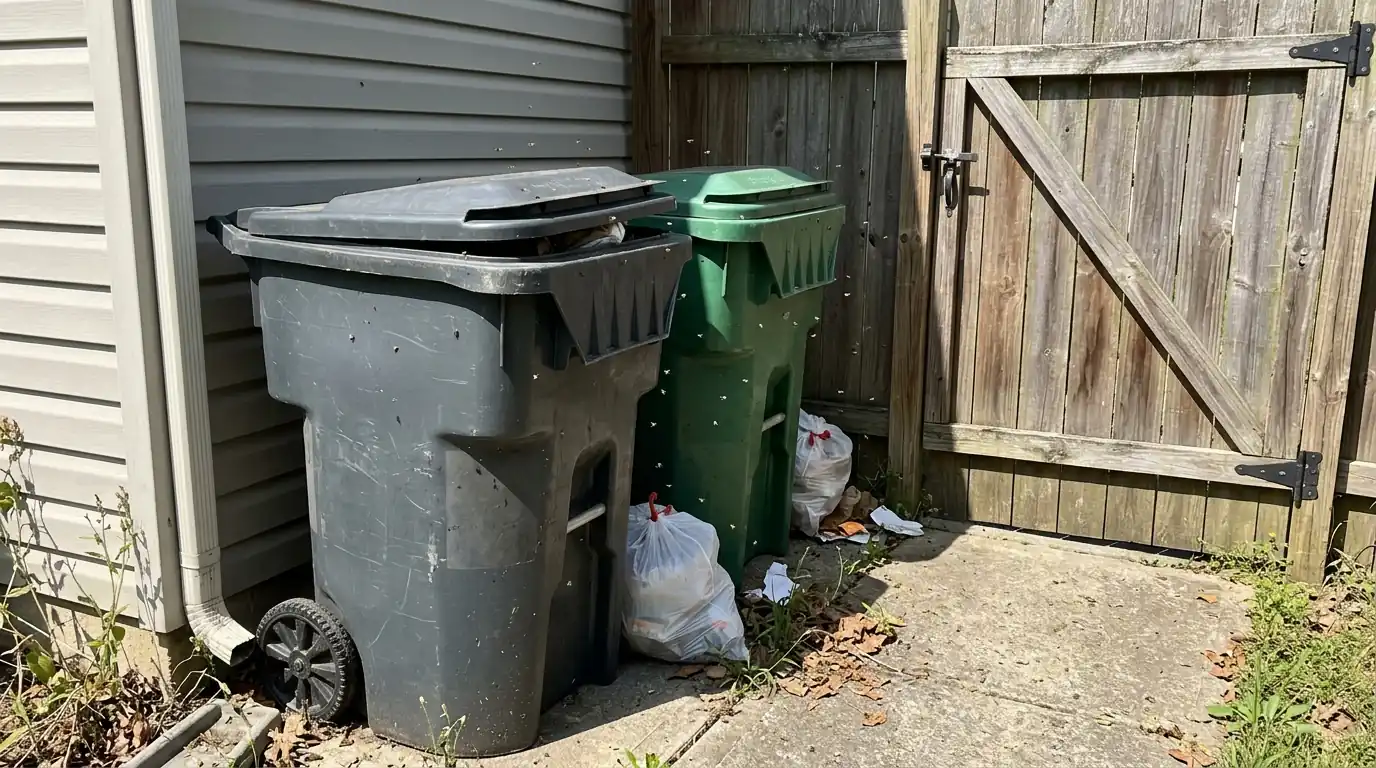
The big ones that get in and bounce off windows. They breed in garbage, pet waste, compost and anything organic staying wet outside, then come in through doors that do not seal and screens with gaps. Treatment pairs exterior work around bins and the harborage with entry fixes: a door sweep, a repaired screen, a self-closer on a back door. Where a commercial dumpster is the source, the honest answer is often a cleaning schedule change rather than more spray.
Drain and fruit flies
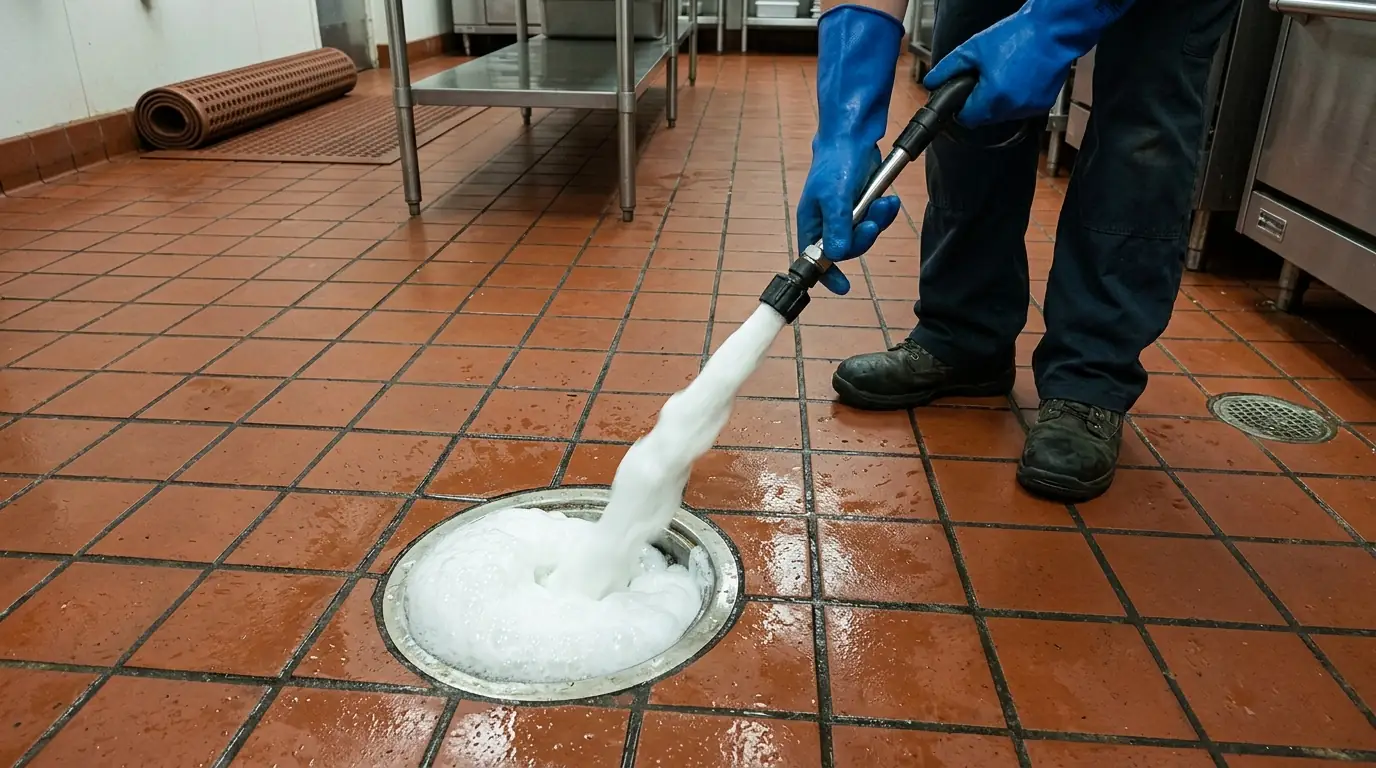
The small ones hovering near a sink, a floor drain or a fruit bowl. Drain flies breed in the biofilm lining a drain, which is why pouring bleach down it does nothing; the film survives and regrows in days. Treatment uses a foaming bio-enzyme product that scrubs the pipe wall, plus finding every drain in play, including the laundry, the condensate line and the one under the bar. Fruit flies breed in fermenting residue instead, so the fix is tracking down the forgotten bottle, bin or bag.
Commercial fly programs
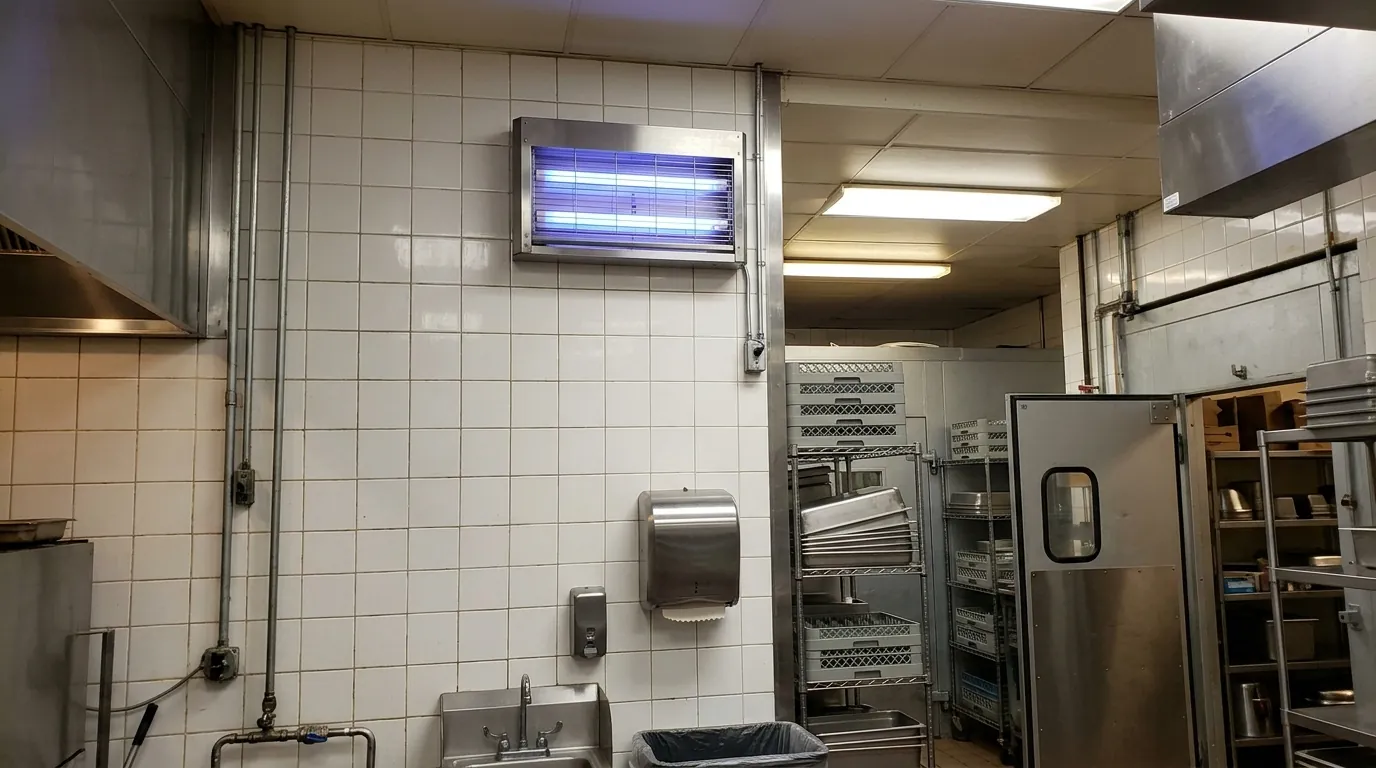
Food service is where this becomes a compliance problem, not a nuisance one. Programs combine drain service on a schedule, insect light traps placed where they catch rather than where they are visible to customers, door and dock sealing, and a written record each visit. We also flag the sanitation items driving it, because a trap full of flies every week is data about what is being missed rather than a job well done.
How a fly problem gets ended
Identify the fly
Size, behavior and where you see them narrow drain, fruit or house fly in seconds.
Find the breeding site
Drains, bins, fruit, pet areas, condensate lines and standing organic material all get checked.
Treat the source
Enzyme foaming on drains, direct treatment of harborage, and removal of the material where possible.
Close the entry
Door sweeps, screens and thresholds get flagged and treated as part of the job.
Follow up
A return visit confirms the source was the right one, because fly problems prove themselves fast.
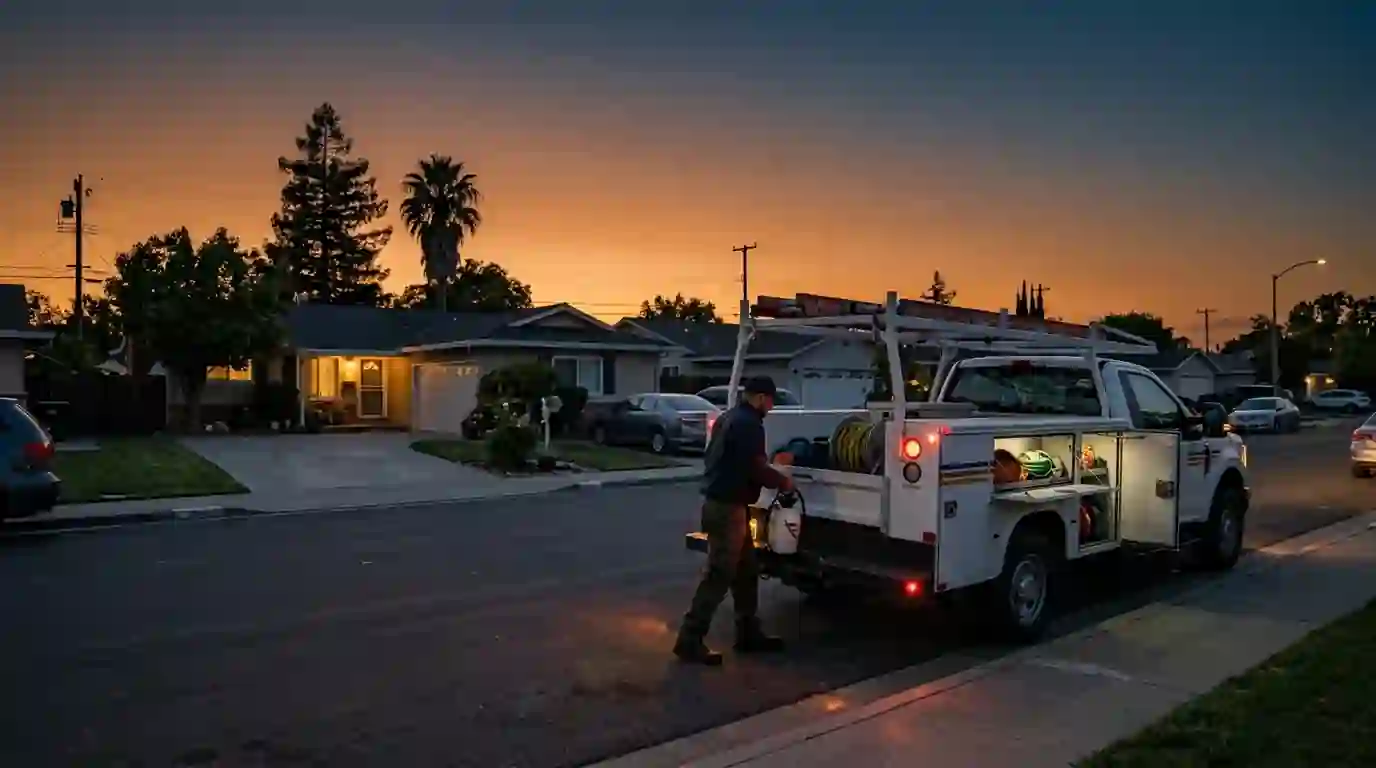
Flies back within a day of cleaning? The source is still breeding.
Call (669) 369-0489What we see around San Jose
San Jose's long warm season gives flies more generations per year than colder regions see, so a source left alone compounds quickly through summer and well into fall. The practical local pattern is backyard-driven: bins in full sun, fruit trees dropping windfall, and pet areas that stay damp from irrigation. Clearing fallen fruit alone ends a surprising share of the residential calls we take between June and October.
If you want the background: why Argentine ants keep coming back.