Roof rats
The county's most abundant rodent pest, moving along fences, branches and utility lines into attics.
Coverage
The county we work most, and the one whose pest pressure shapes everything else we do: roof rats in the canopy, Argentine ants everywhere, and termites in the older housing stock.
Local focus
Short answer
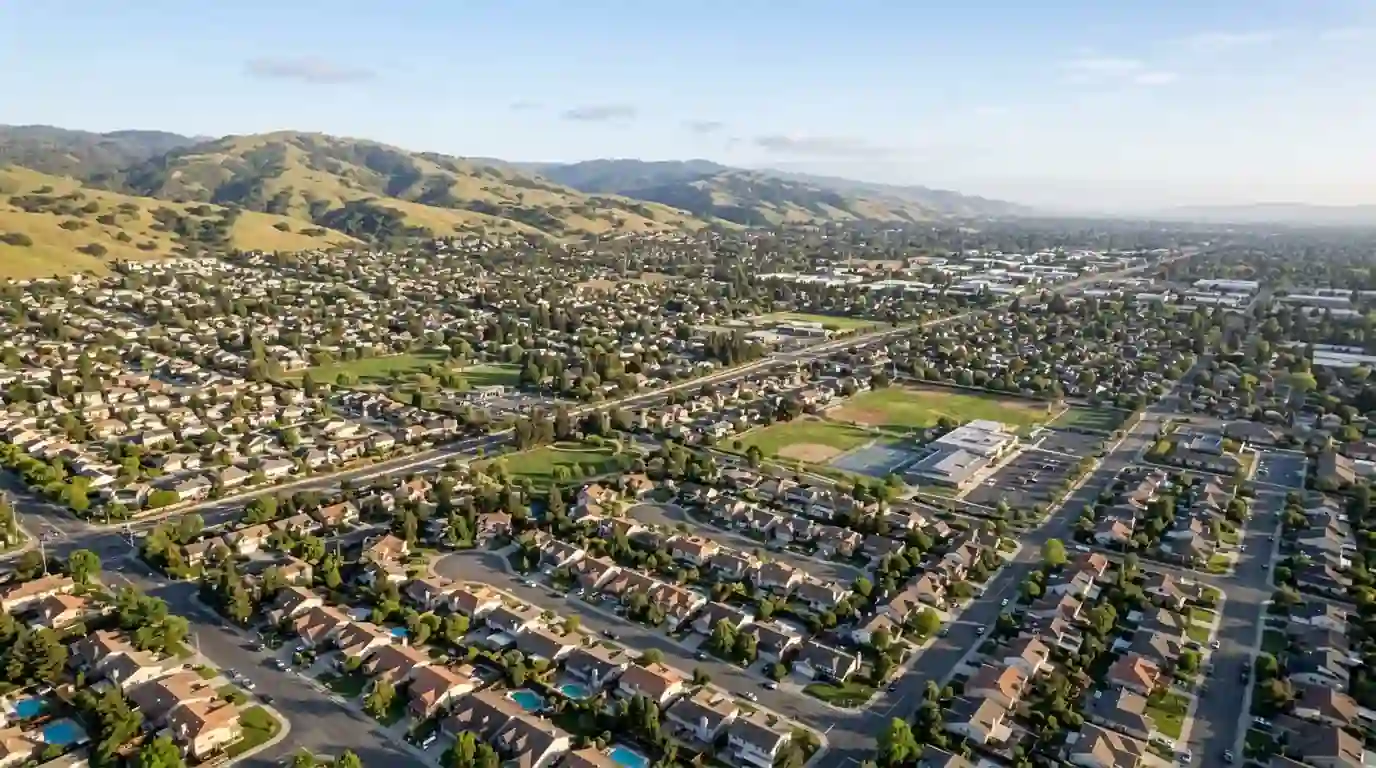
Pest control in Santa Clara County runs on the same catalog we use across the Bay Area, with the emphasis set by what this area actually produces: roof rats, Argentine ants and the conditions behind them. Phones are answered around the clock and crews route out from the San Jose service office.
Santa Clara County covers fifteen cities and about 1.78 million residents, and the county's own vector district tracks the same three commensal rodents we deal with daily: Norway rats, roof rats and house mice. The roof rat is by far the most abundant of them, which is why so much of our work here starts at a roofline.
Housing age drives the rest. Pre-war neighborhoods put framing close to soil and invite subterranean termites; orchard-era homes drop drywood frass from original framing; newer tracts trade those for ant pressure and rodent entry at vents and garage doors. Knowing which era a house belongs to tells a technician where to spend the first ten minutes.
What we see here
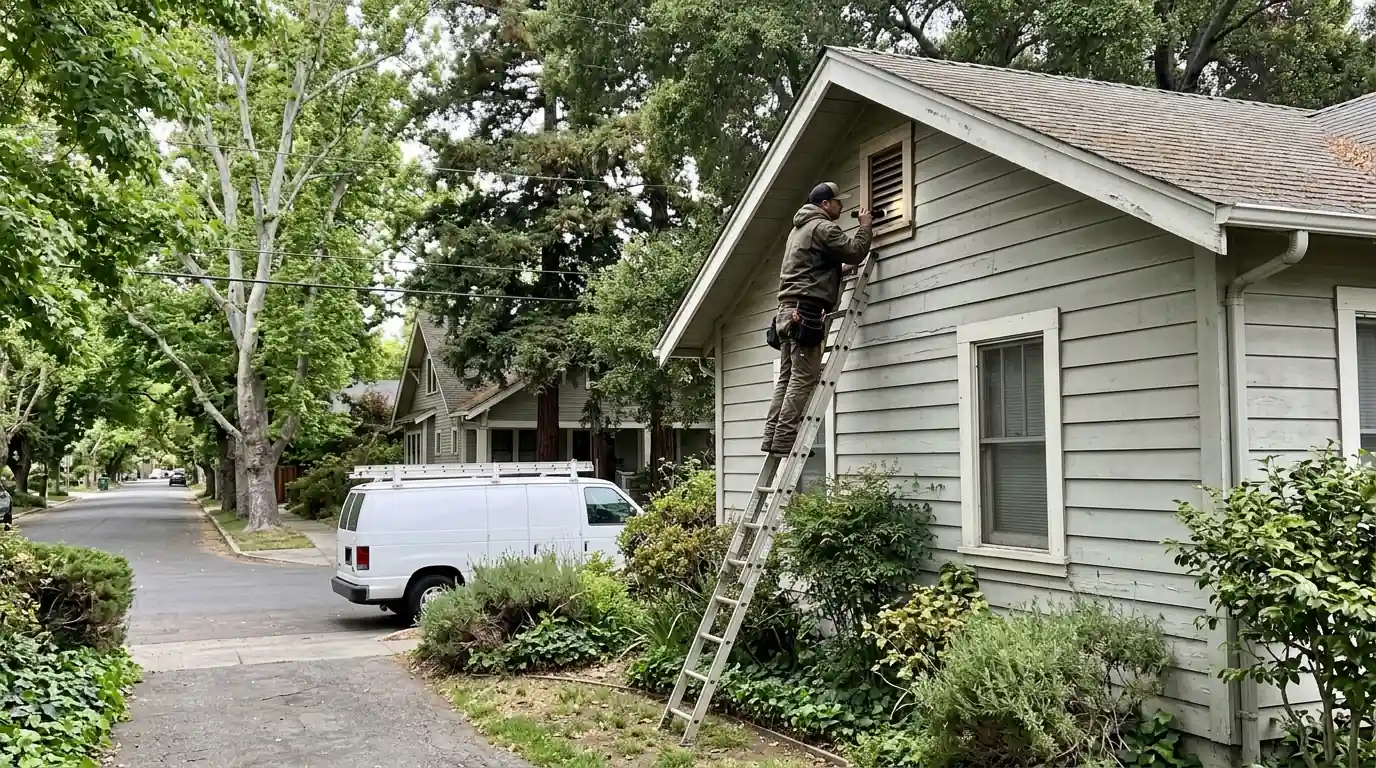
The county's most abundant rodent pest, moving along fences, branches and utility lines into attics.
Supercolonies running valley-wide, year-round, with no seasonal break in pressure.
Soil colonies working the older housing stock where framing sits close to grade.
High pressure across the county's apartments, rentals and food service.
On the ground
Crews run out of the San Jose service office, and routing is built around the day rather than a fixed territory, so a wasp nest or a biting-pest call gets moved up regardless of which part of the coverage area it sits in. Inspections and scheduled service book within a few days.
Coverage here takes in San Jose, Santa Clara, Sunnyvale, Mountain View, Cupertino, Campbell, Los Gatos, Saratoga, Los Altos and Milpitas. If you are just outside what is listed, call anyway and we will tell you plainly whether we can route to you rather than taking a booking we cannot keep.
Local detail
Pressure here never switches off, but it does move. Ants push indoors with the first sustained heat and again when irrigation changes in autumn. Rodent calls climb from late fall as the nights cool and attics look better than the yard. Termite swarmers show up after the first warm rains, which is when the phone rings with people holding a bag of wings. Wasp and yellow jacket calls peak in late summer, when colonies are largest and have switched to scavenging.
What that means practically is that the inspection you book in spring and the one you book in November look for different things first. We work the whole structure either way, but knowing the season tells a technician where the evidence is most likely to be fresh.
The county vector district serves an estimated 1.78 million residents across 15 cities, and the three commensal rodents it tracks, Norway rats, roof rats and house mice, are the same three that drive our rodent schedule. Roof rats dominate, which is why so many Santa Clara County calls end with sealing work at the roofline rather than just traps in the attic.
Straight answers
The main cities and the foothill towns, yes, with crews routed from the San Jose service office. Call with the address and you will get a straight answer rather than a maybe.
Roof rats, by a wide margin, followed by Argentine ants. The county's own vector district names the roof rat as the most abundant rodent pest, and our schedule reflects that.
Very, especially in the pre-war and orchard-era neighborhoods where framing sits close to soil or is original old-growth lumber. Plenty of inspections here find both subterranean and drywood evidence.
Phones are answered around the clock and urgent work goes first. For most of the county, inspections and scheduled service book within a few days.
One number, answered around the clock, and a written note on what was found.
Call (669) 369-0489 any hourWhere to find us