
Short answer
Fabric pests in a San Jose home are clothes moths or carpet beetles, and both feed on natural fibers: wool, silk, cashmere, felt, feathers and animal hair. They work in undisturbed places, under furniture, in stored boxes, along rug edges, so treatment starts by finding the source rather than by spraying a closet.
The first job is separating this from a pantry problem, because the moths look similar across a room and the treatments do not overlap at all. Pantry moths are in your flour and cereal; clothes moths are in your wool. If both are flying, you have two separate problems.
Fabric pests avoid light and movement, so the damage shows up in the parts of a home nobody disturbs: under a sofa, beneath a rug edge, inside a stored suit bag, in the back corner of a closet. That is also why the damage is often well advanced before anyone notices it, and why the inspection matters more than the product.
What this work costs
These are inspection-heavy jobs priced by how much storage and floor area has to be worked through.
| What moves the price | How it moves it |
|---|---|
| Rooms affected | A single closet is quick; a house with several wool rugs is not. |
| Storage volume | Boxed clothing, attic storage and under-bed bins all have to be checked. |
| Rug involvement | Large wool or antique rugs take careful edge and underside work. |
| Monitoring period | Follow-up visits to read pheromone monitors add to a single visit. |
| Cleaning needs | Laundering and professional cleaning of items is your cost, not ours, and we say which items need it. |
| Duct and lint harborage | Carpet beetles in ducts or lint traps widen the scope. |
The quote follows the inspection, and where a thorough clean-out would handle it on its own, you will be told that.
Clothes moths
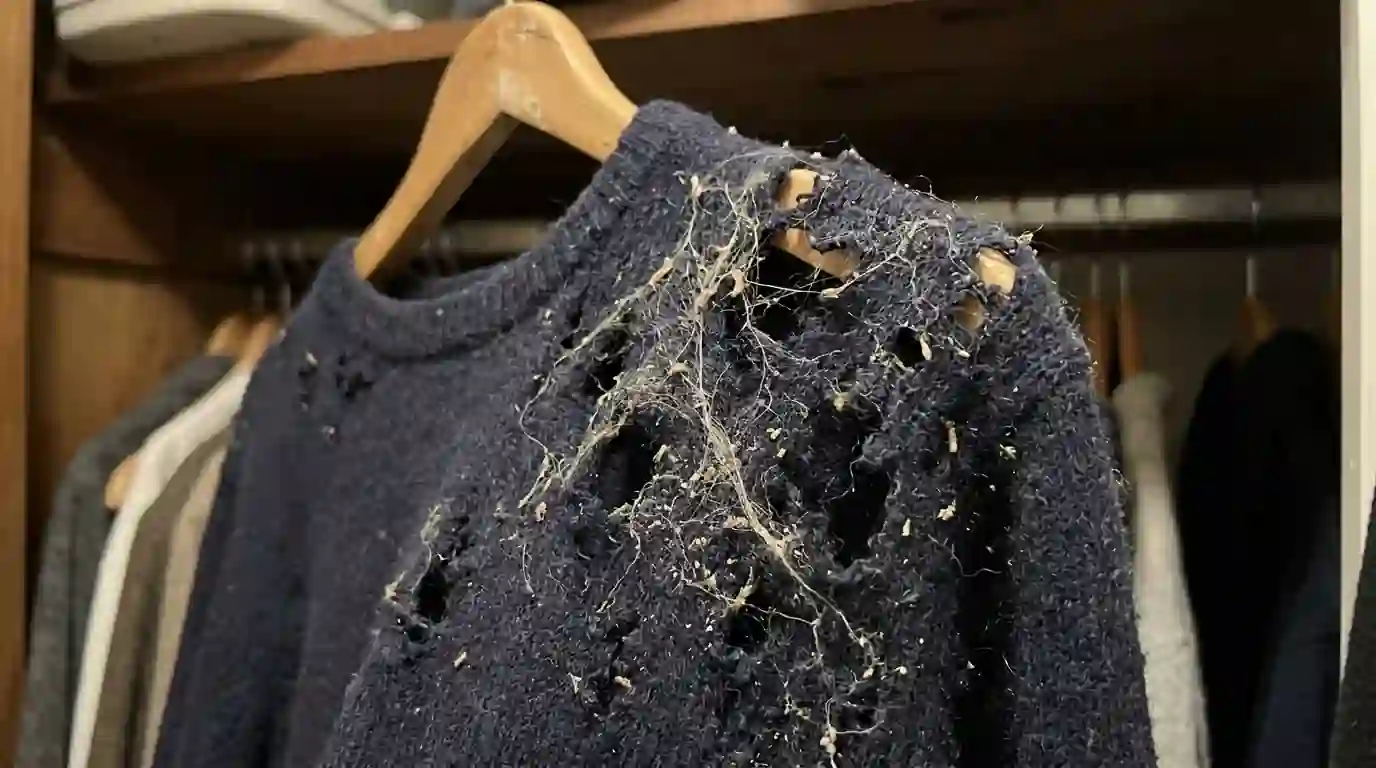
Small, plain buff-colored moths that avoid light and tend to run or flutter weakly rather than fly at a lamp. The damage is done by larvae, which graze irregular holes in wool and leave silk webbing or small cases behind. Treatment covers the affected closet or room, with attention to floor edges, baseboard gaps and the undersides of stored items. Infested garments go through hot laundering or cleaning, and a pheromone monitor confirms whether adults are still emerging after treatment.
Carpet beetles
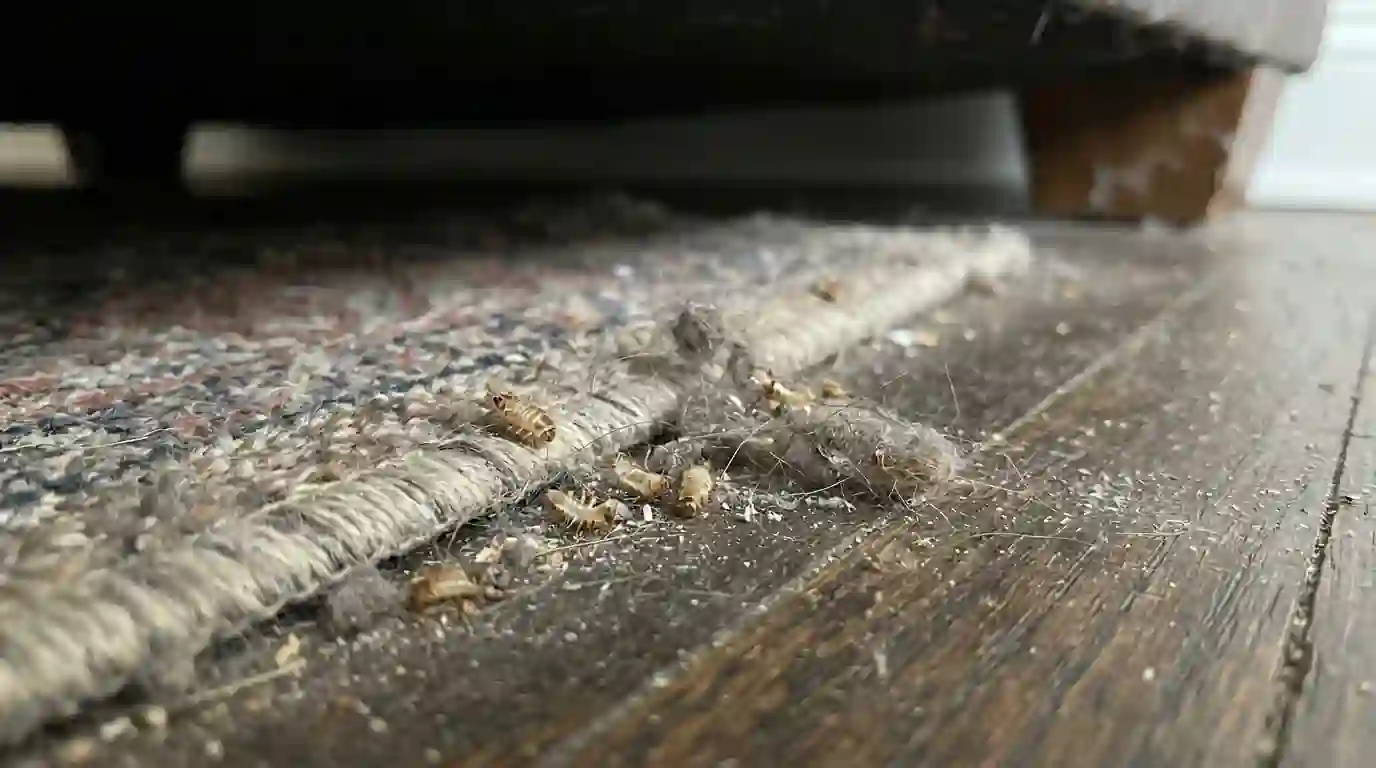
More common than clothes moths in most homes and frequently misdiagnosed. The adults are tiny, rounded and mottled, often found on window sills; the larvae are bristly and shed golden skins that are usually the first thing people find. They work rug edges, under furniture, in heating ducts and anywhere lint and pet hair collect. Treatment pairs thorough vacuuming of the harborage with targeted work along edges and voids, and the shed skins give us a map of where they have been.
How a fabric pest problem gets cleared
Identify the pest
Clothes moth or carpet beetle, and fabric pest rather than pantry pest.
Find the source
Stored wool, rug edges, under furniture, ducts and lint traps all get checked.
Clear and clean
Infested items get laundered hot, dry cleaned or discarded, and harborage gets vacuumed out.
Treat the harborage
Edges, voids and the affected closet or room get targeted treatment, not fabric itself.
Monitor
Pheromone monitors show whether adults are still emerging over the following weeks.
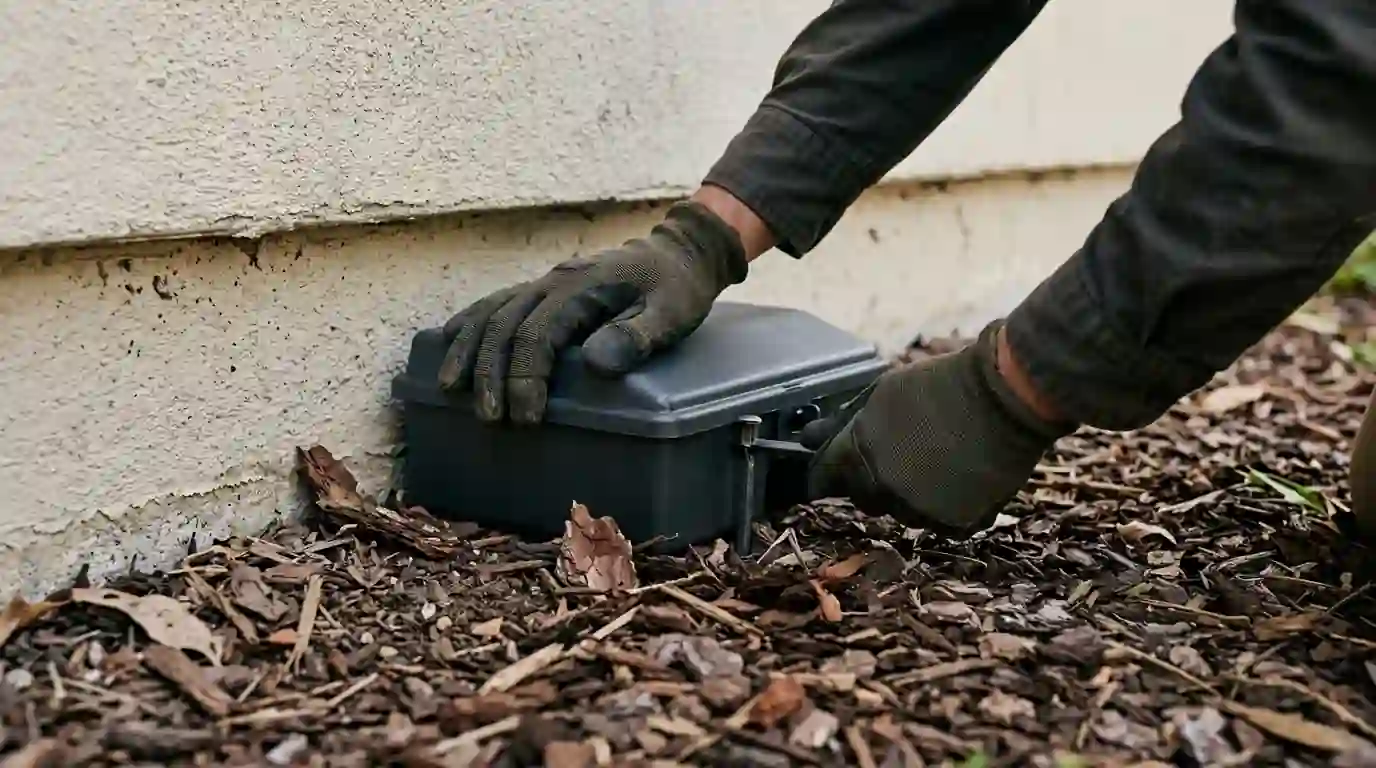
Finding holes in wool you only wear in winter? Worth checking now.
Call (669) 369-0489What we see around San Jose
San Jose's mild winters mean a lot of wool, cashmere and heavy coats sit stored for most of the year, which is exactly the undisturbed condition fabric pests want. Add antique and wool area rugs, common in the older neighborhoods, and the result is damage discovered months after it started, usually when something is pulled out for a trip. Checking stored wool at the end of each season is the cheapest prevention there is.
Worth reading alongside this: why Argentine ants keep coming back.