Roof rats
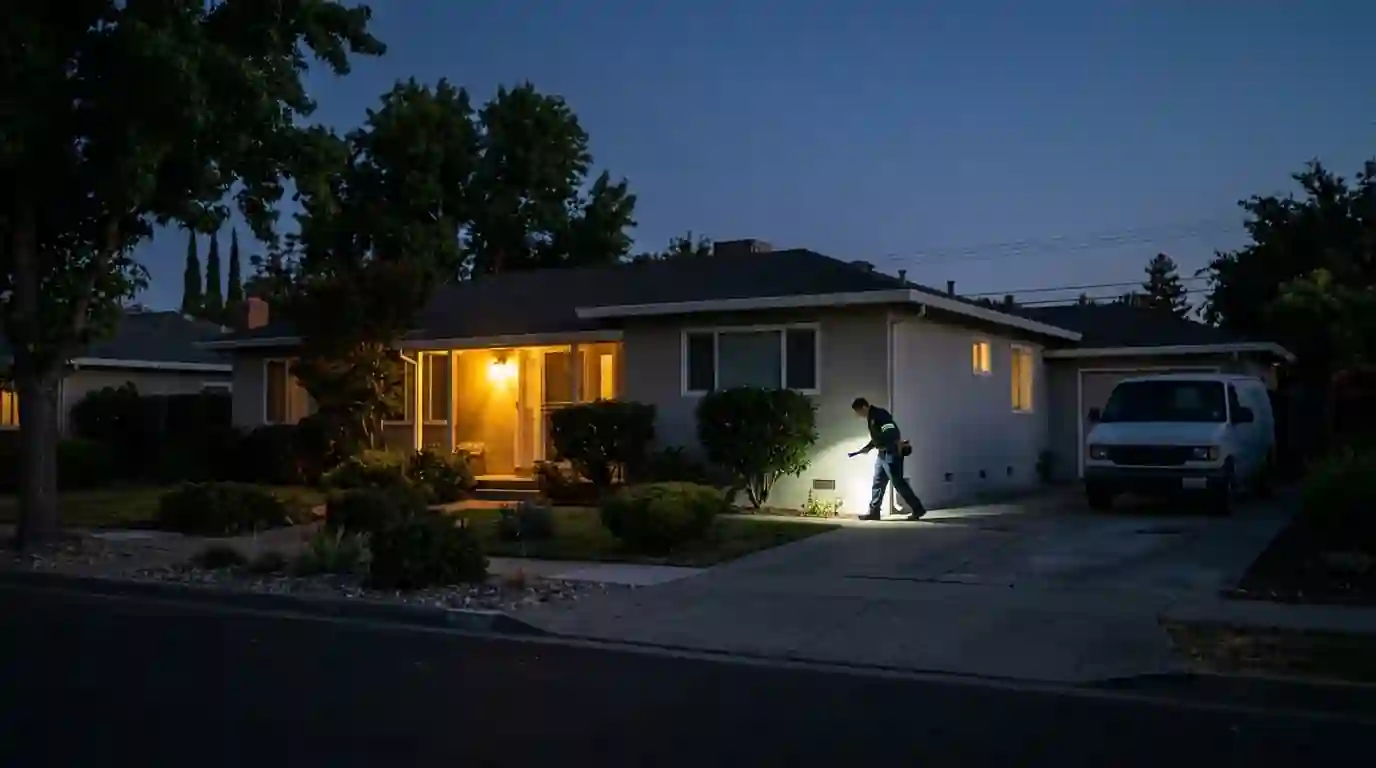
Canopy above and crawl space vents below give them two routes into the same house.
Coverage
San Mateo work sits squarely in the Peninsula pattern: older housing, damp holding in crawl spaces, and rodents working both the roofline and the ground.
Local focus
Short answer
Pest control in San Mateo runs on the same catalog we use across the Bay Area, with the emphasis set by what this area actually produces: roof rats, subterranean termites and the conditions behind them. Phones are answered around the clock and crews route out from the San Jose service office.
Much of the housing here predates the seventies, with raised foundations, wood siding and mature trees reaching the roof. That gives rodents routes at both ends of a house and gives subterranean termites the damp soil contact they want.
Moisture is the Peninsula variable. Crawl spaces stay damp longer here than inland, ventilation that would be adequate in the South Bay often is not, and the pests that follow damp get a longer working season every year.
What we see here
Canopy above and crawl space vents below give them two routes into the same house.
Damp soil against older framing is the standing invitation here.
Coastal damp keeps crawl spaces and bathrooms attractive most of the year.
Creek corridors and older decks bring skunks and opossums into yards.
On the ground
Crews run out of the San Jose service office, and routing is built around the day rather than a fixed territory, so a wasp nest or a biting-pest call gets moved up regardless of which part of the coverage area it sits in. Inspections and scheduled service book within a few days.
Coverage here takes in the older residential neighborhoods, the blocks toward the bay and the streets running up toward the ridge. If you are just outside what is listed, call anyway and we will tell you plainly whether we can route to you rather than taking a booking we cannot keep.
Local detail
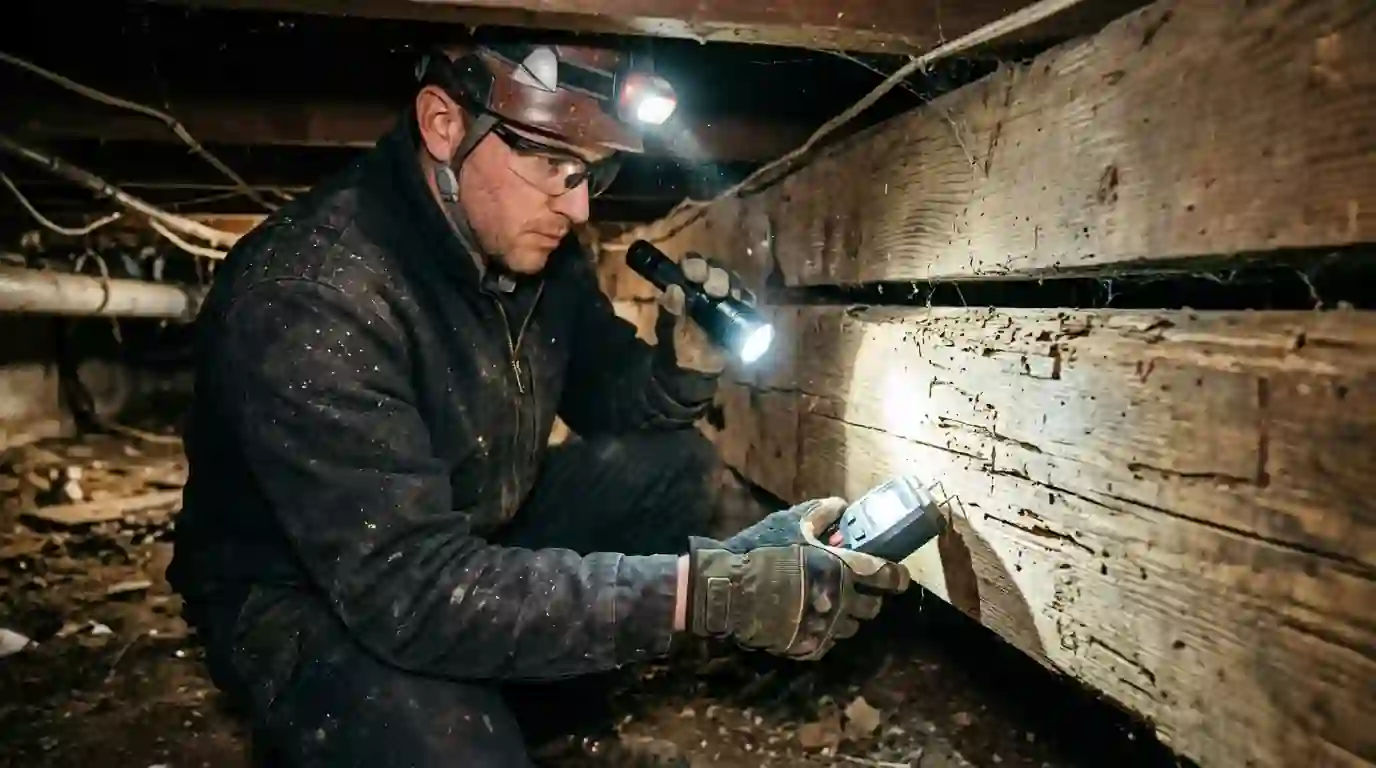
On Peninsula jobs the moisture section of an inspection often matters more than the pest findings. Framing that stays damp gives termites, decay fungi and wood-boring beetles a longer window to work the same wood.
Correcting the damp, drainage, grading, ventilation, a leaking hose bib, is usually what stops a problem repeating two years after the treatment.
Peninsula housing gives rodents two routes at once: mature canopy reaching the roofline above, and raised foundations with aging crawl space vents below. We work both ends on the same visit here as a matter of course, because sealing one and leaving the other simply relocates the entry point rather than closing it. Coastal damp adds a second layer, holding moisture in crawl spaces long enough that wood-destroying organisms and moisture pests turn up on the very same inspection.
Straight answers
Yes, it is part of the standard routing out of the San Jose service office.
Most of the useful evidence is there: mud tubes on piers, damaged sill plates, moisture conditions. An inspection that skips it is not worth much.
The inspections overlap and both often turn up. Treatment is quoted separately because they are different jobs.
Clear gutters, aim sprinklers off the wall, keep crawl space vents unobstructed and fix slow leaks. Those four do more than any product.
One number, answered around the clock, and a written note on what was found.
Call (669) 369-0489 any hourWhere to find us