Roof rats
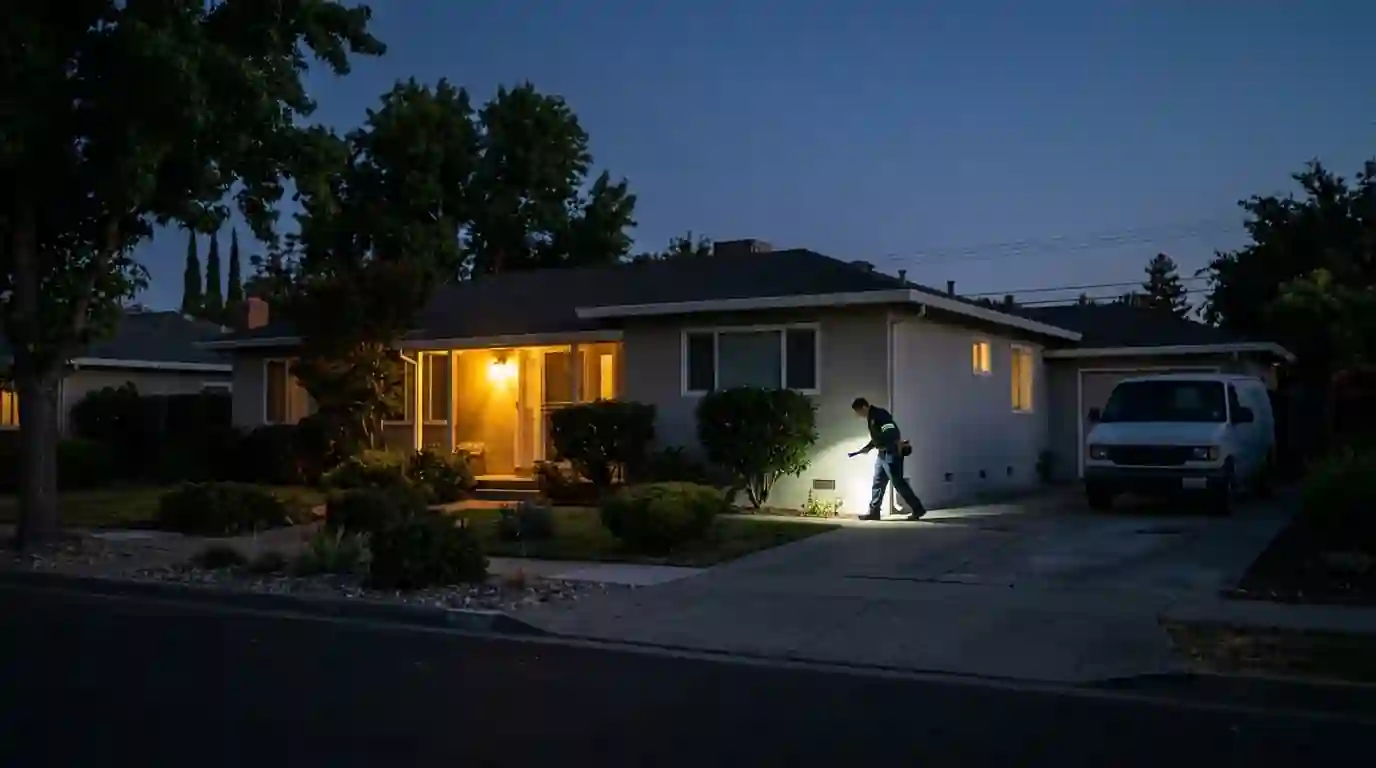
Deep canopy reaching rooflines, with aging vents providing the way in.
Coverage
Menlo Park has the combination that keeps both halves of this trade busy: older housing with original framing, and tree cover that reaches nearly every roofline.
Local focus
Short answer
Pest control in Menlo Park runs on the same catalog we use across the Bay Area, with the emphasis set by what this area actually produces: roof rats, subterranean termites and the conditions behind them. Phones are answered around the clock and crews route out from the San Jose service office.
Period and mid-century homes here sit on raised foundations with crawl spaces that have been accessible for decades. Subterranean activity turns up regularly on inspections, and the moisture conditions behind it are usually visible in the same crawl space.
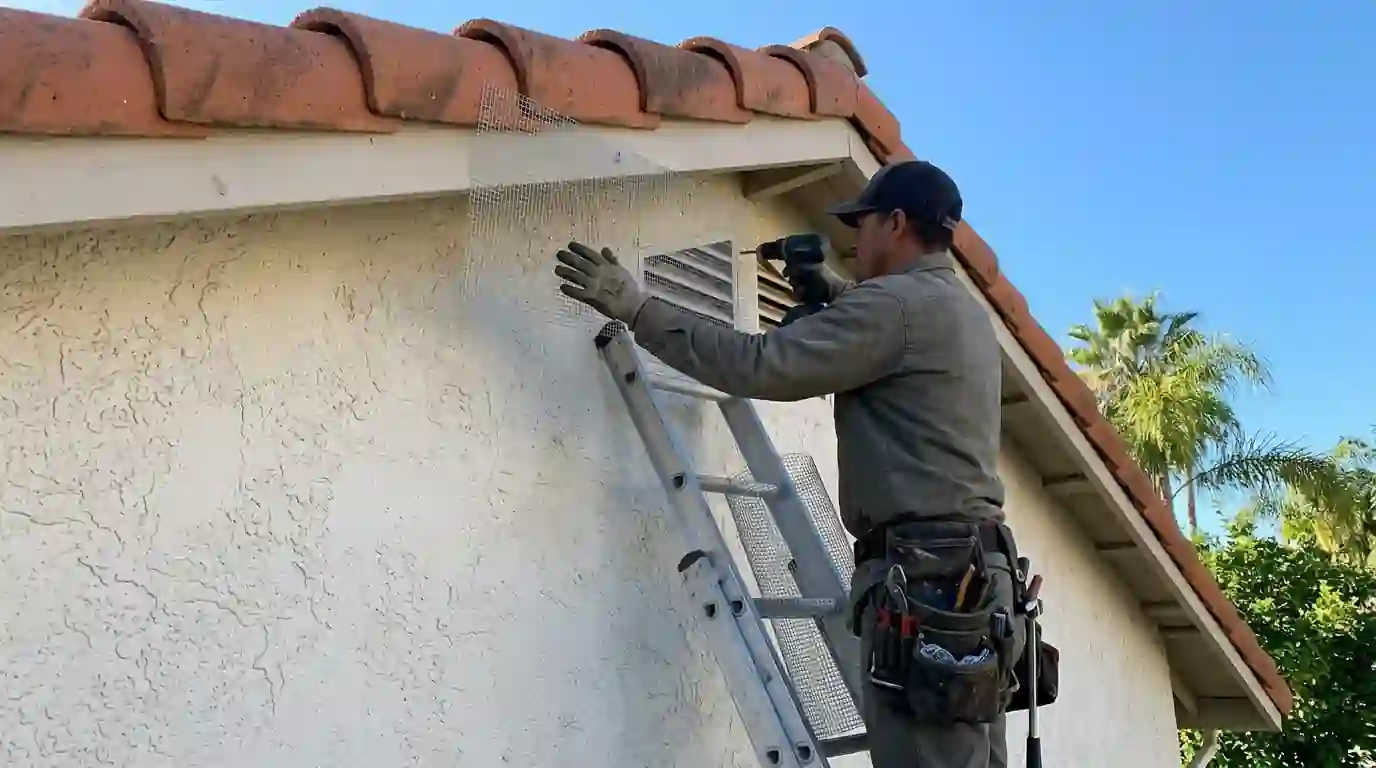
The canopy does the rest. Deep tree cover gives roof rats a route that bypasses the ground entirely, so sealing eave lines and vents matters more here than perimeter work at grade.
What we see here
Deep canopy reaching rooflines, with aging vents providing the way in.
Older framing with long-standing soil contact under raised foundations.
Damp framing from old leaks and heavy shade in the usual spots.
Creek corridors bring raccoons, skunks and opossums through yards after dark.
On the ground
Crews run out of the San Jose service office, and routing is built around the day rather than a fixed territory, so a wasp nest or a biting-pest call gets moved up regardless of which part of the coverage area it sits in. Inspections and scheduled service book within a few days.
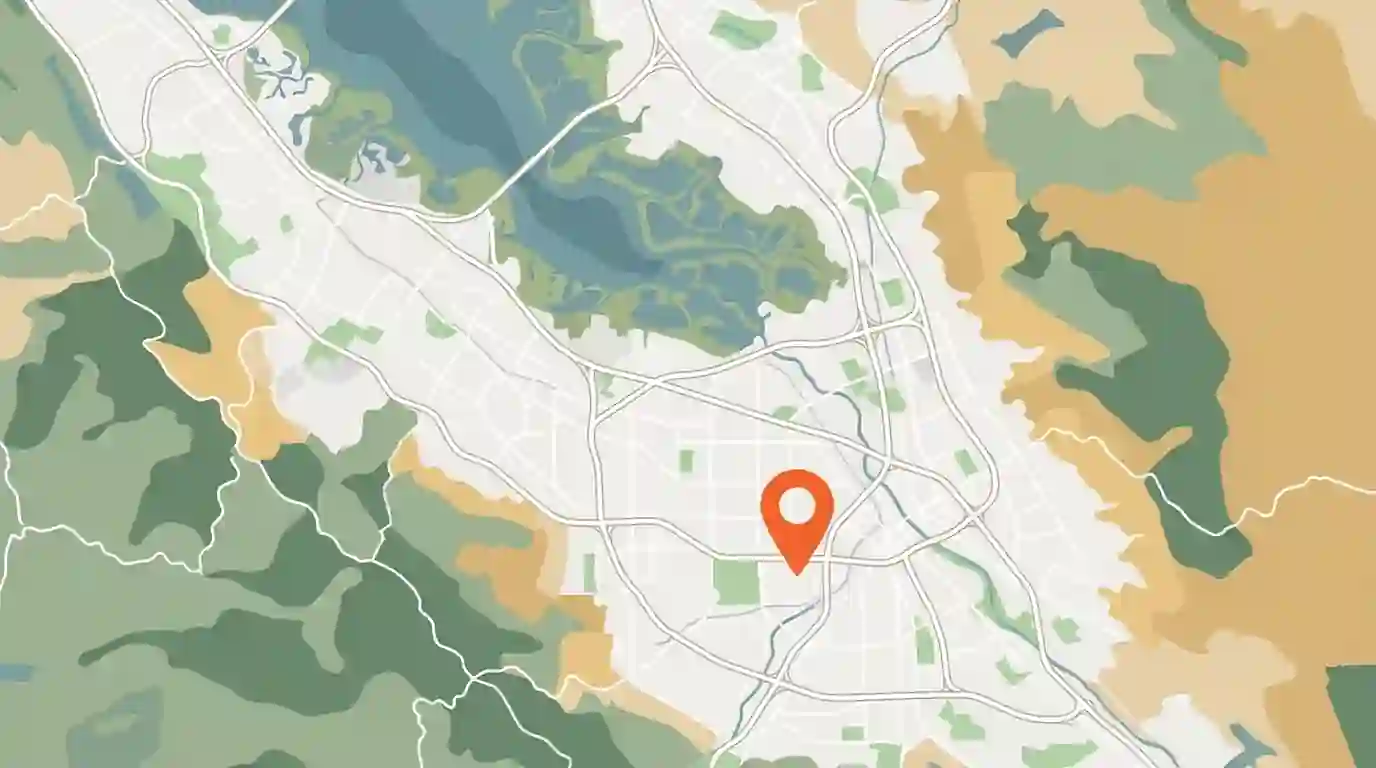
Coverage here takes in the older residential streets, the blocks near the creek corridors and the neighborhoods toward the ridge. If you are just outside what is listed, call anyway and we will tell you plainly whether we can route to you rather than taking a booking we cannot keep.
Local detail
Multiple additions, original framing, short clearances and finished lower levels all slow a proper inspection, and all are normal in this housing. Findings get missed when somebody is working to a twenty-minute visit.
Where areas are genuinely inaccessible, a good report lists them as inaccessible rather than treating them as clear, so you know where the uncertainty sits.
Older Peninsula housing under deep canopy is the setup that keeps roof rat and termite work arriving on the same inspection. The route in is overhead, the damage is usually underfoot, and the moisture conditions in the crawl space explain most of what is happening above it. That is why inspections here cover the roofline and the crawl space rather than one or the other.
Straight answers
Original framing, additions and tight clearances. Most of what matters is under the floor and in the attic, and reading that properly takes time.
On these streets, yes. Branches and utility lines put them on the roof, and aging vents let them in from there.
Yes, and in shaded, damp-framed homes they are a regular finding. Locating the nest and fixing the moisture is the job.
Access is discussed before anything happens rather than after, and local treatment is drilled and injected rather than opened up wholesale.
One number, answered around the clock, and a written note on what was found.
Call (669) 369-0489 any hourWhere to find us