Short answer
Carpenter ants in a San Jose home are a moisture problem wearing an insect costume. They excavate damp, softened wood rather than eating it, so the fix is finding the nest, treating it directly, and identifying the leak or condensation that softened the wood. Spraying the trails kills foragers and leaves the colony working behind the wall.
These are the biggest ants most people ever see indoors, a quarter inch and up, and they move with purpose rather than in the dense trails smaller species make. They chew smooth, clean galleries through wood that has been wet at some point: a window frame below a failed seal, a sill under a slow plumbing leak, the fascia behind a dripping gutter, a fence post or stump in the yard that fed the parent colony.
The telltale they leave is frass, but not the pellet frass of drywood termites. Carpenter ant frass looks like coarse pencil shavings mixed with insect parts, pushed out of slit-like openings. Finding where it lands is usually how we find the nest, and the nest is the only thing worth treating.
What moves the price on carpenter ant work
The work is finding and dosing nests, so price tracks how hard the nest is to locate and reach.
| What moves the price | How it moves it |
|---|---|
| Nest accessibility | A nest in exposed crawl space framing is cheaper to treat than one behind finished tile. |
| Number of nests | Satellite colonies plus an outdoor parent nest means multiple treatment points. |
| Locating time | Some nests reveal themselves in minutes; others take evening trail observation. |
| Structure size | More framing, more windows and more roofline means more inspection surface. |
| Moisture repairs | We flag the source; carpentry and plumbing repairs are separate trades and separate costs. |
| Follow-up visits | Jobs with an outdoor parent colony usually need a verification return. |
No published local range covers carpenter ant work specifically, so the quote follows the inspection rather than an average.
Moisture-wood nest removal
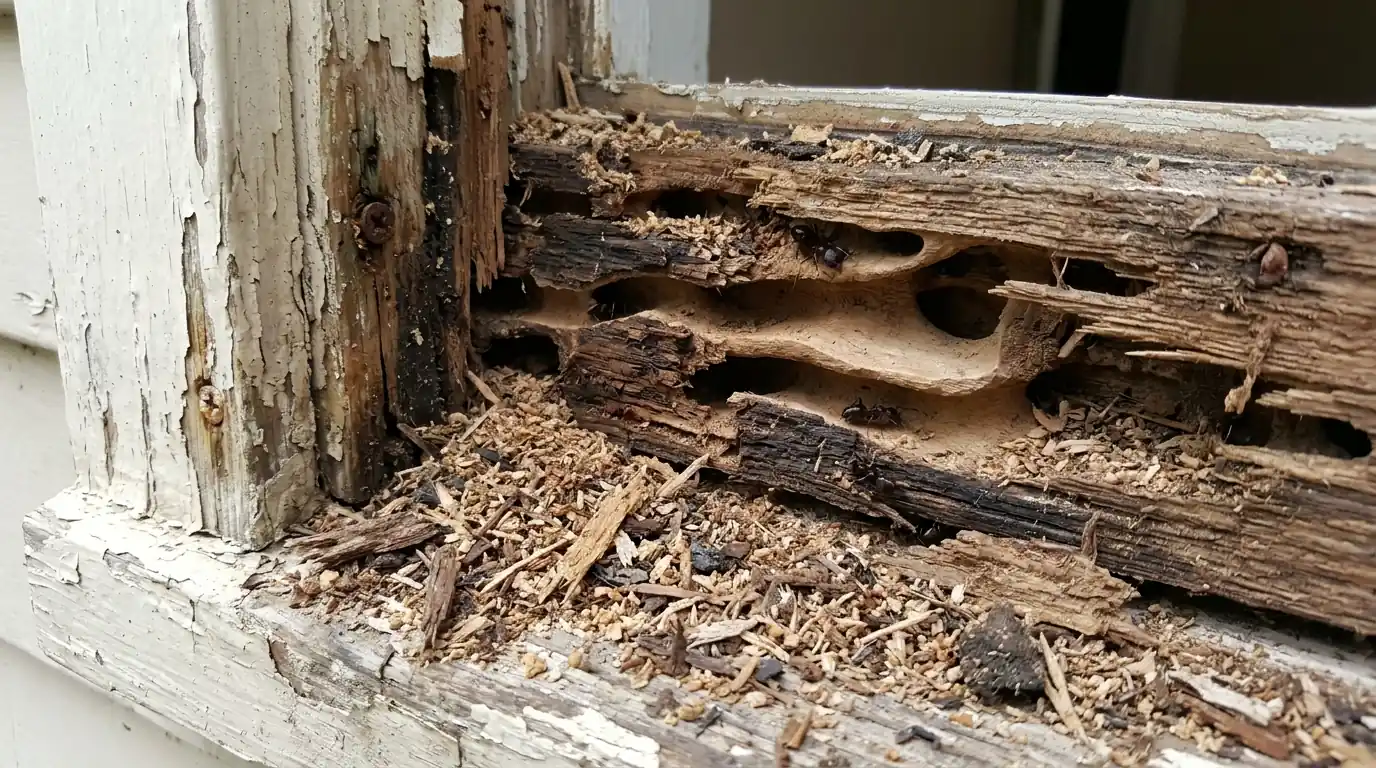
The nest is almost always in wood that got wet and stayed wet. We follow trails at night when foraging peaks, tap suspect framing for the hollow sound galleries make, and check the usual suspects: window and door frames, the sill under a bathroom, fascia behind gutters, the band joist above a damp crawl space. Treatment goes into the galleries directly rather than onto surfaces, and we point out the leak or ventilation problem that made the wood habitable, because a treated nest in wood that stays wet becomes a new nest in eighteen months.
Satellite colony tracing
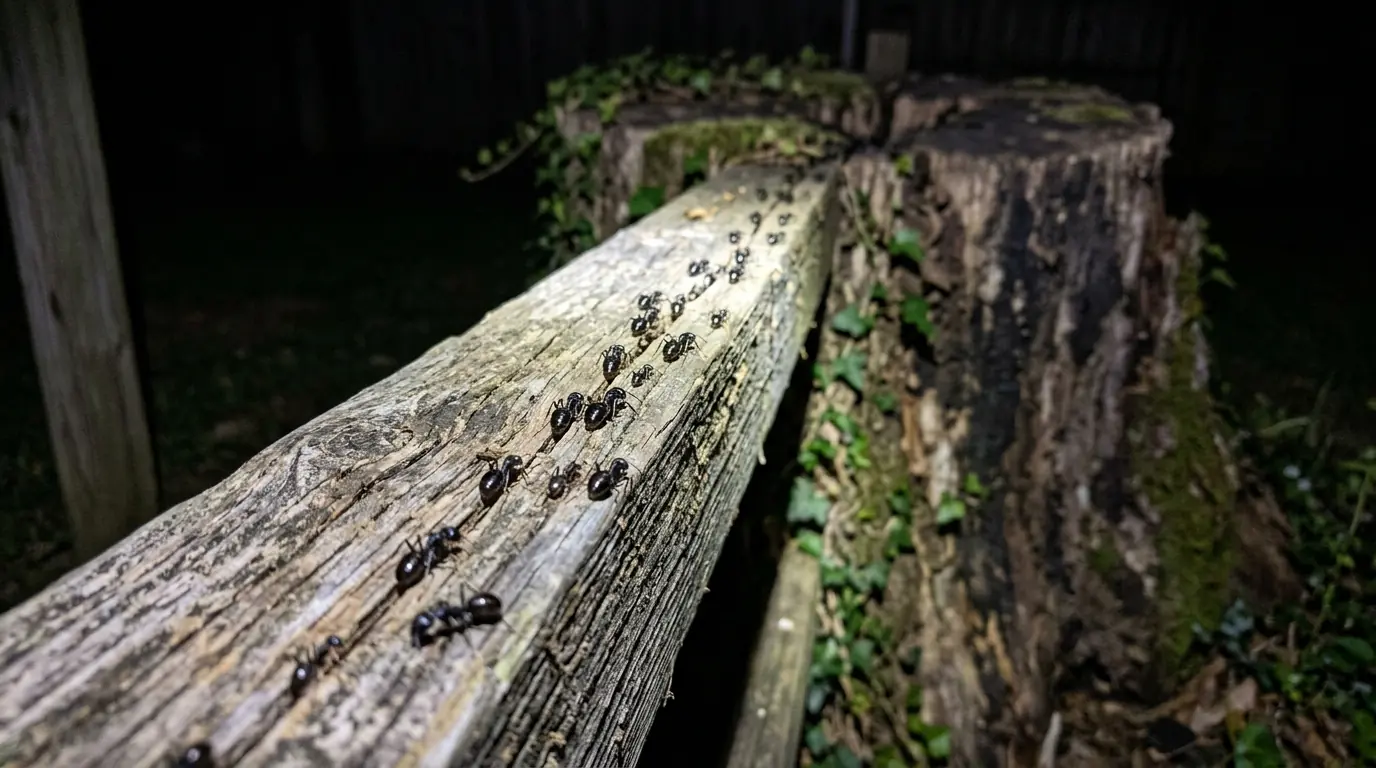
Mature carpenter ant colonies split. The parent nest with the queen often sits outdoors in a stump, a woodpile or a tree, while satellite nests of workers and older larvae live inside the structure, connected by trails along fence lines, utility lines and branches. Treating the indoor satellite without finding the parent means a steady resupply. We trace the outdoor connection, treat both ends, and tell you which branches, firewood stacks or stumps are the standing invitation.
How we find the nest
Trail and frass read
We work from where frass lands and where ants travel, not from a standard perimeter route.
Locate the nest
Tapping, probing and night observation narrow it to the actual galleries.
Check the moisture
The leak, condensation or grading problem that softened the wood gets identified.
Treat nest and satellites
Direct gallery treatment plus the outdoor parent connection where one exists.
Verify
A follow-up confirms the trails are gone and nothing new is pushing frass out.
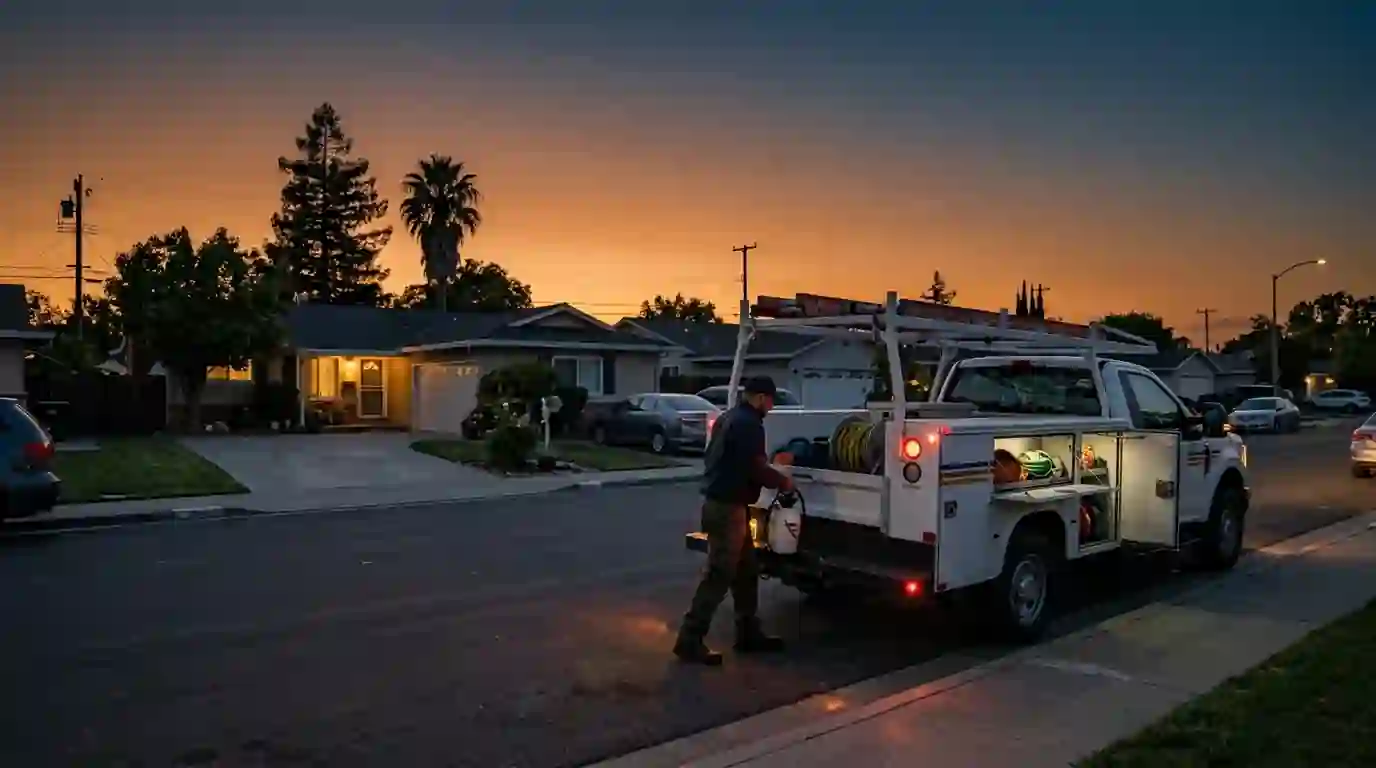
Sawdust piling up again under the same window? Let us find the nest.
Call (669) 369-0489What we see around San Jose
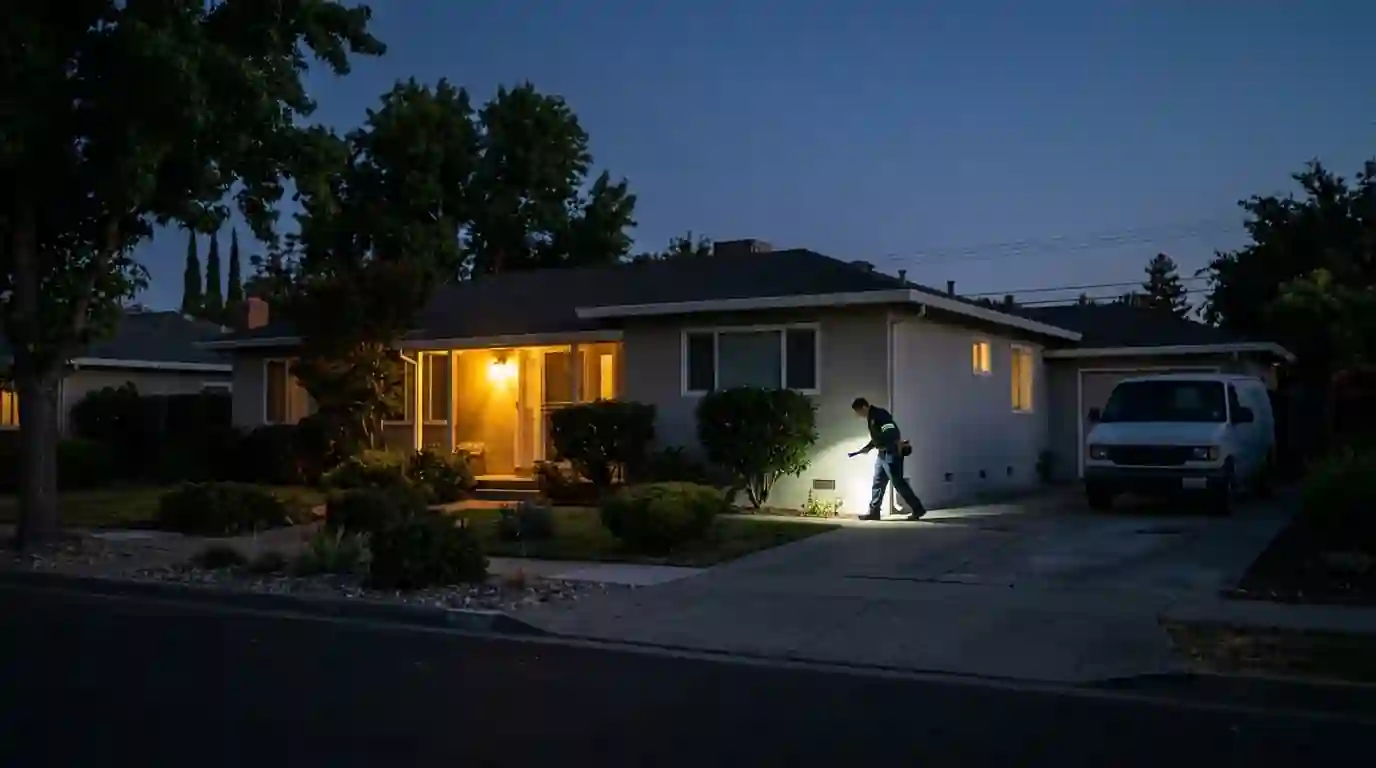
Carpenter ant calls in San Jose cluster in older homes and in houses with a moisture history: a roof valley that leaked one winter, a bathroom that vented into a wall for years, fascia behind a gutter that overflowed every storm. Most ants people see here are a different, much smaller species, so the first job on these visits is confirming which you actually have. Size, nighttime foraging and coarse frass settle it quickly, and the answer changes the entire treatment.
If you want the background: why Argentine ants keep coming back.