Short answer
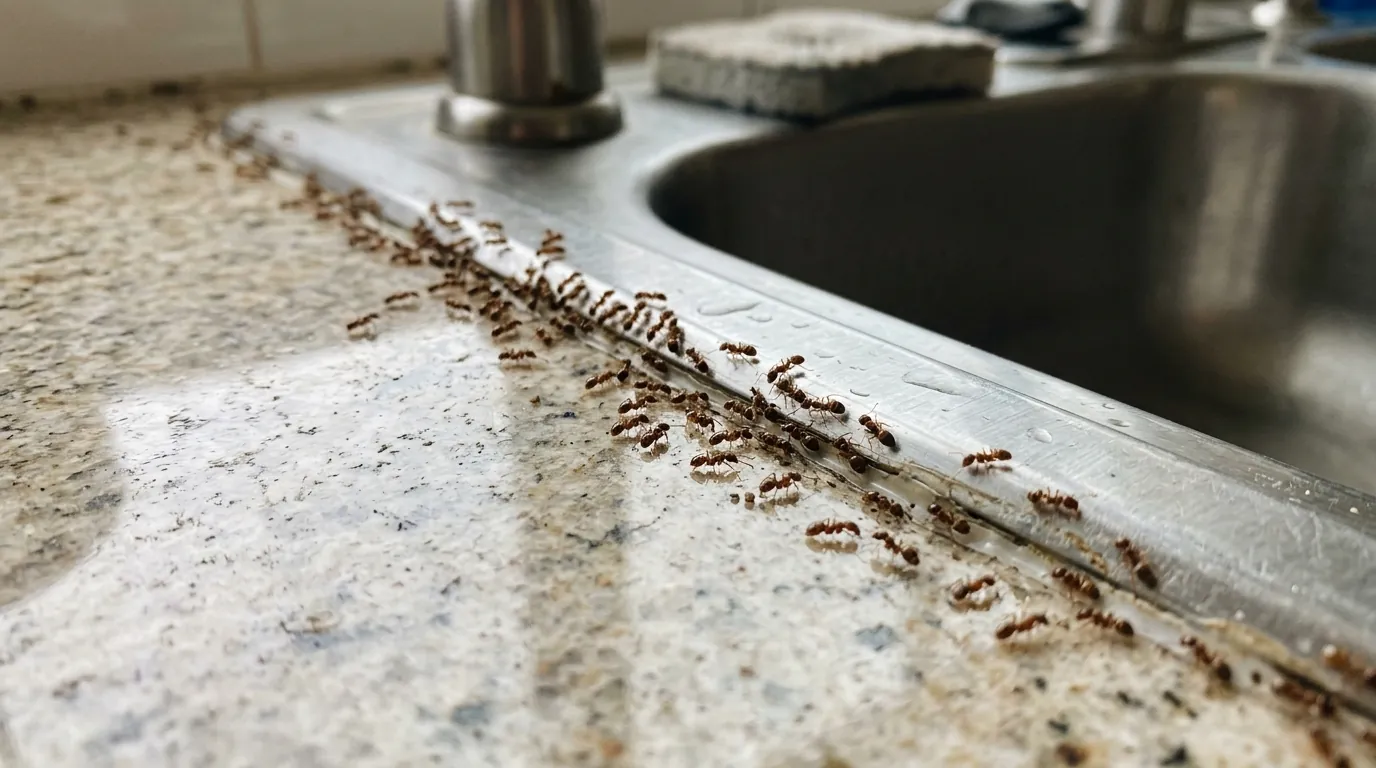
Argentine ants run linked supercolonies across the Santa Clara Valley year-round, so the trail in your kitchen is one branch of a network that extends for blocks. Repellent sprays kill foragers and push the rest into new entry points. Non-repellent treatment and baiting, which workers carry back to the colony, are what actually reduce it.
Most ant species defend territories against their own kind, which naturally limits colony size. Argentine ants in California do not: separate nests recognize each other as kin and cooperate, forming a single enormous network with many queens. The practical result is that the population pressing on your house has no edge you can find and no season when it goes away.
Why the spray under your sink makes it worse
Over-the-counter ant sprays are repellent by design. They create a barrier ants avoid, which sounds useful and is the opposite of what you want against a supercolony.
- You kill foragers, not the colony. The ants on your counter are a tiny fraction of the network, and they are replaceable within days.
- The trail reroutes. Repellent residue pushes the supply line to a new entry point, which is why one trail often becomes three.
- Bait stops working. Ants avoiding a treated area will not take bait placed in it, so spraying before a professional visit actively sets the treatment back.
That last point is the one worth remembering. If you have a visit booked, the single most helpful thing you can do is stop spraying and wipe trails with soapy water instead.
What actually reduces the population
Treatment that works with the ants' behavior rather than against it. Non-repellent materials are undetectable to the ants, so foragers walk through treated zones, pick up the dose and carry it back into the nest, sharing it through normal food exchange. Baits do the same thing more slowly and more thoroughly.
Expect activity to look worse for a day before it gets better. Bait attracts foragers, so a heavier trail right after placement is the treatment working, not failing. The trail then thins over several days and stops.
The outdoor half nobody does
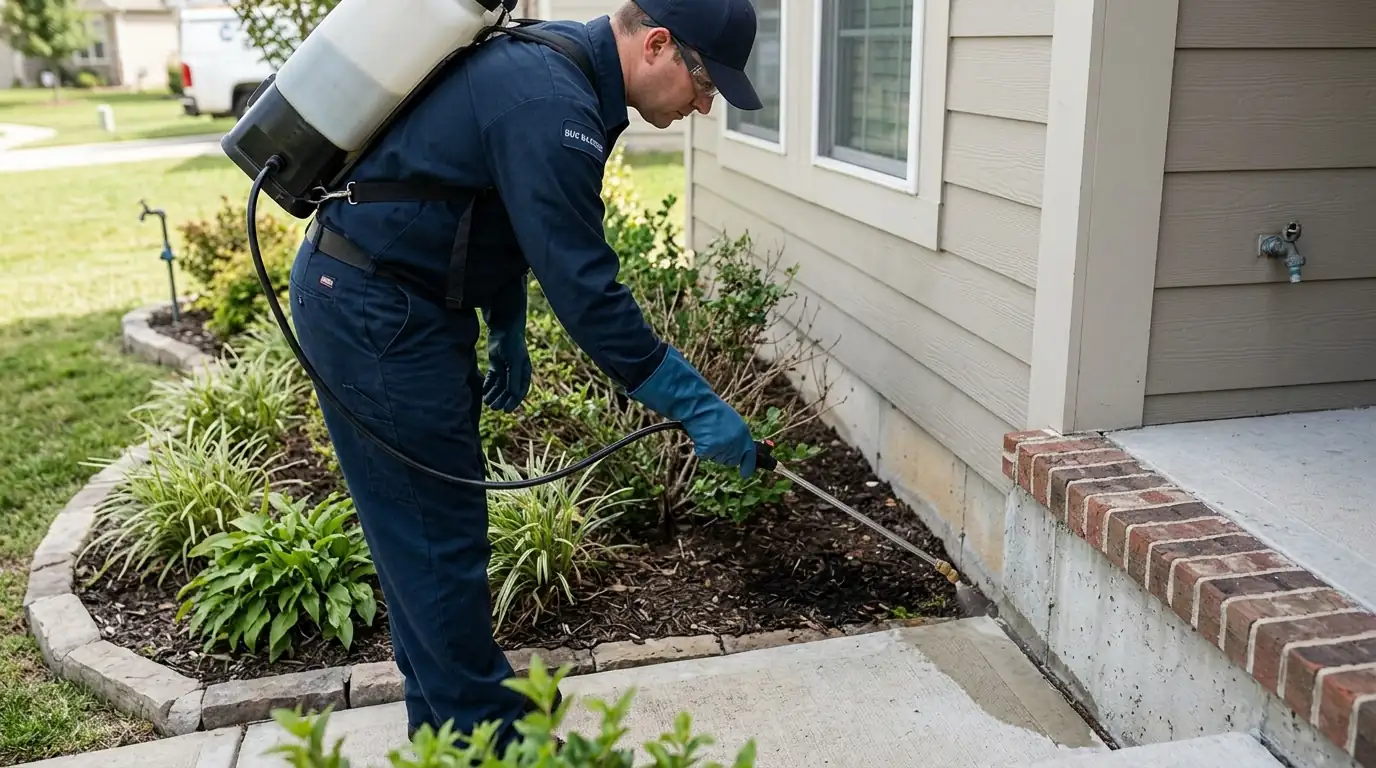
Indoor work handles the branch; the supply line is outside. A few changes genuinely reduce the pressure arriving at your wall:
- Pull mulch and groundcover back a few inches from the foundation so the damp harborage is not touching the house
- Aim sprinklers away from the wall; constant damp soil at the foundation is prime nesting ground
- Trim branches and vines touching the roof or siding, which are highways that bypass the ground entirely
- Keep pet food, sticky jars and recycling sealed, since a reliable food source is why one house gets chosen over the next
Telling Argentine ants from the others
Not every ant trail is this species, and the difference changes the plan. Argentine ants are small, uniformly brown and move in dense two-way trails along edges, year-round. Odorous house ants are slightly larger, darker and smell faintly of rotten coconut when crushed. Pavement ants push fine sand mounds up through driveway cracks.
Carpenter ants are the one that really matters to get right: large, black, mostly active after dark, and leaving coarse frass like pencil shavings rather than following a visible trail. That is a moisture and nesting problem inside wood, and baiting a trail does nothing for it.
What a treatment visit actually involves
Expect more time outside than inside. The technician follows trails out to where they cross the structure line, treats the exterior perimeter and the harborage zones with non-repellent material, and places bait indoors directly on the routes foragers use rather than spraying surfaces.
You will usually be asked not to clean the treated edges for a stretch, and not to spray anything, which is the same instruction as before the visit for the same reason. A follow-up check confirms the trails are gone rather than assuming the first visit did it.
Why some homes end up on a schedule
Because the outdoor population genuinely never ends. For homes with heavy pressure, four or six scheduled exterior visits a year cost less than three or four emergency calls and keep the trail from ever reaching the kitchen. For homes with a single seasonal push, one visit and the habitat changes above are usually enough.
Either way, nobody can honestly promise permanent elimination of Argentine ants in this valley. What is realistic, and what we aim at, is keeping them reliably out of the house.