Short answer
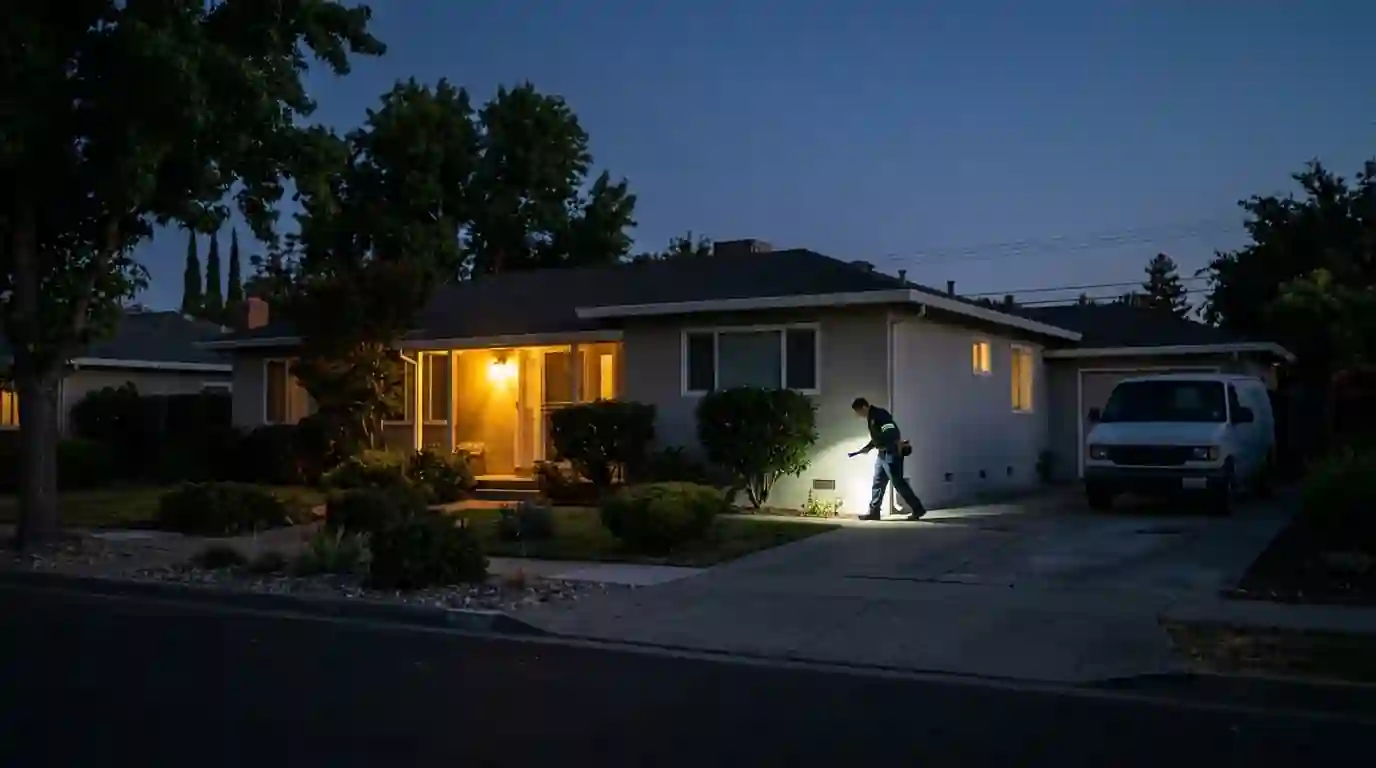
Wood-boring beetle damage in a San Jose home starts with one question: is it active? Fresh, light-colored powder and clean-edged exit holes mean larvae are feeding now; dusty old holes may be decades dead. We identify the species from the hole size and frass, confirm activity, and only then talk treatment, because dead infestations need a report, not a service.
Powderpost and deathwatch beetles spend years as larvae tunneling inside wood before emerging through the exit holes you eventually notice. By the time holes appear, the generation that made them is already out, and the question becomes whether a new generation went back in. That's why we inspect before we quote anything.
The good news is most beetle problems are narrower than they look. An infested piece of flooring, a batch of firewood brought inside, or one damp sill plate is typical; whole-structure infestations are the exception. Treatment is matched to that reality: borate applications where wood is exposed, targeted work where it isn't, and a straight recommendation to replace the piece when that's genuinely cheaper.
What sets the price on beetle work
Beetle jobs are priced by access and area, and the inspection settles both before you hear a number.
| What moves the price | How it moves it |
|---|---|
| Active or historic | Dead damage needs a written assessment, not a treatment, and costs accordingly. |
| Accessible wood area | Open crawl space framing treats fast; finished flooring changes the approach. |
| Species involved | Deathwatch work usually includes moisture correction alongside treatment. |
| Treat vs replace | Sometimes one board swapped out beats treating around a finish. |
| Follow-up monitoring | A next-season recheck is built into jobs where activity was borderline. |
| Escrow timelines | Reports needed for a sale add documentation work on a deadline. |
No sourced market range exists for beetle-specific work the way it does for termites, so we quote from the inspection rather than quoting averages.
Powderpost beetles
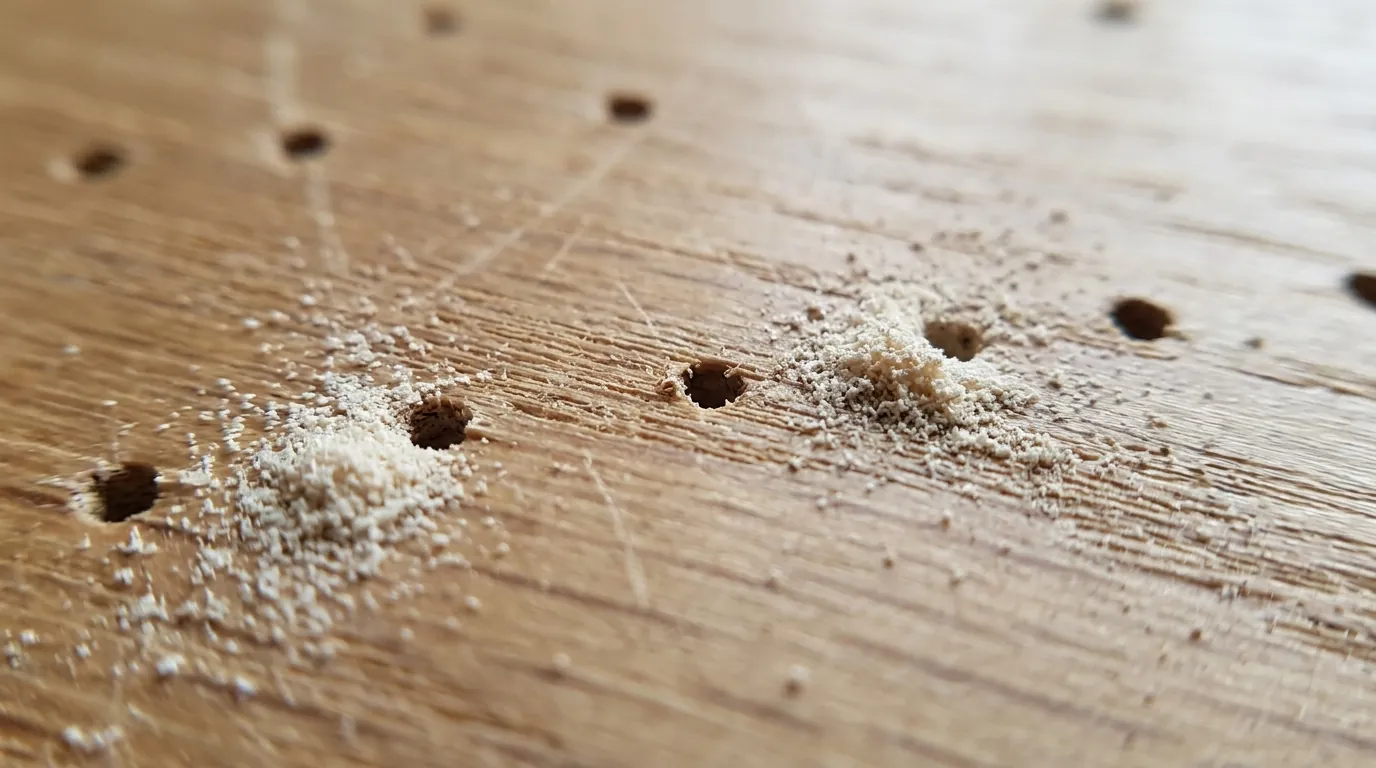
The flooring and trim specialist. Powderpost larvae feed on the starch in hardwoods, which puts oak floors, door frames and furniture at the top of their menu, and new hardwood that arrived already infested is a common source. Exit holes run about the size of a pencil lead with flour-fine frass. Where the wood is accessible we treat with borates that soak into the surface the next generation must chew through; sealed, finished surfaces sometimes make replacing the board the cleaner fix, and we'll say which.
Deathwatch beetles
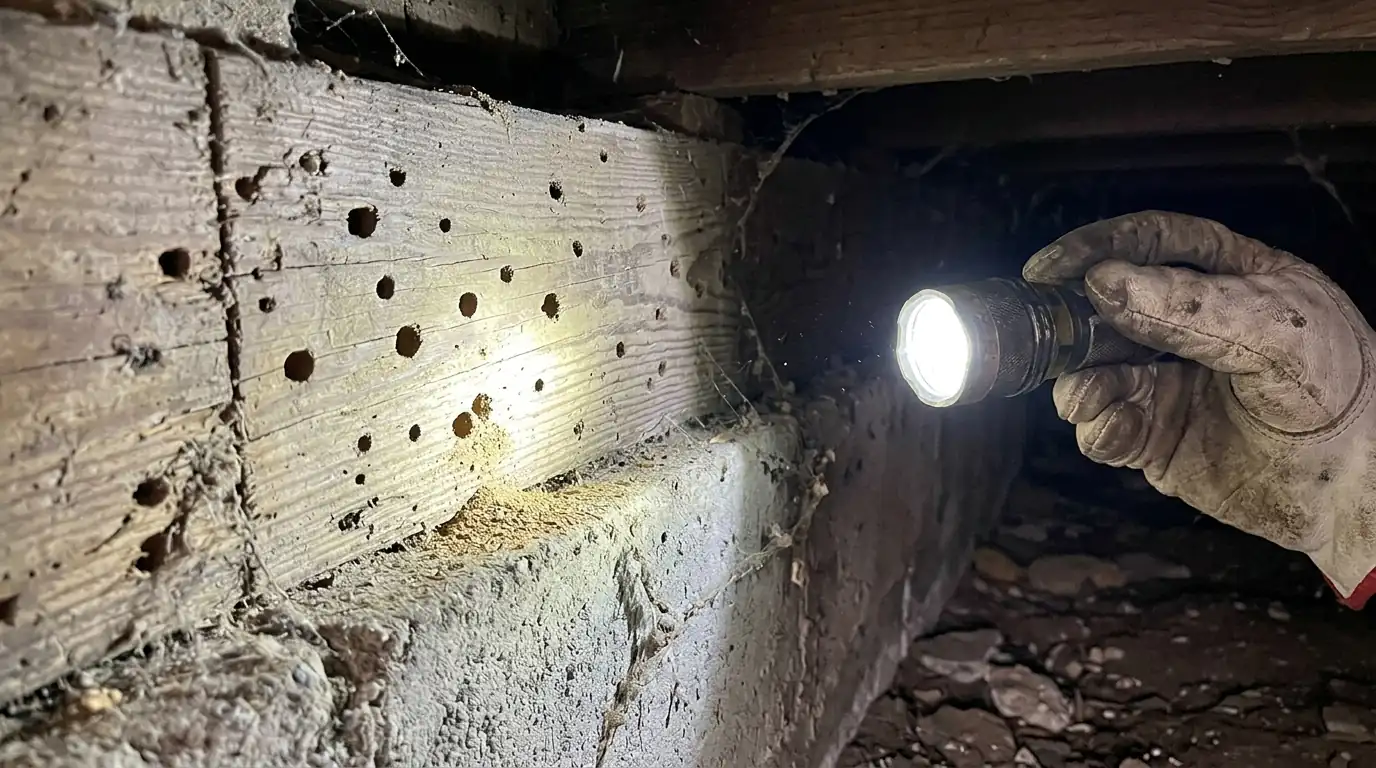
The structural-timber one. Deathwatch beetles work older, slightly damp softwood: sill plates, crawl space framing, beam ends near a plumbing leak. Their holes are larger and the frass feels gritty rather than silky. Because moisture is a requirement, treatment pairs with fixing the dampness; borate work on framing that stays wet is money half-spent. In a crawl space we treat the exposed members directly and flag the leak or ventilation issue feeding the problem.
Treat the wood or replace the piece
This is the real decision on most beetle jobs, and the honest answer depends on access and how much wood is involved.
| Borate treatment | Replacement | |
|---|---|---|
| Best when | Bare or accessible wood, framing, subfloor, larger areas | One finished board, a furniture piece, trim |
| How it works | Borates penetrate and poison the wood against the next generation | The infested piece leaves the house entirely |
| Finish impact | None on raw wood; finished surfaces block penetration | New material has to match the old finish |
| Certainty | Stops reinfestation; larvae already deep may still emerge once | Total for that piece; says nothing about the rest |
How we settle it
Identify the species
Hole size, frass texture and the wood type narrow it to powderpost, deathwatch or a one-time emerger.
Confirm activity
Fresh frass, hole marking and moisture readings separate a live problem from history.
Map the extent
We probe and sound the surrounding wood so the treatment covers the real footprint.
Treat or recommend
Accessible wood gets borate treatment; sealed pieces get a treat-vs-replace call in writing.
Recheck next season
Marked holes get reviewed after the spring emergence window to confirm it's over.
What we see around San Jose
The age of the wood matters more than the neighborhood, and San Jose has plenty of old wood. Around Santa Clara's Old Quad, homes built in the orchard era carry original framing and old-growth flooring that beetles and drywood termites both exploit, and more than once we've opened an inspection for one and found the other. Frass on a sill can belong to either, which is why identification comes before any treatment talk.
More on this in Pest Watch: drywood versus subterranean termites.