Short answer
Termite pretreatment means treating the soil beneath and around a structure before the slab is poured, and optionally borate-treating framing before walls close. It costs a fraction of post-construction treatment because nothing has to be drilled, trenched or worked around, and it gets documented for the project file.
This is a timing service more than a pest service. There is a window during construction when the ground is open, the plumbing penetrations are visible and the framing is bare, and a treatment applied then protects the structure in ways that are expensive or impossible to replicate later.
The comparison is stark. Published California figures put post-construction subterranean treatment at roughly $345 to $1,900, with soil barriers running about $5 to $12 per linear foot once there is hardscape to drill through. Pretreatment covers the same ground with none of that labor. For additions, ADUs and new builds in this valley, it is one of the few genuinely easy decisions.
Pre-construction soil treatment
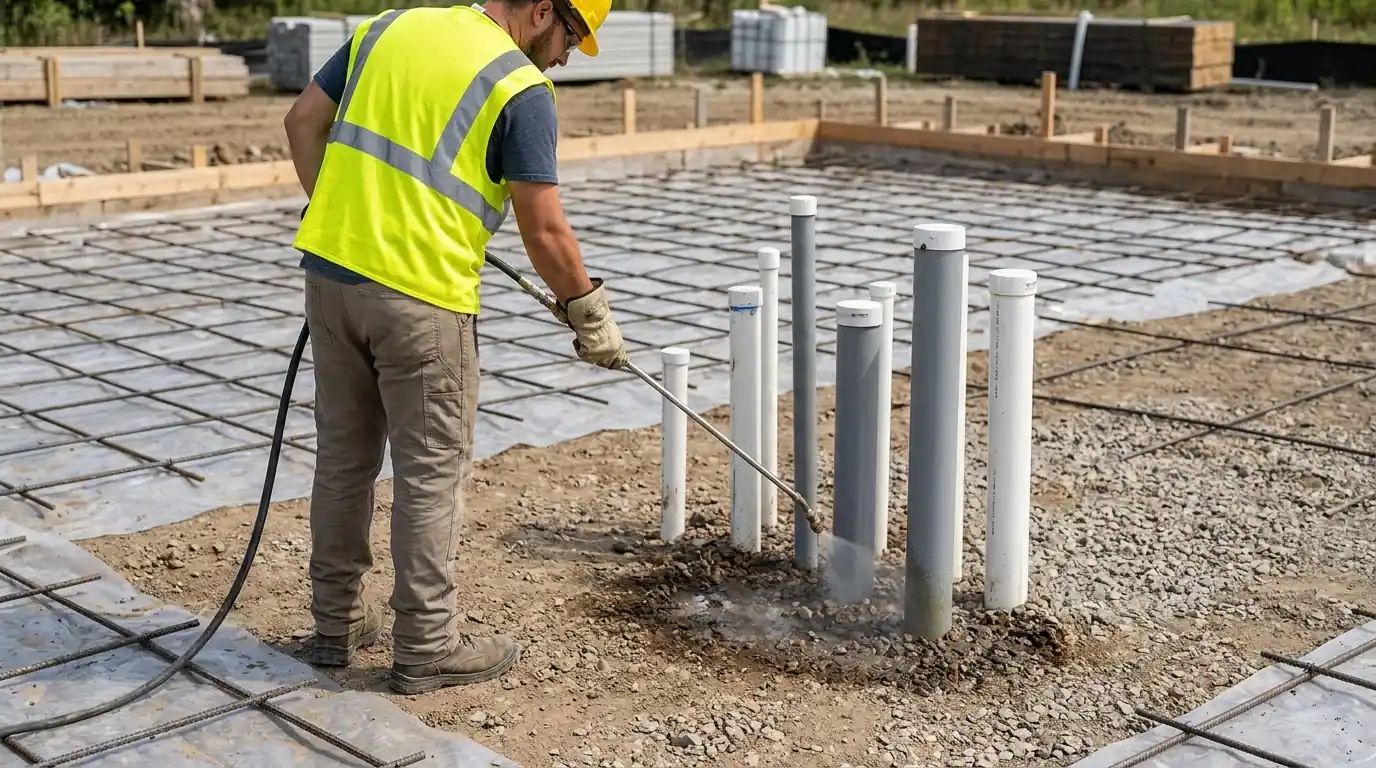
Applied to the prepared grade before the slab is poured, with particular attention to the areas around plumbing penetrations, the footing trenches and the perimeter. The treated zone sits exactly where subterranean termites would otherwise travel up into the structure, with no hardscape to drill and no landscaping to work around. Scheduling matters: the application has to land after grading and plumbing rough-in but before the vapor barrier and pour, so we work to your builder's schedule rather than ours.
Borate framing treatment
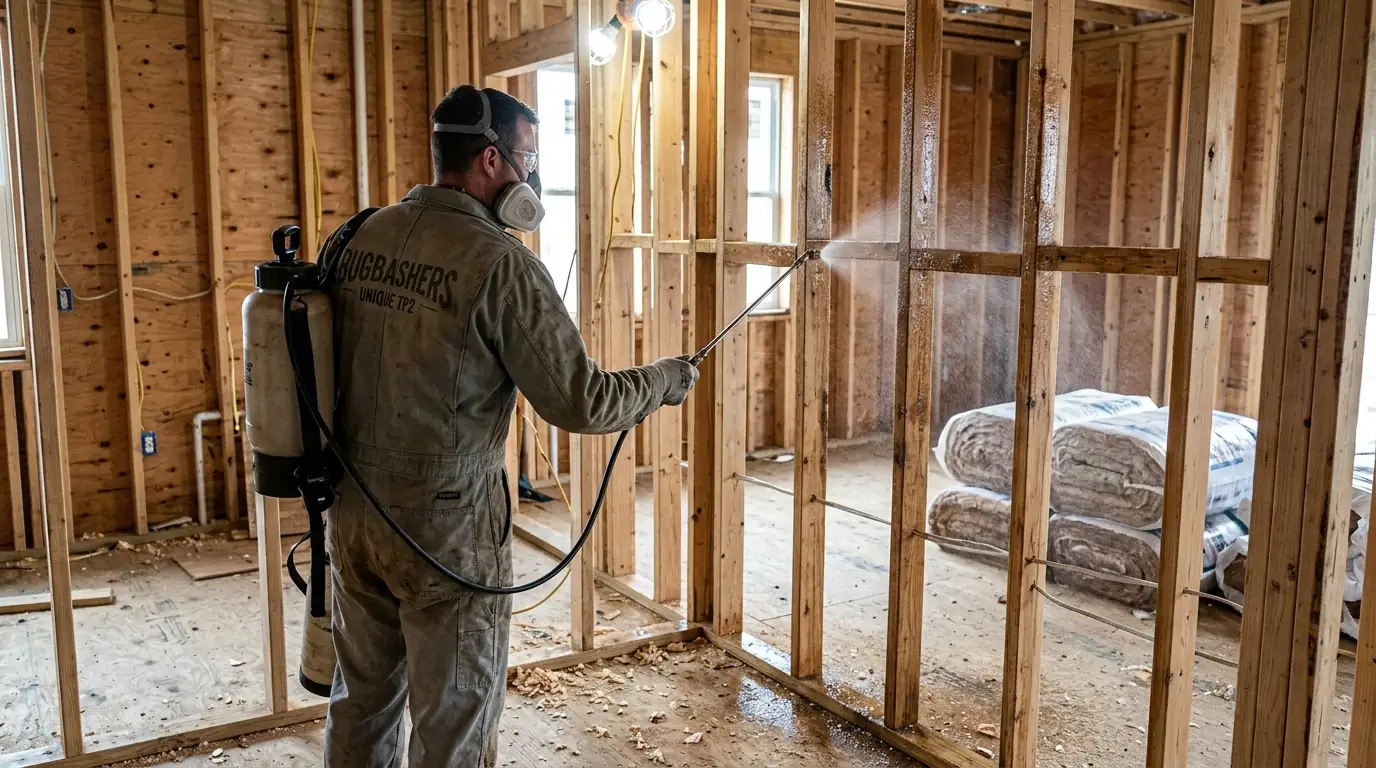
The second window, after framing goes up and before insulation and drywall close the walls. Borate solution applied to bare framing penetrates the wood and makes it unattractive to termites and wood-boring beetles for the life of the structure, as long as it stays dry. It is cheap at this stage and impossible afterward. Sill plates, rim joists, bottom plates and any framing within a few feet of grade are the priority areas on most jobs.
How pretreatment fits a build
Talk to the builder
We get the schedule and identify the two windows: pre-pour and pre-insulation.
Confirm the stage
Grading and plumbing rough-in done, vapor barrier not yet down, is the pre-slab trigger.
Treat the soil
Perimeter, footing trenches and penetrations get the treated zone before the pour.
Treat the framing
If borate work is in scope, it follows framing and precedes insulation.
Document
You get a written record of what was treated and when, for the project file.
What we see around San Jose
San Jose's building mix makes this relevant well beyond new subdivisions. ADUs, garage conversions, kitchen and room additions and rebuilt decks all create fresh soil contact and new framing, and all of them sit next to older housing that may already carry subterranean pressure. Treating during the build is the only moment you get the protection cheaply, and additions are the version most people miss.
What pretreatment costs
Pricing is by treated area and linear footage, and it sits well below what the same protection costs after construction.
| What moves the price | How it moves it |
|---|---|
| Square footage | Soil treatment is priced by the area of prepared grade being covered. |
| Perimeter footage | Footing trenches and the perimeter zone add to the slab area itself. |
| Framing scope | Borate treatment is priced by the framing area covered, usually lower-level members. |
| Site access | Active construction sites with limited access or tight scheduling take longer. |
| Scheduling windows | Work timed around a builder's calendar sometimes means split visits. |
| Documentation needs | Records for a permit file or a builder's warranty package are included. |
Published California post-construction figures run $345 to $1,900 for subterranean work, with soil barriers around $5 to $12 per linear foot; those are planning numbers and they are exactly why pretreatment is worth scheduling.
If you want the background: what a termite inspection costs.