Roof rats
Fruit trees and deep canopy supply both the food and the route to the roofline.
Coverage
Los Altos is one of the clearest roof rat patterns in our coverage area, and the reason is the gardens: mature fruit trees, deep canopy and large, well-watered lots.
Local focus
Short answer
Pest control in Los Altos runs on the same catalog we use across the Bay Area, with the emphasis set by what this area actually produces: roof rats, subterranean termites and the conditions behind them. Phones are answered around the clock and crews route out from the San Jose service office.
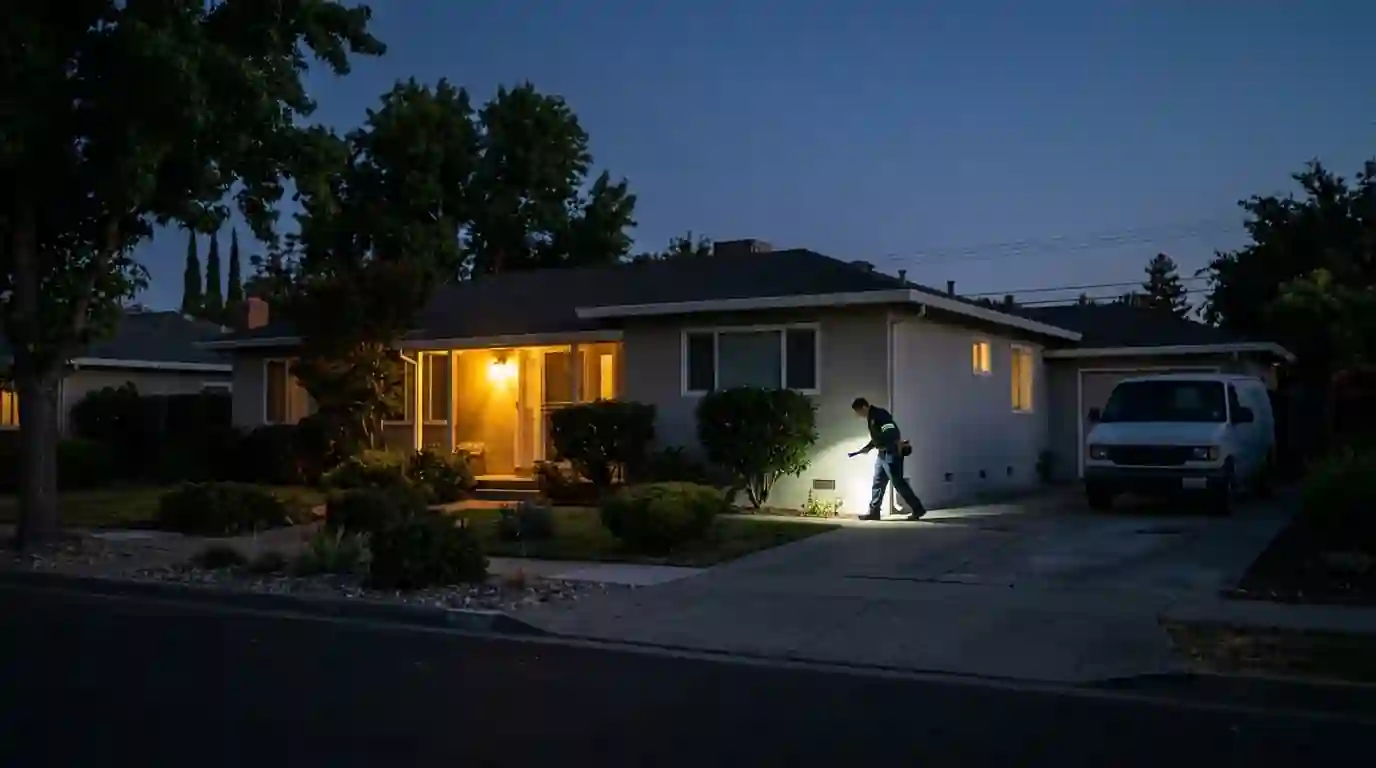
Properties here tend to be large and green, with established orchards, ornamental fruit and tree cover that reaches most rooflines. That combination feeds a rodent population year-round and hands it a route straight to the eave line.
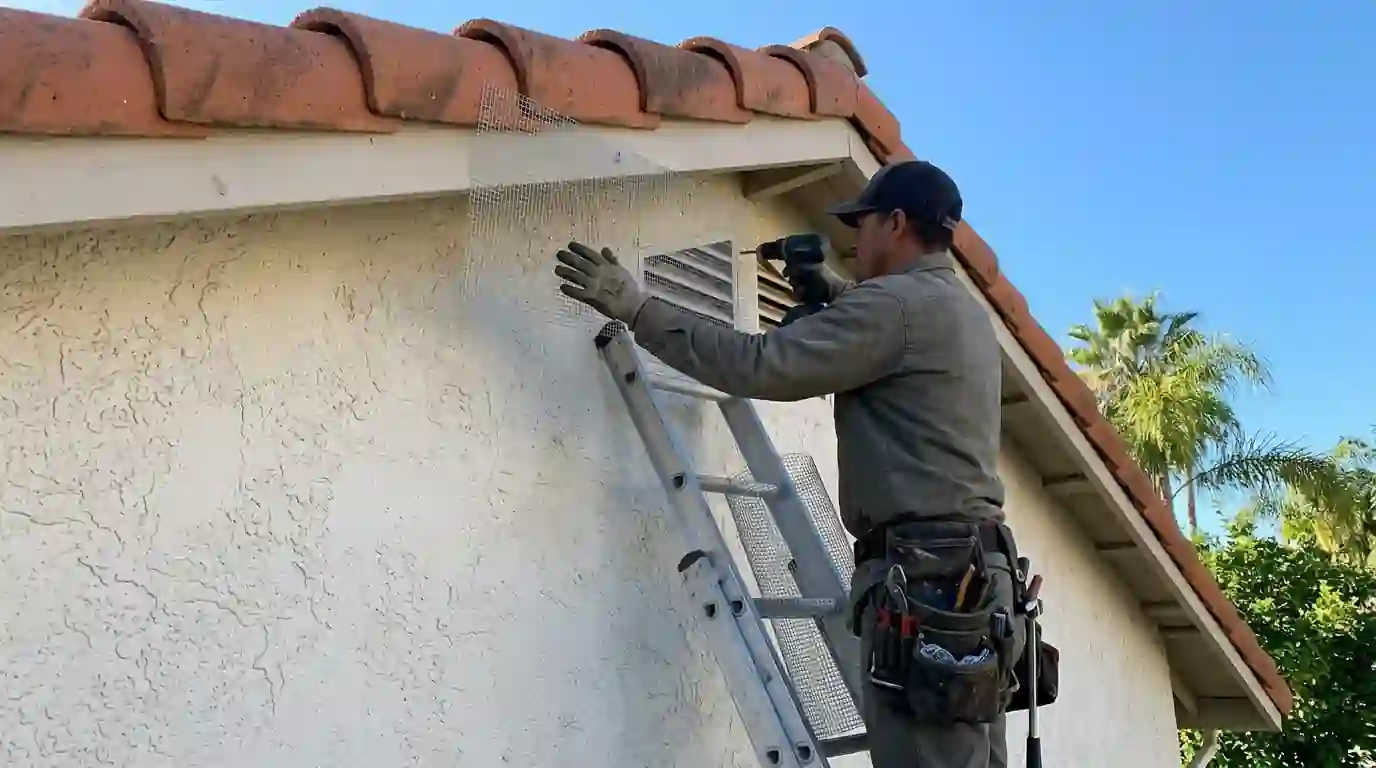
The housing adds the rest. Older homes on these streets carry original framing, raised foundations and vents that predate anything rodent-rated, so once rats reach the roof they rarely struggle to get in. Termite findings on the same inspections are common.
What we see here
Fruit trees and deep canopy supply both the food and the route to the roofline.
Older framing with long-standing soil contact under raised foundations.
Established landscaping and irrigation against foundations keep trails running.
Large wooded lots see raccoons, skunks and opossums as nightly traffic.
On the ground
Crews run out of the San Jose service office, and routing is built around the day rather than a fixed territory, so a wasp nest or a biting-pest call gets moved up regardless of which part of the coverage area it sits in. Inspections and scheduled service book within a few days.
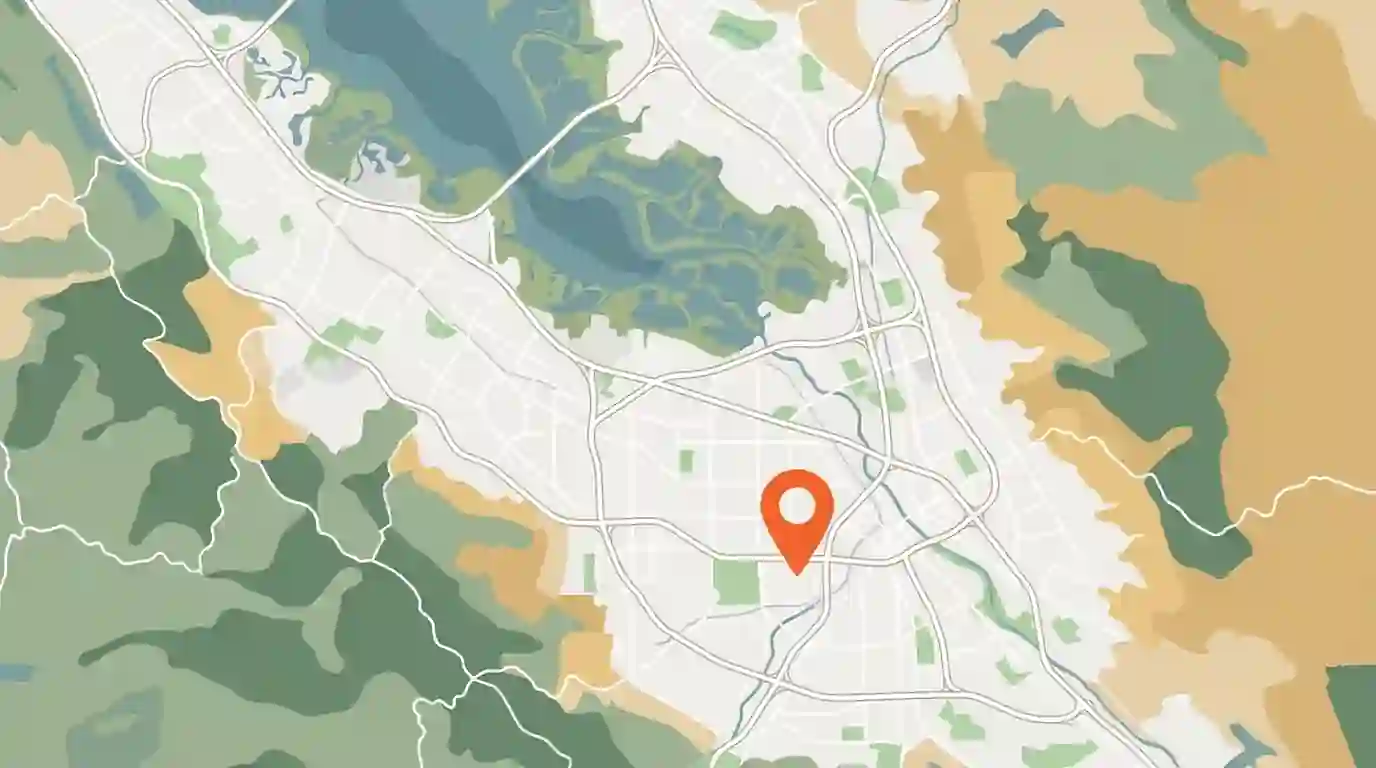
Coverage here takes in the larger residential lots, the older streets near the downtown triangle and the properties running toward the hills. If you are just outside what is listed, call anyway and we will tell you plainly whether we can route to you rather than taking a booking we cannot keep.
Local detail
More perimeter, more roofline, more outbuildings and more landscaping all mean a longer visit than a compact suburban lot. Pool houses, detached garages, studios and sheds each add their own entry points and their own harborage.
It also means the food-supply work matters more. Clearing windfall fruit promptly and keeping bird seed sealed does real work on a property large enough to feed a population on its own.
This is the pattern the whole valley version of roof rat work is built on: in Saratoga and Los Altos, mature fruit and nut trees and dense canopy give roof rats food and a highway straight to the eaves. Hollowed fruit still hanging on the tree is usually the first sign, and it shows up well before anything is audible in the attic.
Straight answers
Roof rats feed in the canopy and eat fruit in place, leaving the rind attached to the branch. Squirrels knock it down instead, so the pattern identifies the animal.
Perimeter footage, roofline length and outbuildings all affect the work, so quotes follow a walk of the property rather than a flat rate.
Framing close to soil under a raised foundation is the classic setup here, so it is worth checking even with no symptoms.
It helps and does not finish it. Fences and utility lines carry them too, so clearance plus a sealed roofline is what holds.
One number, answered around the clock, and a written note on what was found.
Call (669) 369-0489 any hourWhere to find us