Short answer
Drywood termites in a San Jose home live entirely inside the wood, no soil contact, which changes everything about treatment. Confirmed colonies in accessible wood can be treated locally; widespread or hidden colonies point to whole-structure fumigation. The inspection decides which, and we put the reasoning in writing so you're choosing between real options, not sales pitches.
Drywood and subterranean termites get confused constantly, and the treatments don't interchange. Drywoods need no ground contact: a colony starts when a swarmer pair enters a crack in fascia, an attic vent or furniture, and everything after happens inside that wood. The frass they kick out through pin holes, hexagonal pellets that feel like coarse sand, is the usual first evidence.
The treatment decision is really a coverage decision. Local treatment handles the colonies you can find and reach. Fumigation handles every colony in the structure, found or not. Neither is automatically right, and a company that only ever recommends one of them is telling you about their equipment, not your house.
What moves a drywood treatment price
Published California ranges are wide because the method and the structure size drive everything. Here's what actually moves your number inside them.
| What moves the price | How it moves it |
|---|---|
| Method required | Mapped, reachable colonies price as targeted work; whole-structure certainty prices by the cubic footage tented. |
| Structure size | Fumigation is sized to the sealed volume, which is why the state range runs so wide. |
| Colony count and access | Each separate local-treatment area adds drilling and injection time. |
| Attached structures | Shared walls and attached garages complicate tenting and sometimes decide the method. |
| Escrow deadlines | Section 1 clearance work on a sale timeline compresses scheduling. |
| Repairs | Treatment stops the termites; damaged members found along the way are quoted separately. |
The ranges above are published California market figures for planning, not our quote. Your written price comes from the inspection.
Local treatment
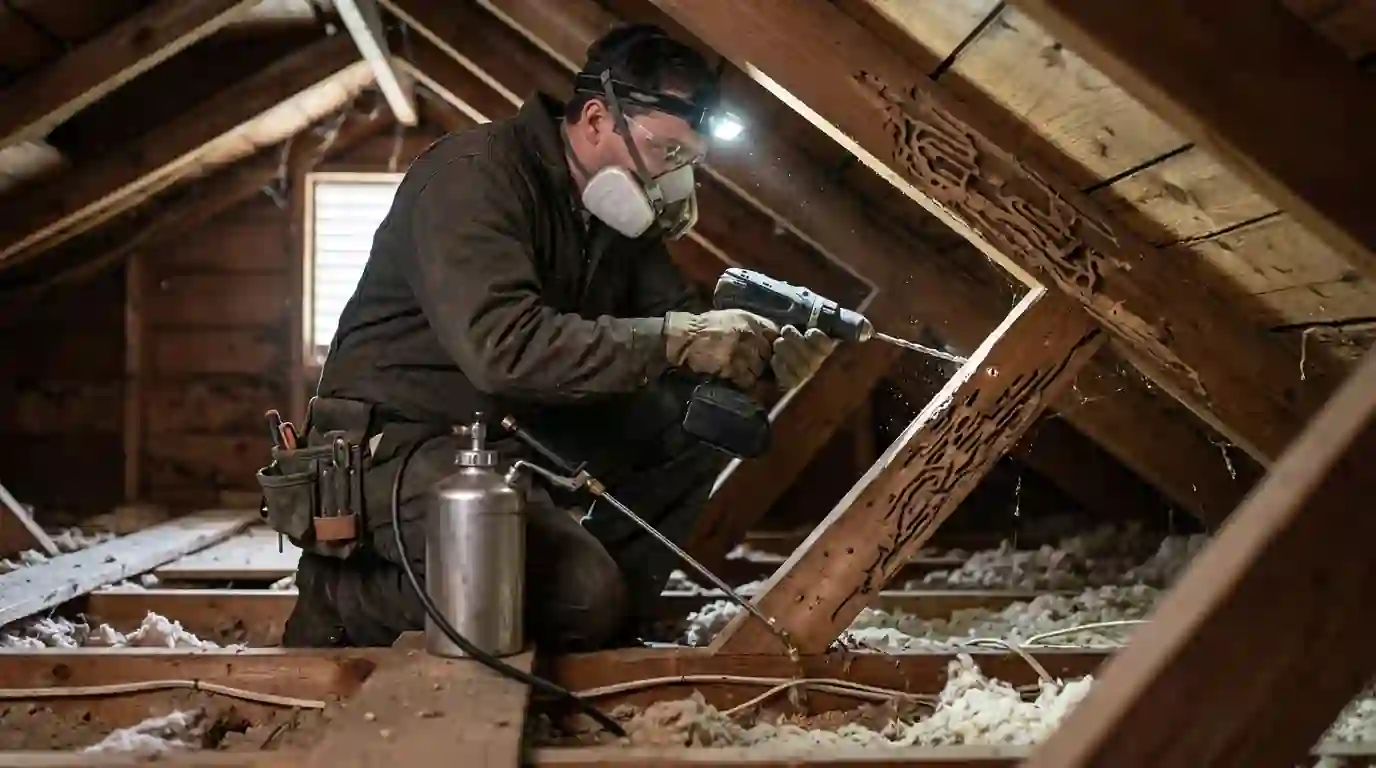
When the inspection maps colonies in accessible wood, we treat them directly: drilling into the galleries and injecting materials that spread through the colony, plus borate treatment on nearby raw wood to block the next swarm. It's a same-week job with no moving out and no bagging food. The honest limit is coverage; local treatment is only as good as the mapping, which is why we probe well beyond the visible frass before calling a job local-treatable.
Whole-structure fumigation
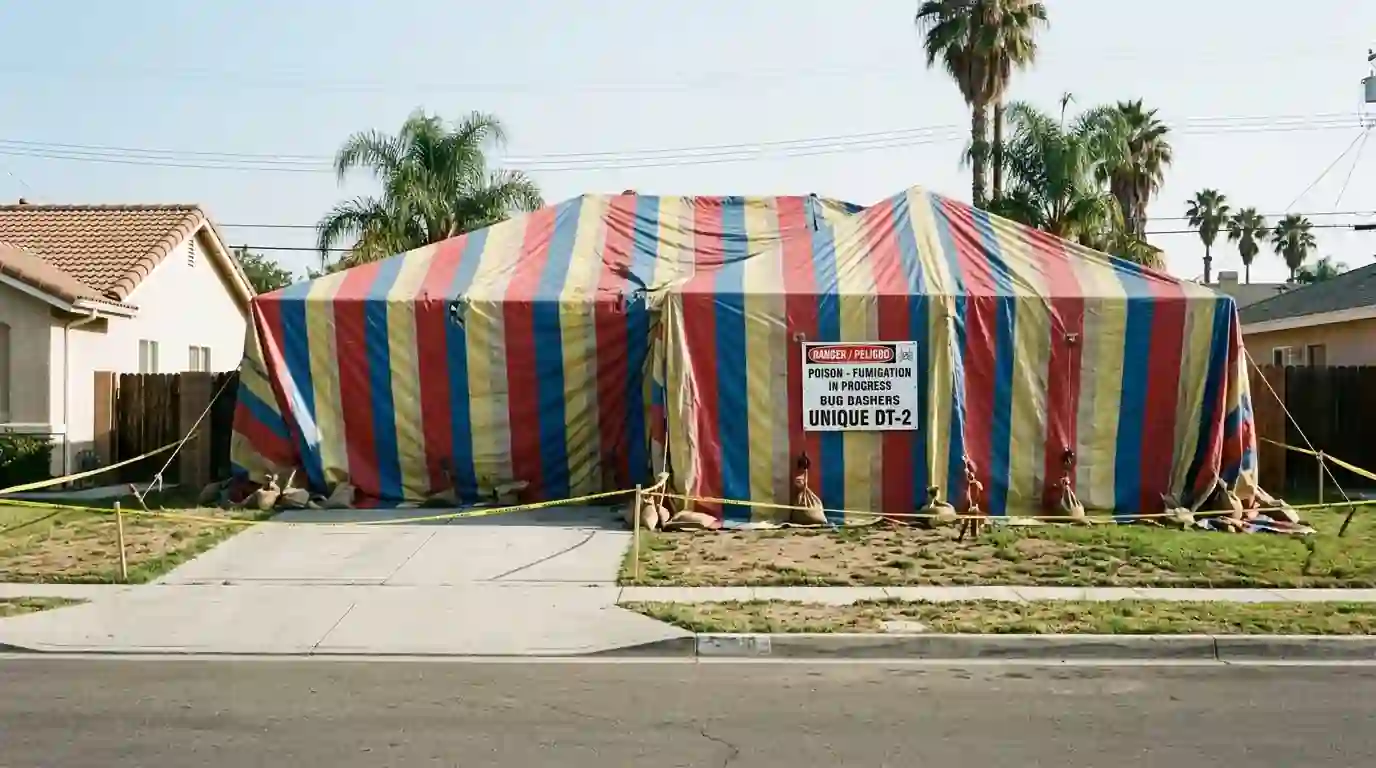
Tenting is the one method that reaches every drywood colony at once, including the ones no inspection can see inside walls. The structure is sealed and the fumigant penetrates all wood over two to three nights away from home. In California, whole-structure fumigation commonly runs $920 to $13,440 depending on the size of the structure, roughly $1 to $3 per square foot, so it's a decision worth real evidence. We recommend it when frass appears in separated areas or escrow demands certainty.
Orange oil option
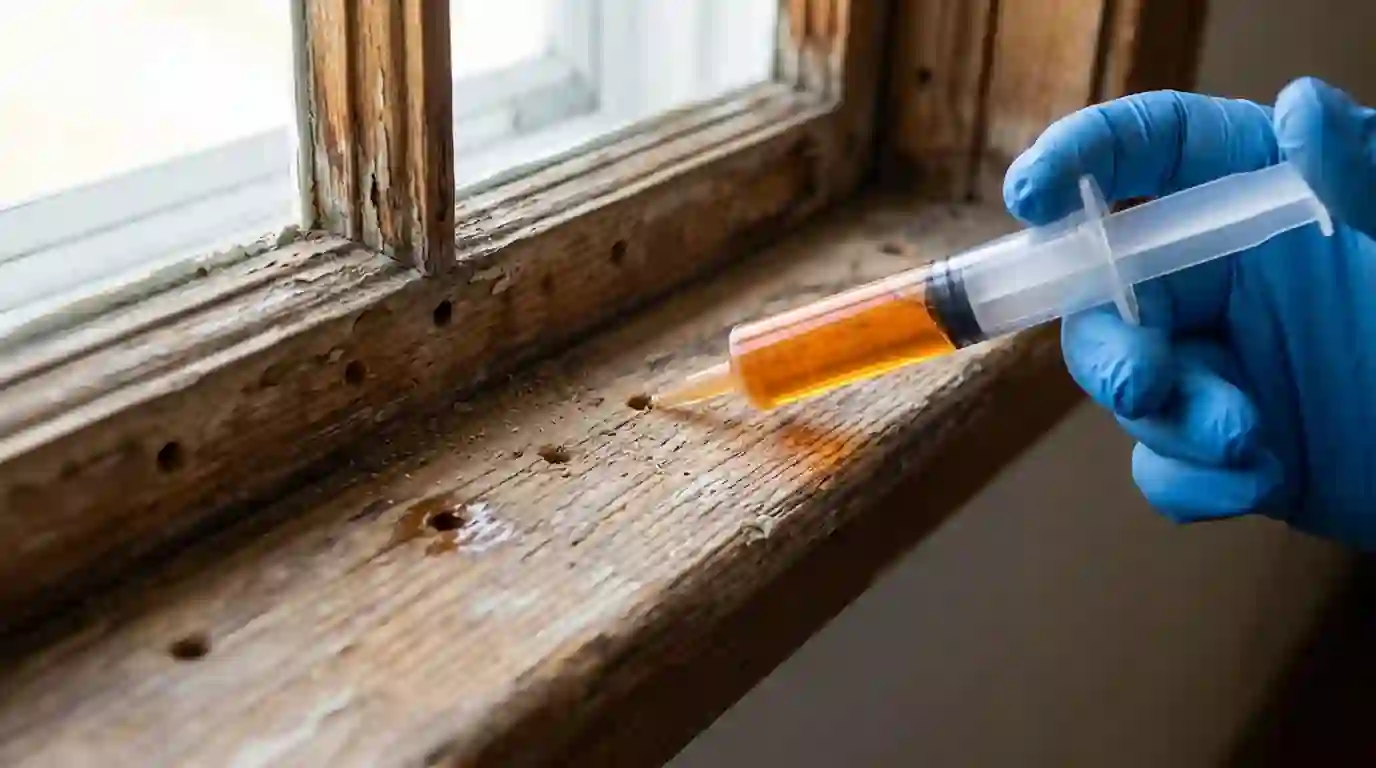
Some homeowners ask for orange oil by name, and our crew has used it in North Bay drywood work for years, so we can speak to it plainly. The d-limonene kills termites it contacts inside treated galleries, making it a local-treatment material with a lighter chemical profile, not a substitute for fumigation's total coverage. Where colonies are mapped and accessible it's a legitimate choice; where they aren't, no injected material fixes a coverage problem.
Local treatment or fumigation: the real tradeoff
Both work. They answer different questions, and the inspection tells you which question your house is asking.
| Local treatment | Fumigation | |
|---|---|---|
| Coverage | The colonies we found and reached | Every colony in the structure |
| Disruption | Same-week visit, you stay home | Two to three nights out, food bagged |
| Typical cost shape | Targeted work; California targeted termite jobs commonly run $220 to $2,500, averaging near $575 | Sized to the structure; commonly $920 to $13,440 in California |
| Leaves behind | Borate protection on treated wood | No residual; a new swarm can start fresh |
| Best evidence for it | Frass confined to one or two mapped areas | Frass in separated areas or escrow-driven certainty |
From frass pile to verified treatment
Full-structure inspection
Attic, eaves, window frames, garage and crawl space, with every frass point and probe result documented.
Species confirmation
Pellet frass and no mud tubes reads drywood; we rule subterraneans in or out explicitly.
Coverage decision
You get the local vs fumigation reasoning for your findings, in writing, with both prices.
Treatment
Local jobs run the same week; fumigations get scheduled with the prep walk-through handled for you.
Re-inspection
Treated areas get checked after the next swarm season so the result is verified, not assumed.
Frass showing up again after you vacuumed it? That's active. Call us.
Call (669) 369-0489What we see around San Jose
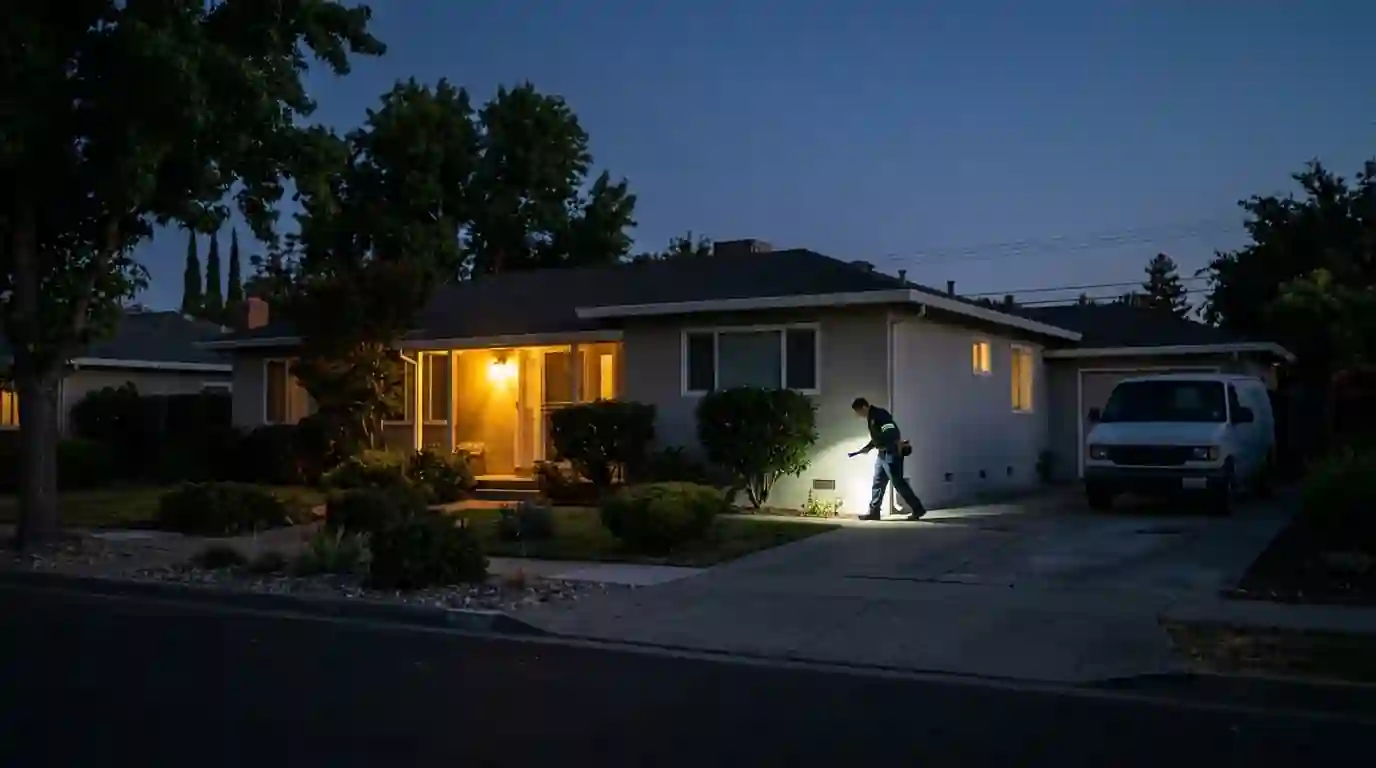
This work is in the company's blood: the operation has run WDO inspection and drywood treatment, orange oil included, across Sonoma, Marin and Napa counties for years, and that inspection-first habit carries into every San Jose job. Locally, orchard-era homes around Santa Clara's Old Quad show the classic evidence: frass sifting from original old-growth framing onto sills that have held it before.
Worth reading alongside this: drywood versus subterranean termites.