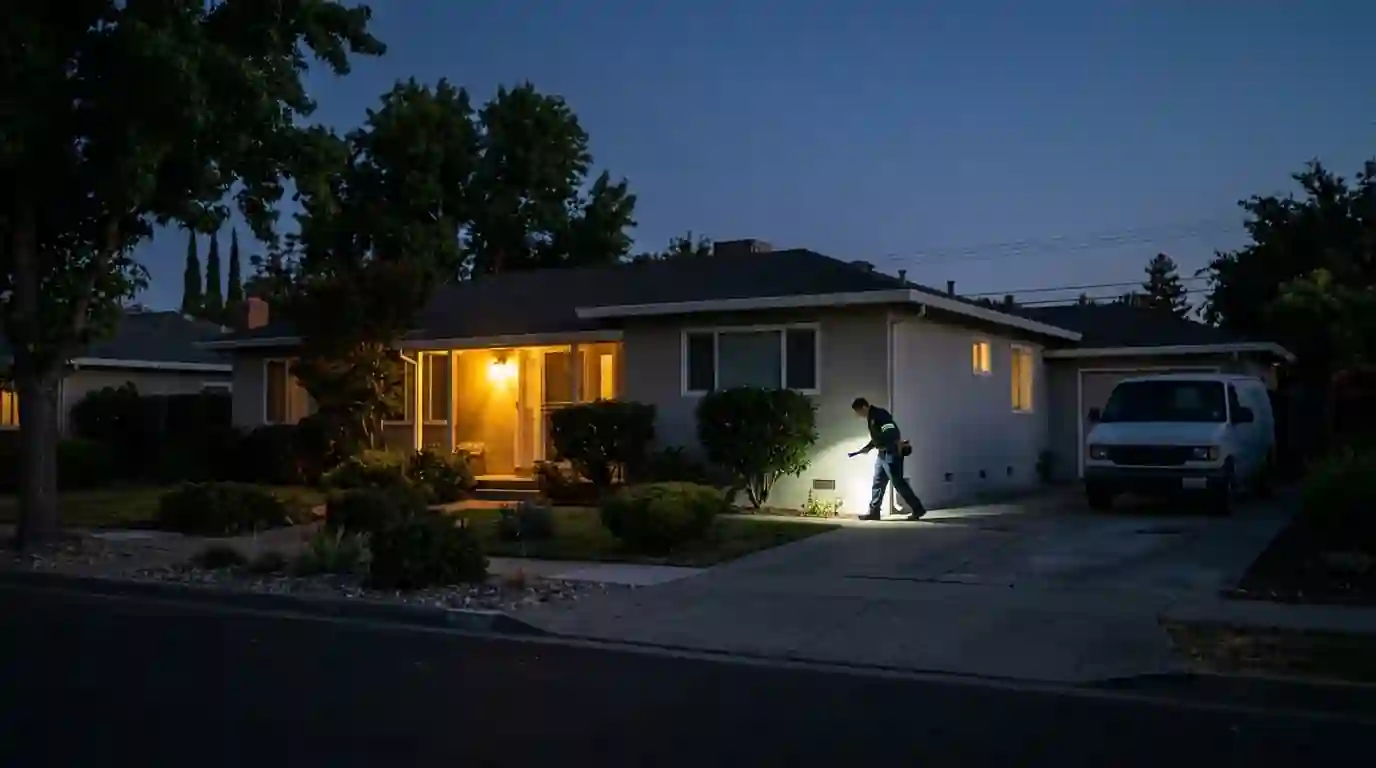
Short answer
Spider control in San Jose combines three things: physically sweeping webs and egg sacs, treating the harborage spots where spiders sit, and reducing the insects they eat. Black widows are the species worth real attention here, and they favor garages, meter boxes, woodpiles and the underside of patio furniture.
Spiders are predators, which changes the whole approach. They go where the food is, so a house with heavy insect pressure around the lights and eaves will keep producing spiders no matter how often you knock the webs down. Treating the prey population is as much of the job as treating the spiders.
The second half is mechanical. Webs and egg sacs get swept off rather than left, because a single sac can hold hundreds of eggs and sweeping removes a generation in one pass. The rest is harborage: garage clutter, stacked wood against the wall, boxes on the floor, the gap behind the meter box. Those spots get treated directly, and on homes with ongoing pressure a scheduled sweep keeps them clear.
What drives the cost of spider work
Price follows the treated footprint and the amount of sweeping involved, both of which the walk-around settles.
| What moves the price | How it moves it |
|---|---|
| Property size | Eave runs, patio covers and perimeter footage set the sweeping and treatment time. |
| Web volume | Heavily webbed eaves and porches take real time to clear properly. |
| Garage condition | Cluttered garages have far more harborage to treat than clear ones. |
| Outbuildings | Sheds, detached garages and pool equipment areas each add scope. |
| Insect pressure | Homes with heavy light-drawn insect activity need the food source treated too. |
| One-time or scheduled | Recurring web rebuild is cheaper handled on a cycle than as repeat visits. |
The quote comes after the walk-around and includes the sweeping, which some companies treat as extra.
Black widow removal
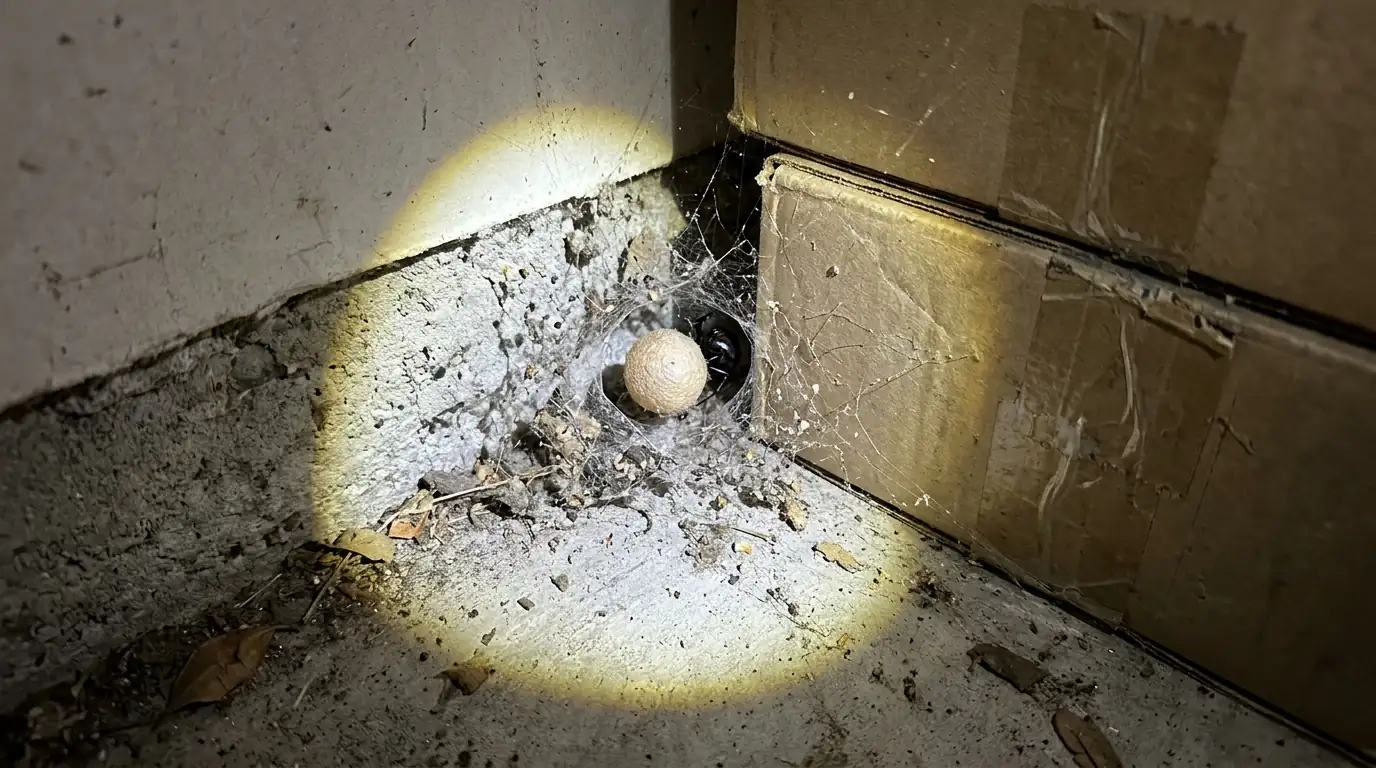
The one that matters in this county. Glossy black, globe-shaped body, red hourglass underneath, and a messy, strong, irregular web rather than the neat orb of a garden spider. They sit low and sheltered: garage corners near the floor, inside meter and irrigation boxes, under patio furniture, in woodpiles and the voids under decks. Treatment covers those harborage spots directly, with egg sacs removed physically, and we point out the specific places on your property that keep producing them.
Web and eave sweeps
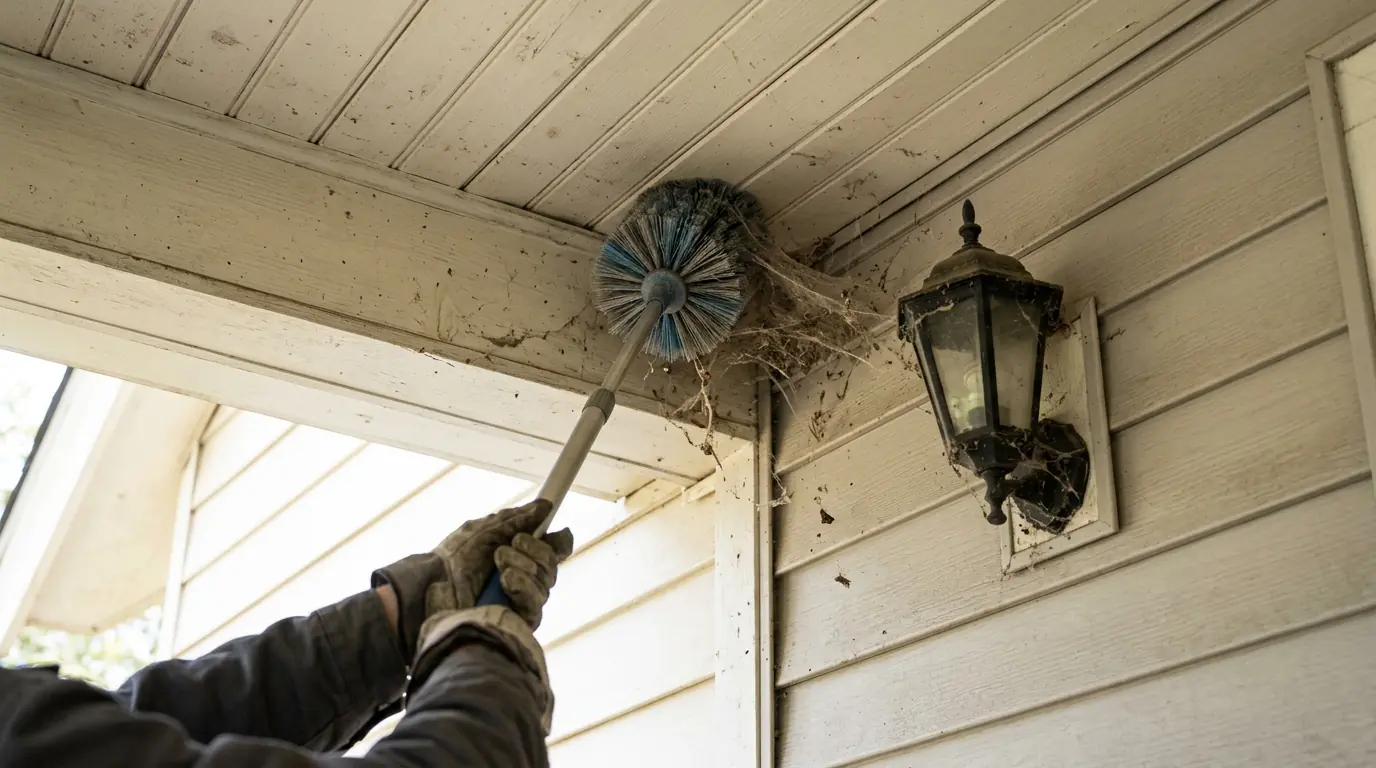
The visible, recurring part. Eaves, soffits, porch ceilings, window frames and patio covers collect webbing fast, especially where exterior lights run all night and deliver insects to the same spot. Sweeps clear the webs and sacs with a duster, and the treated band at those junctions slows the rebuild. Swapping porch bulbs to warmer, less attractive lighting makes more difference to eave webbing than almost anything else we can apply.
Garage treatments
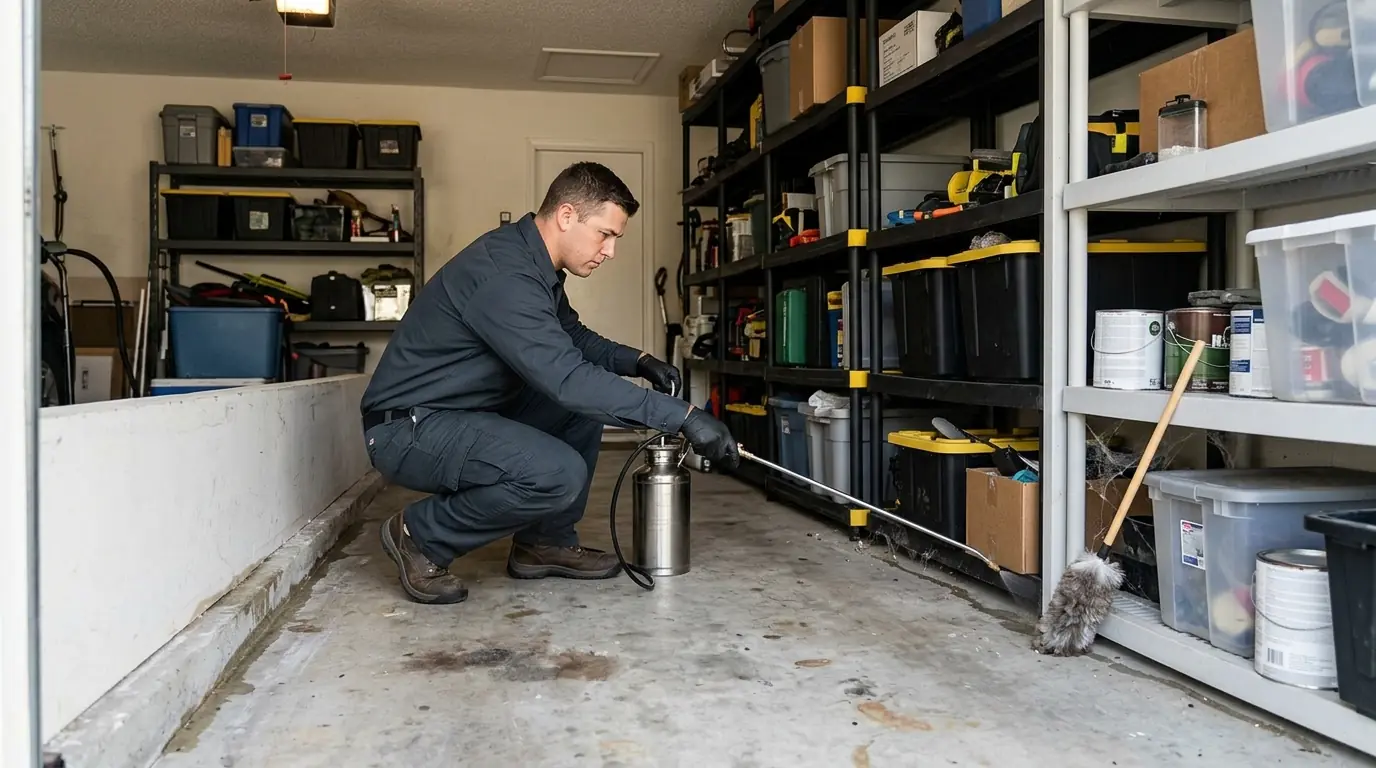
Garages are where spider problems and black widow risk concentrate, because they combine clutter, darkness, floor-level harborage and a door that never fully seals. Treatment runs the floor line, corners, shelving edges, the door track and the junction where the wall meets the slab, with webs and sacs cleared as we go. Storage advice comes with it: boxes off the floor and onto shelving, wood stacked away from the wall, and the door sweep replaced if daylight shows under it.
How spider service runs
Walk the harborage
Garage, meter boxes, woodpiles, patio furniture and eave runs get checked first.
Sweep
Webs and egg sacs come off physically, which removes a generation rather than just the adult.
Treat the spots
Harborage corners, floor lines, eave junctions and box interiors get targeted treatment.
Cut the food supply
The insect pressure feeding them gets treated too, which is what keeps webs from returning fast.
Hand over the fixes
Lighting, storage and clutter changes that reduce the harborage, in writing.
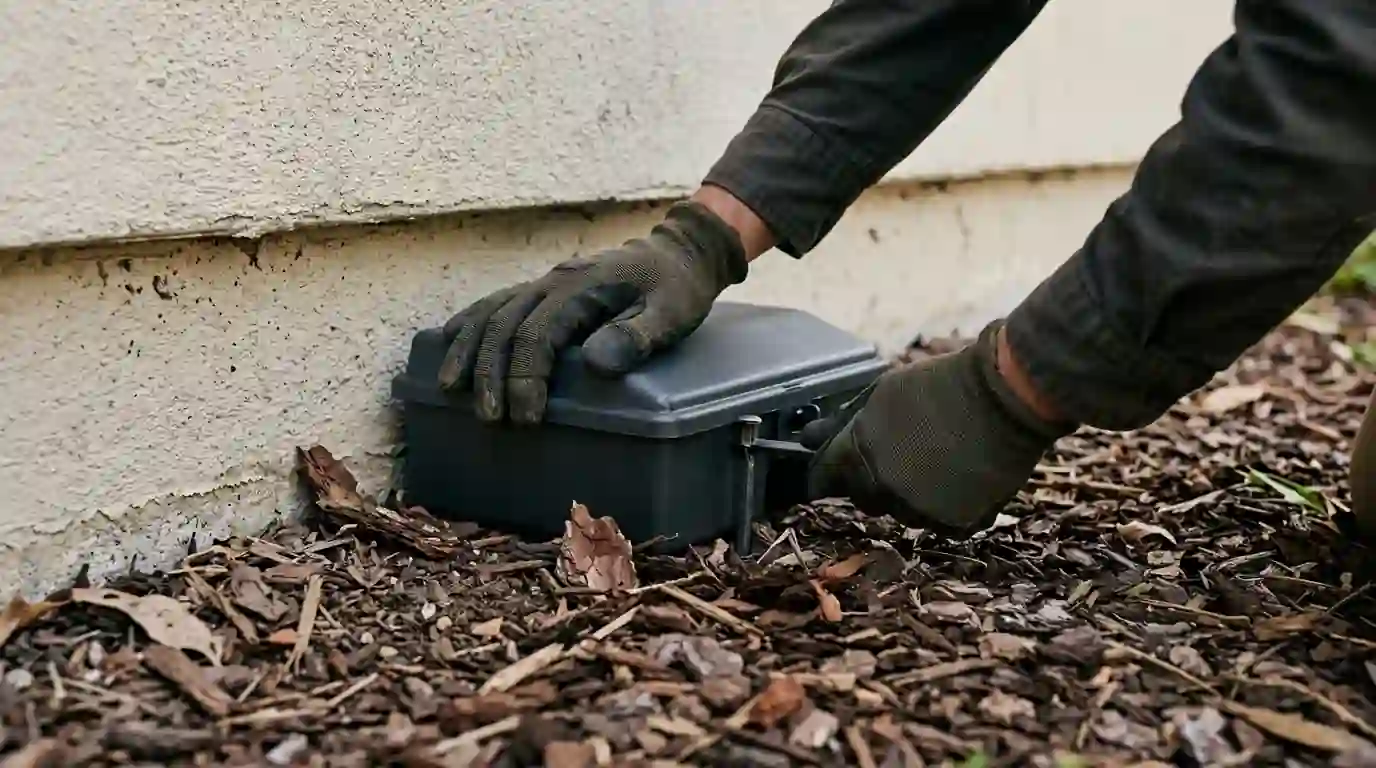
Widow webs in the garage where the kids park bikes? Get it swept.
Call (669) 369-0489What we see around San Jose
Black widow spiders turn up in garages and yards right across San Jose, which is why we treat garage floor lines and meter boxes as standard rather than as an add-on. They are not aggressive and bites are uncommon, but the harborage they choose, exactly the low, dark, undisturbed spots where people reach for a bike or a bag of potting soil, is what makes them worth clearing deliberately rather than tolerating.
Related reading: why cockroach sprays fail.