Short answer
Fleas in a San Jose home live mostly off the pet: eggs, larvae and pupae sit in carpet fibers, pet bedding and shaded yard soil, which is why treating the animal alone never ends it. We treat the indoor hot zones and the yard rest areas with an adulticide plus a growth regulator, then time a follow-up to the pupae that hatch after the first visit.
The lifecycle is the whole story. Adults on the pet lay eggs that roll off wherever the animal sleeps; those become larvae feeding in carpet pile and shaded soil, then pupae that sit protected for weeks waiting for vibration and warmth. That pupal stage is why people call us two weeks after a thorough DIY attempt, convinced the fleas came back from nowhere.
The job therefore has three parts that have to run together: the pet handled by your vet, the house, and the yard. We cover the second and third, and we schedule around the first, because treating a home while the animal is still carrying adults is a shorter-lived result. If the fleas arrived with wildlife under the house, the den has to go as well.
Signs the house itself is infested
Bites around the ankles
Bites clustering below the knee point at the carpet, not the bed.
Flea dirt in the pet's coat
Black specks that turn rust red on a damp towel are digested blood.
Pale socks turning spotted
Walk the carpet in white socks and hitchhikers show up fast.
Pets scratching one area raw
Constant chewing at the tail base is the classic flea allergy pattern.
Fleas appearing after a trip
Pupae waiting in an empty house hatch all at once when people return.
Activity near crawl space vents
Fleas concentrated at one wall often mean wildlife has been denning below.
What ending a flea problem takes
Find the hot zones
Pet routes, bedding, favorite furniture and the shaded yard rest spots get mapped first.
Prep list
You get a short, specific prep list: vacuum, launder bedding hot, and coordinate the vet treatment.
Treat inside and out
Adulticide plus growth regulator indoors on the zones, outdoors on the rest areas.
Vacuum schedule
Daily vacuuming for the next stretch pulls pupae out early and into reach of the treatment.
Follow-up visit
Timed to the hatch window so the last generation does not restart the cycle.
Indoor flea treatment
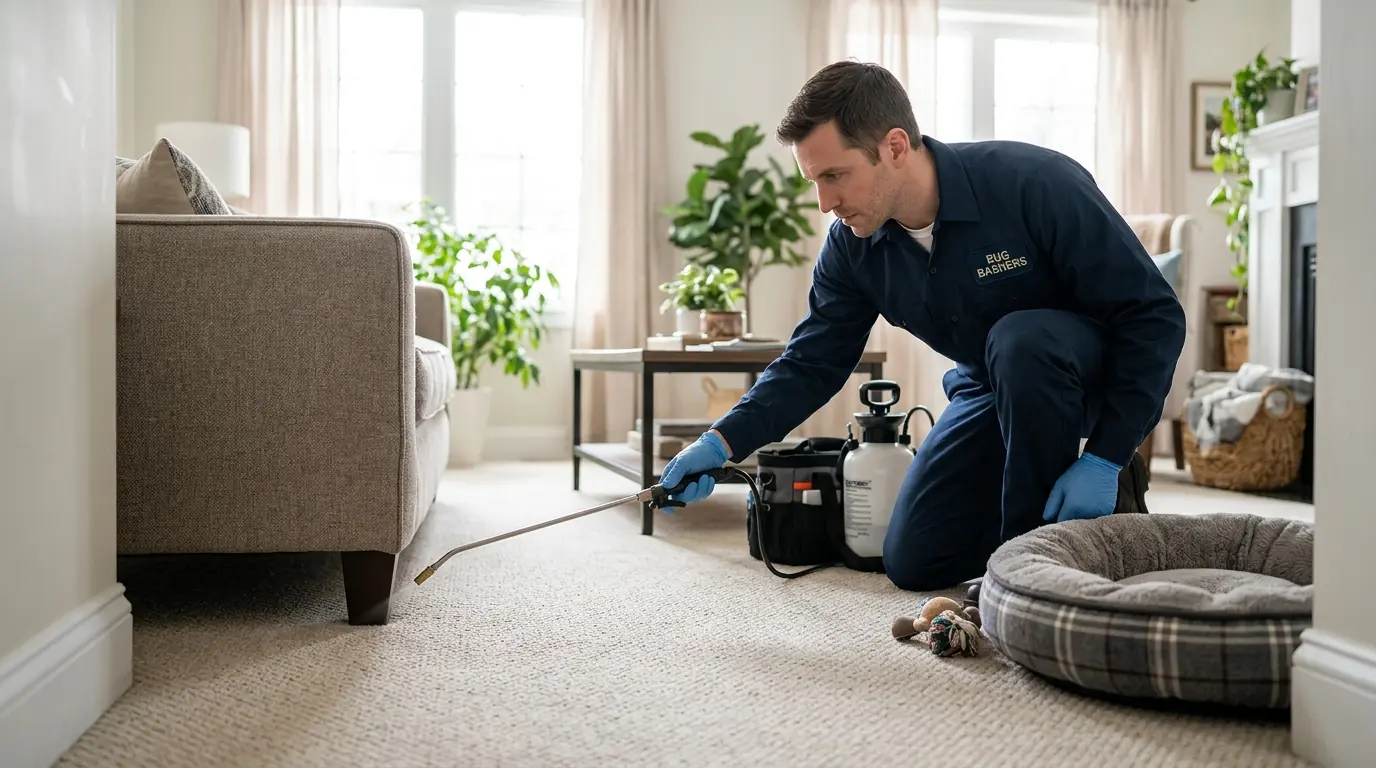
Indoor work targets where the pet actually spends time, rarely the whole floor. Carpet edges, under furniture, pet beds, the couch the dog is not supposed to be on, and baseboards along favorite routes get an adulticide plus a growth regulator that stops eggs and larvae from maturing. Vacuum thoroughly before and after; the vibration pulls pupae out early, right where the treatment can reach them.
Yard flea treatment
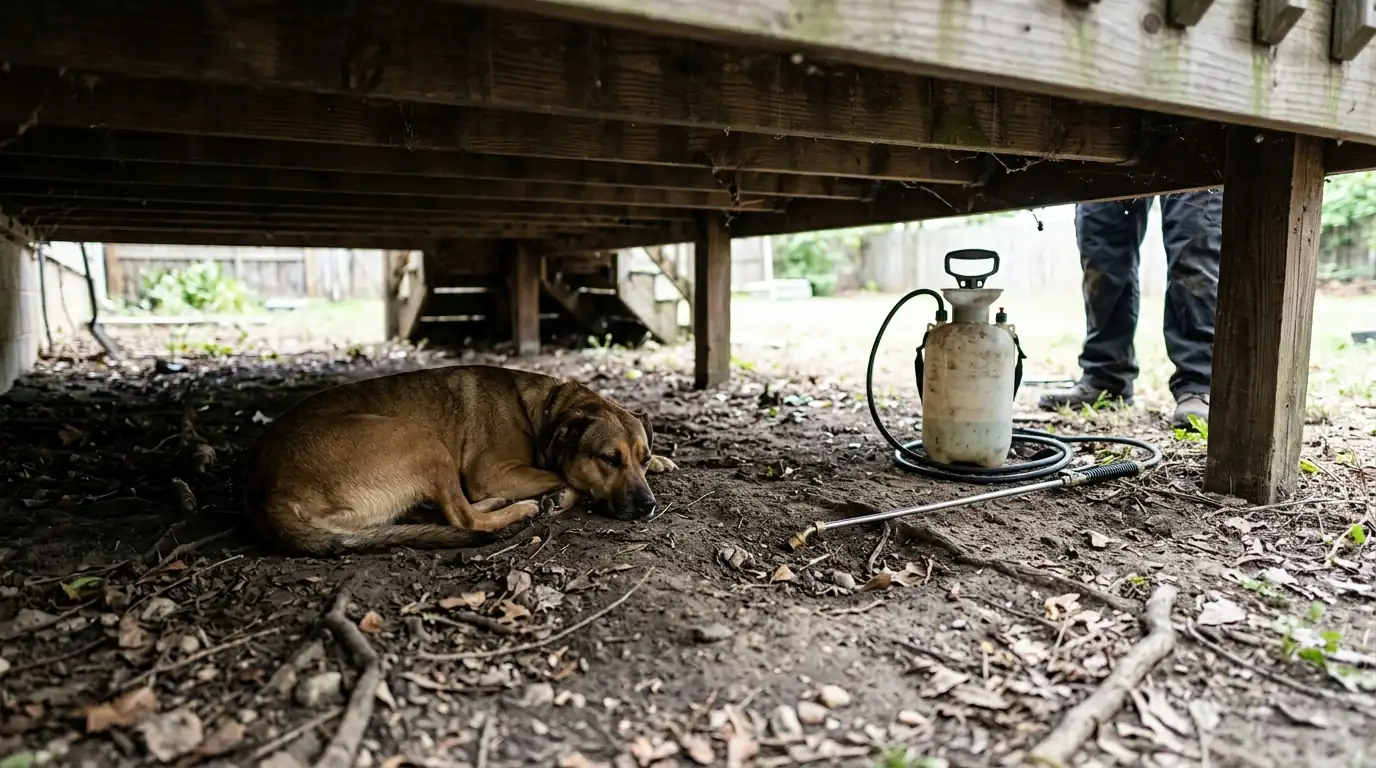
Outdoors, fleas live where the dog lies down, not across open lawn: shaded dirt under the deck, the cool patch by the foundation, the spot under the hedge. Those rest areas and the routes between them get treated, along with crawl space access where wildlife shelters. Sun-baked turf needs nothing. If an opossum or feral cat has denned under the structure, that is the source and it gets addressed in the plan.
Why it takes two visits, not one
Adults die within hours of the first treatment and the biting usually drops the same day. The pupae are the holdout: armored, chemically protected, hatching on their own schedule over one to three weeks. The growth regulator means nothing that hatches can reproduce, and the follow-up clears the hatch itself. Homes that stop after one visit are the ones that call back convinced it failed.
Getting bitten in your own living room? Phones are answered now.
Call (669) 369-0489What we see around San Jose
Fleas ride in on wildlife here as often as on pets, and San Jose yards see plenty of traffic after dark. Opossums denning under a deck or raccoons in a crawl space leave a flea population behind once the animal is gone, which is why a sudden problem in a pet-free home is usually a wildlife story. Mild winters mean no hard die-off, so an untreated yard population carries into next year.
What drives flea treatment cost
The price tracks treated area and visit count, both of which come out of the first walk-through.
| What moves the price | How it moves it |
|---|---|
| Home size and flooring | Carpeted square footage is the real number; tile and hardwood homes treat faster. |
| Indoor plus yard | Most infestations need both, but a yard-only or indoor-only job prices lower. |
| Infestation level | Heavier populations mean more treated area and sometimes a third visit. |
| Clutter and access | Floors that cannot be cleared take longer and treat less completely. |
| Wildlife source | A den under the structure adds removal and exclusion work to the plan. |
| Number of pets | More animals mean more rest zones and a longer coordination window with the vet. |
The quote covers the treatment plan including the timed follow-up, so the second visit is not a surprise line later.
Worth reading alongside this: pest control around pets and kids.