Short answer
A termite inspection in San Jose covers the whole structure, attic to crawl space, looking for subterranean mud tubes, drywood frass, beetle damage and the moisture conditions that invite all three. Findings are written down with locations so you can act on them or hand them to an agent. Inspection and treatment are quoted separately, which is how it should be.
What gets looked at during the inspection
A real inspection is a crawl-around, not a walk-past. Here is the ground covered on a standard single-family structure.
- Crawl space or slab perimeter, including piers, sill plates and subfloor
- Foundation walls and plumbing penetrations checked for mud tubes
- Attic framing, eave blocking and any accessible wall voids
- Garage, including the slab joint and any attached framing
- Window and door frames, trim and sills for frass and galleries
- Exterior siding, fascia, decks, fences and wood-to-soil contact points
- Moisture conditions: leaks, grading, ventilation and irrigation spray
- Written findings with locations, plus what is active versus historic
The inspection is the only part of this trade that is pure information. A technician walks the structure, probes suspect wood, documents what is there, and tells you what it means. Everything after that is your decision, and keeping those two things separate is what makes the report worth anything.
Most calls come from one of three situations: a property changing hands, something visible that worried someone, or a homeowner who has simply never had the house checked. The structures here earn the attention; between subterranean colonies in older neighborhoods and drywood activity in orchard-era framing, finding both in one house is not unusual.
Escrow and WDO reports
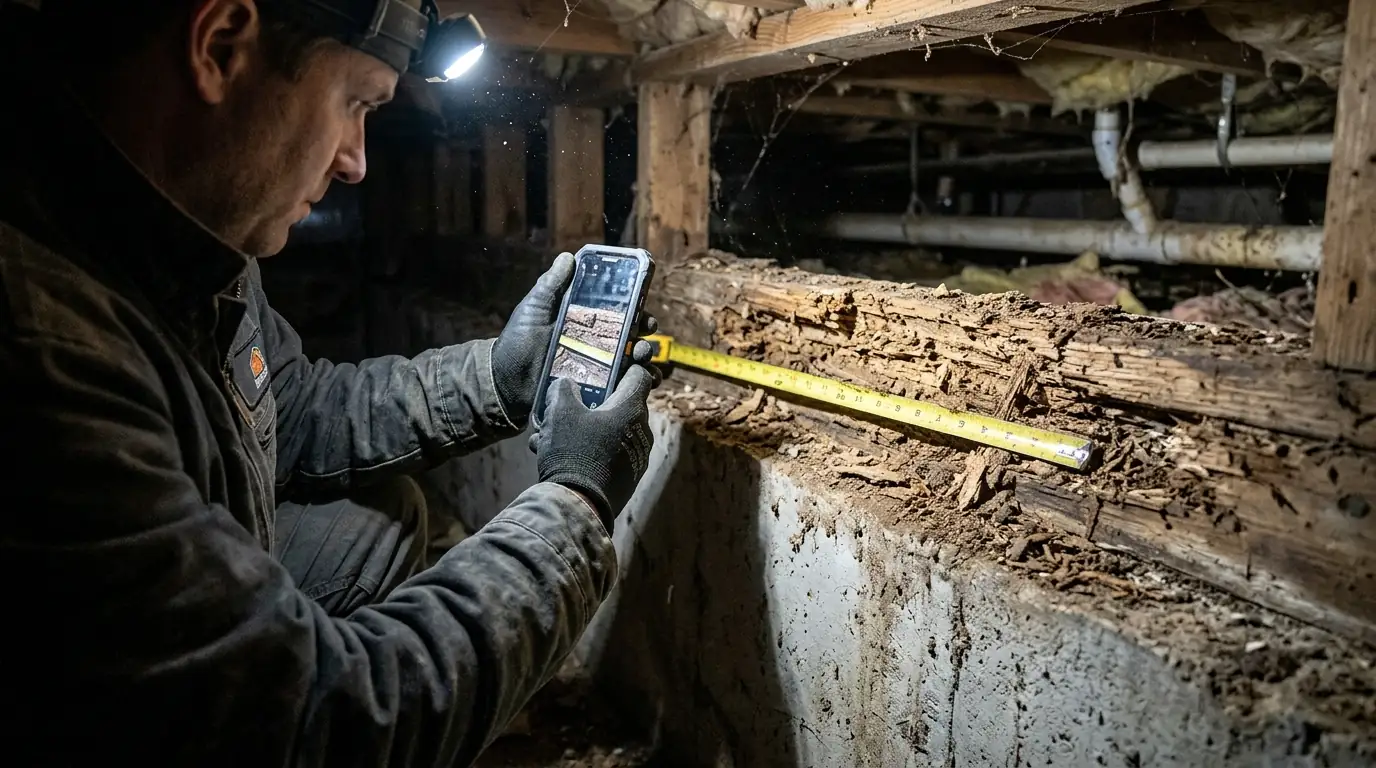
Property transactions run on deadlines, and a wood-destroying organism report is a document other people are waiting on. We inspect the whole structure, document findings by location with the conditions that caused them, and separate what is active damage from what is an old, already-dry condition. Agents and lenders care about that distinction and so should you, because paying to correct historic damage that is not spreading is money that belongs in the repair budget instead. Scheduling on escrow timelines is routine for us.
Annual inspections
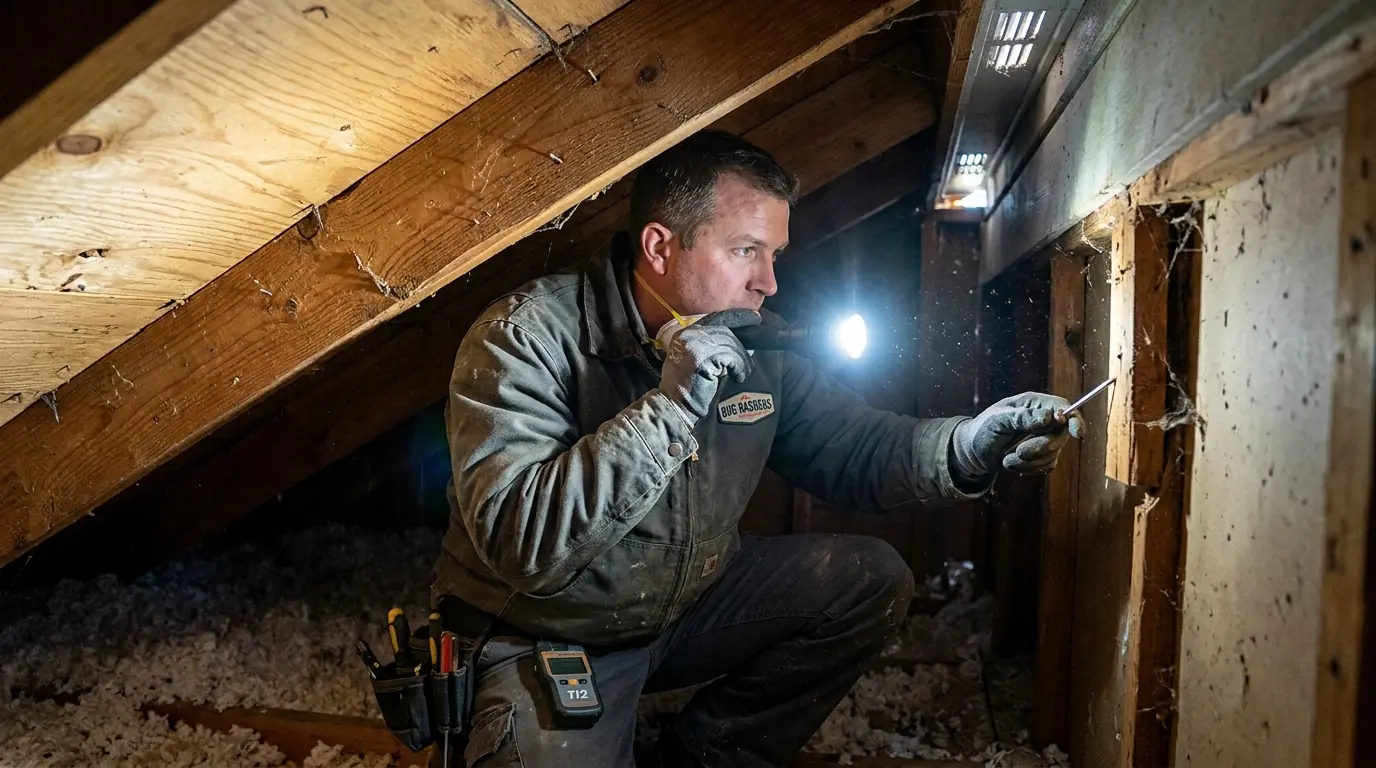
For owners not selling anything, a scheduled check is the cheap version of this trade. Termite damage is slow and silent, and the difference between finding subterranean activity this year and finding it in four years is usually the difference between a treatment and a treatment plus carpentry. An annual or biennial walk-through covers the same ground as a transaction inspection, builds a record of what changed since last time, and catches moisture problems, leaking hose bibs, blocked vents, failed grading, before they recruit anything.
How an inspection runs
Book the slot
Tell us whether this is a transaction, a worry or a routine check, and the timeline gets set around it.
Walk the structure
Interior, attic, crawl space, garage and the full exterior, with probing where wood sounds wrong.
Separate active from historic
Live workers, fresh frass and rebuilt tubes read active; dry, empty damage reads historic.
Deliver findings
You get the written record with locations and conditions, not a verbal summary at the door.
Price the options
If treatment is warranted, it is quoted separately so the inspection stands on its own.
What we see around San Jose
Two local patterns show up again and again on these walks. In Willow Glen and Naglee Park, pre-war homes put framing close to the soil, which is the setup subterranean colonies exploit, and around Santa Clara's Old Quad, orchard-era houses drop drywood frass onto window sills from original old-growth framing. Knowing which neighborhood pattern a house sits in does not replace the inspection, but it does tell a technician where to spend the extra ten minutes.
What an inspection costs and what moves it
Inspections price by the time the structure takes to walk properly, and that varies more than people expect.
| What moves the price | How it moves it |
|---|---|
| Square footage | Bigger structures take longer, and so do homes with multiple additions. |
| Crawl space access | A tight or partially blocked crawl space slows the most important part of the walk. |
| Number of structures | Detached garages, ADUs and outbuildings each add a full inspection area. |
| Report type | A transaction report with documented locations takes more desk time than a homeowner check. |
| Timeline | Escrow deadlines sometimes mean scheduling around other people's calendars. |
| Follow-up visits | Re-inspection after corrective work is a separate, smaller visit. |
Treatment, if any is warranted, is quoted on its own. Published California treatment ranges run $345 to $1,900 for subterranean work and $920 to $13,440 for whole-structure fumigation, which is why the inspection comes first.
If you want the background: drywood versus subterranean termites.