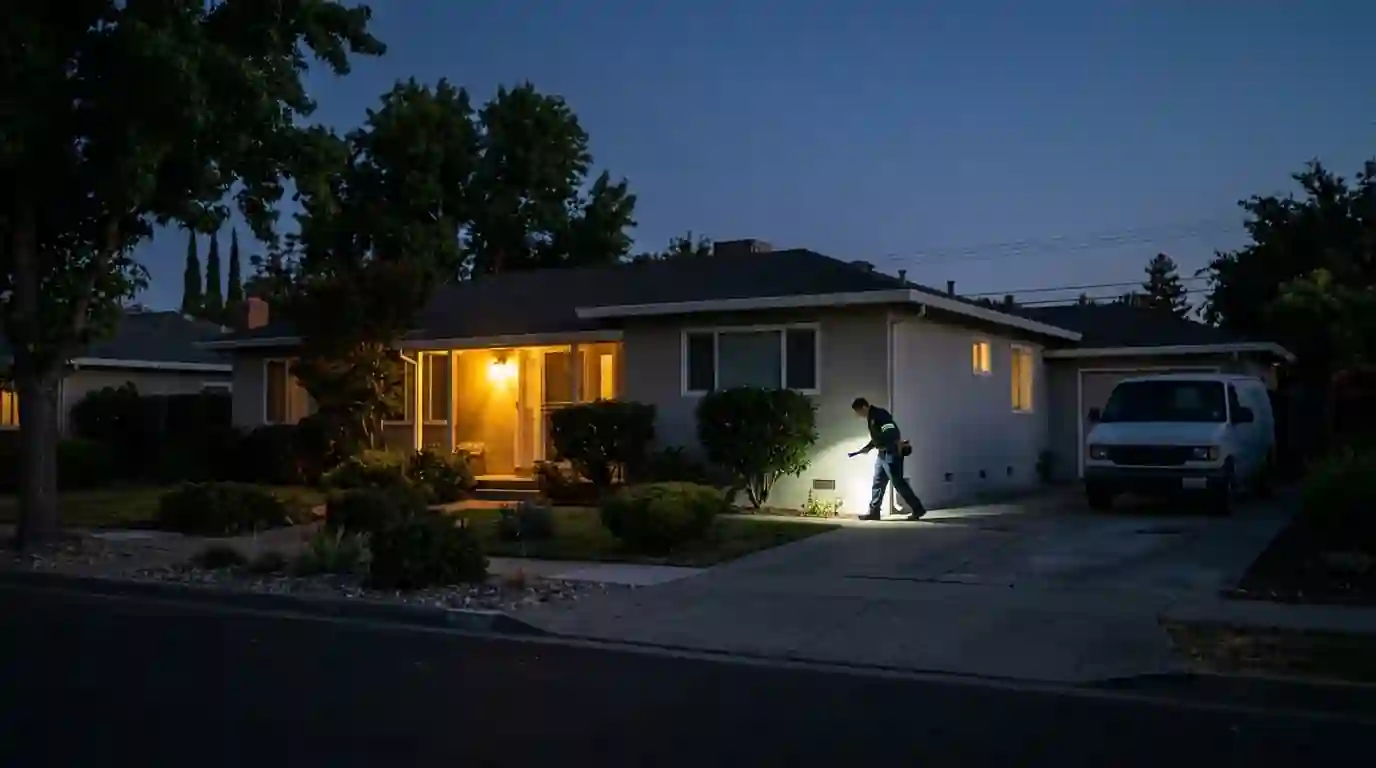
Short answer
Earwigs, silverfish and crickets in a San Jose home are moisture pests that live outside and wander in. Control works on the perimeter and the entry points, paired with the conditions feeding them: irrigation against the foundation, mulch piled at the wall, leaf litter, cardboard in a damp garage. Spraying indoors alone is treating the symptom.
What a visit covers
This is a perimeter and conditions job, so the visit is weighted to the outside of the house.
- Walk of the foundation line for damp harborage: mulch depth, planters, leaf litter, woodpiles
- Irrigation check for sprinklers spraying the wall or soaking the foundation
- Exterior perimeter band treatment through the harborage zones
- Entry treatment at door thresholds, weep holes, slab cracks and utility penetrations
- Garage and crawl space perimeter, including door sweeps
- Interior targeted treatment in bathrooms, closets and under sinks where activity shows
- Written notes on the moisture, lighting and storage changes that reduce pressure
These are the classic occasional invaders. None of them breeds in large numbers inside a dry house; they live in damp harborage outside and come in through the gap under a door or a crack at the slab edge, usually in numbers after a watering change or a weather swing.
That makes the treatment predictable and the prevention genuinely effective. Exterior perimeter work plus entry sealing handles the traffic, and reducing the damp harborage against the house reduces the population that is pressing in. Homes that stay on scheduled exterior service rarely see these at all, because the band stays current through the seasons they show up in.
Earwigs
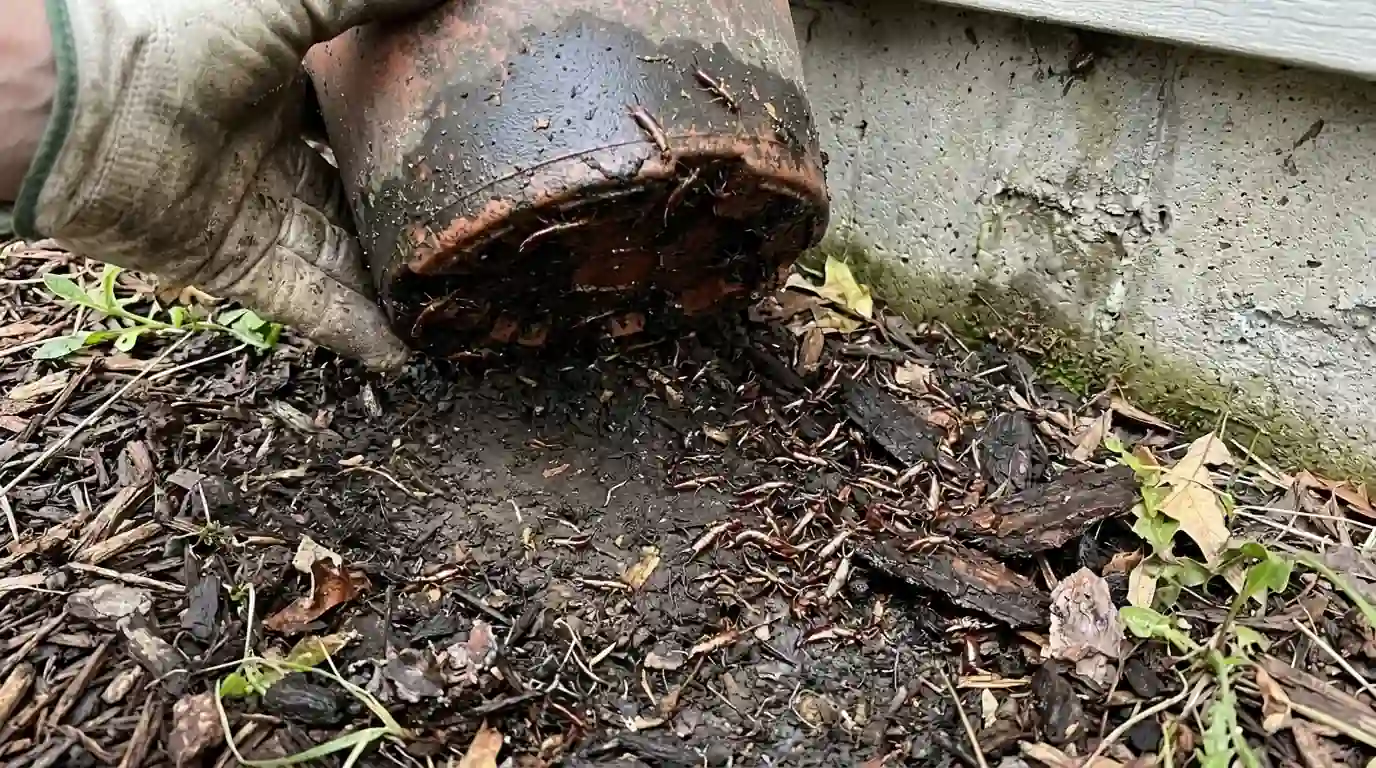
The pincer insects people find in bathrooms and kitchens at night. They live in mulch, under pots, in leaf litter and in the damp soil of planter beds, especially where irrigation keeps things wet against the house, and they come inside under doors and through weep holes. Treatment is an exterior band through the harborage plus entry points, and the practical fix alongside it is pulling mulch back a few inches from the foundation and adjusting sprinklers that spray the wall.
Silverfish
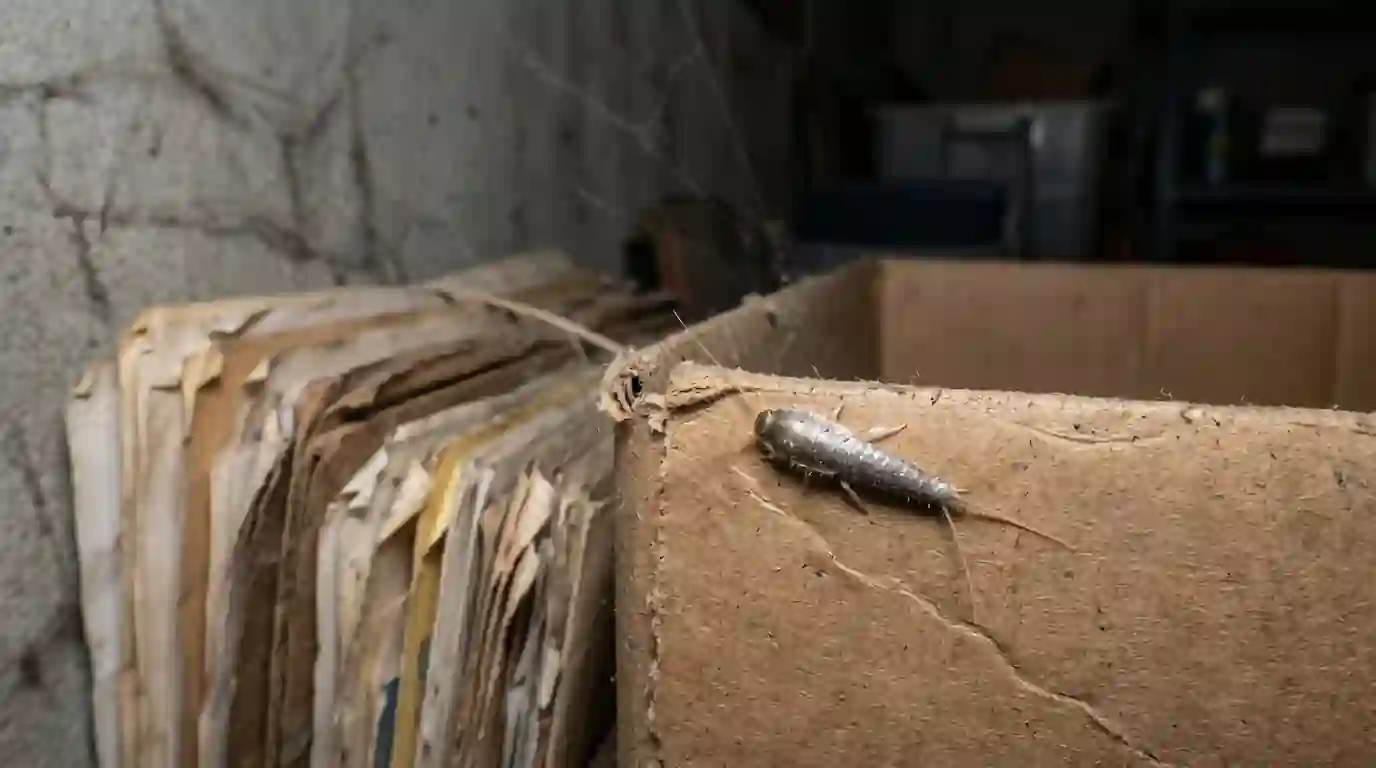
Fast, teardrop-shaped and silver, and the ones people find in bathrooms, closets and boxes of stored paper. Silverfish want humidity and starch, which is why they turn up in bathroom cabinets, around plumbing penetrations and inside cardboard storage in garages and crawl spaces. Treatment covers those voids and penetrations, and the lasting fix is usually ventilation or a dehumidifier in the room they favor, plus moving stored paper out of cardboard and into plastic bins.
Crickets
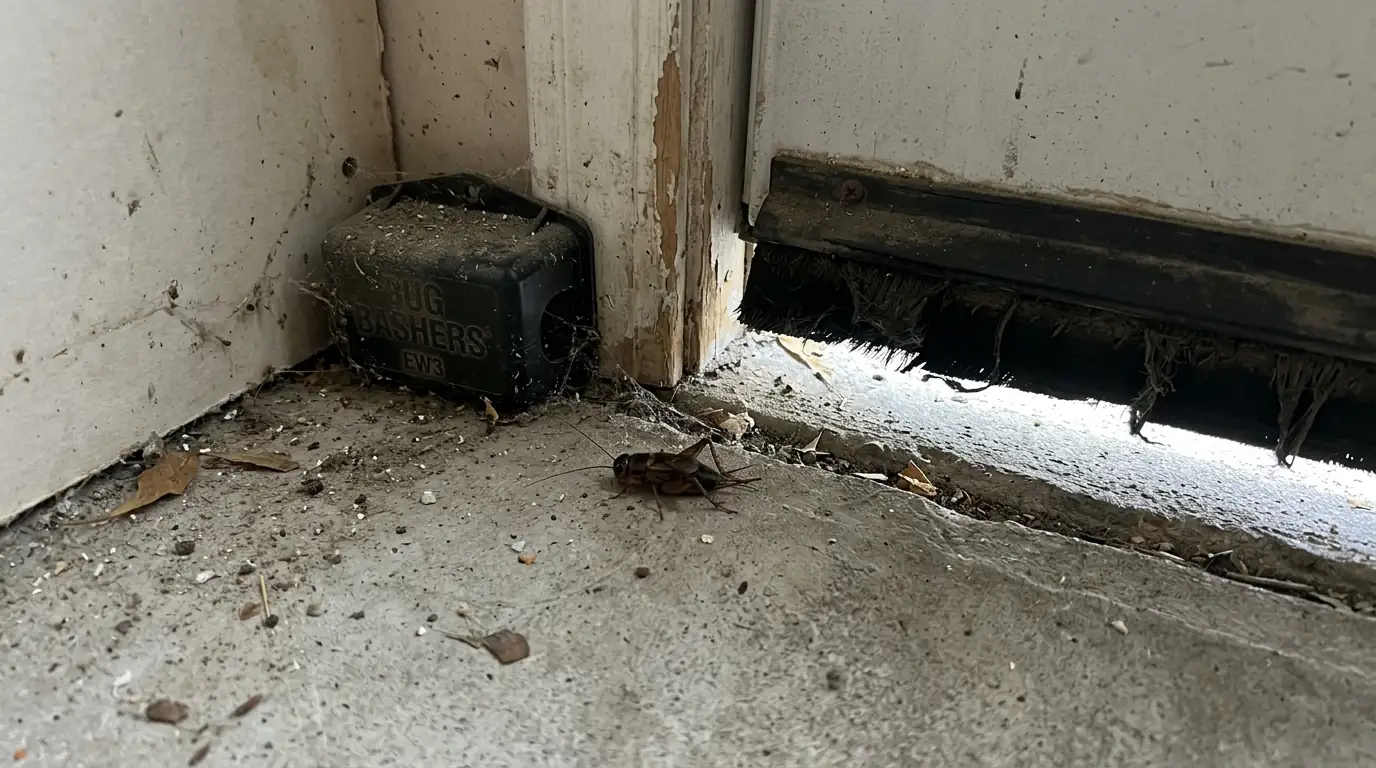
Mostly a garage and crawl space problem, and mostly a noise one, though they also chew paper, fabric and stored goods. Field crickets come in from landscaping and sheltered exterior areas, particularly where outdoor lighting draws them toward the house at night, and they settle in the first dark, undisturbed space they find. Treatment covers garage perimeters, door sweeps and crawl space access, and switching exterior lighting to warmer bulbs reduces the nightly delivery service.
How these get handled
Identify what you have
Earwig, silverfish or cricket, each with its own harborage and entry pattern.
Read the moisture
Irrigation, mulch, grading and ventilation get checked, because they are the actual cause.
Treat the perimeter
The band goes through the harborage zones and across the entry points.
Target indoors
Bathrooms, closets and plumbing voids get specific treatment where activity is showing.
Hand over the fixes
Mulch depth, sprinkler aim, storage bins and lighting changes, in writing.
What we see around San Jose
San Jose's watering pattern drives this more than the weather does. Through the dry months, the only reliably damp ground on most lots is the irrigated strip right against the house, so earwigs and silverfish concentrate exactly where they can get in, and a sprinkler head aimed at the wall is worth more to them than any amount of rain. Homeowners who shift that irrigation away from the foundation usually see the indoor sightings drop before we ever come back.
What sets the price
These are perimeter jobs, so the price tracks the footprint being treated and whether the pressure needs ongoing cover.
| What moves the price | How it moves it |
|---|---|
| Perimeter footage | The exterior band is the bulk of the work on every one of these jobs. |
| Landscaping depth | Heavy planting, mulch beds and groundcover against the house add treated surface. |
| Entry point count | Thresholds, weep holes, slab cracks and penetrations each get attention. |
| Garage and crawl space | Including those areas extends the visit beyond the house perimeter. |
| Interior involvement | Bathrooms and closets showing activity get targeted indoor work. |
| One-time or scheduled | Recurring seasonal pressure usually costs less covered on a plan. |
Price comes after the walk-around, and if the honest answer is that moving a sprinkler head will do more than another visit, that is what you will hear.
More on this in Pest Watch: why Argentine ants keep coming back.