Short answer
A wood-destroying organism report on a San Jose home covers accessible structure for termites, beetles, fungal decay and the moisture conditions behind them, with findings documented by location and active evidence separated from historic damage. It does not see inside finished walls, and inaccessible areas get listed as inaccessible rather than cleared.
In a California transaction the pest report is one of the few documents that attaches a dollar figure to a physical condition, which is why both sides pay attention to it. For a buyer it answers two questions: what is wrong, and what will fixing it cost.
What a report actually covers
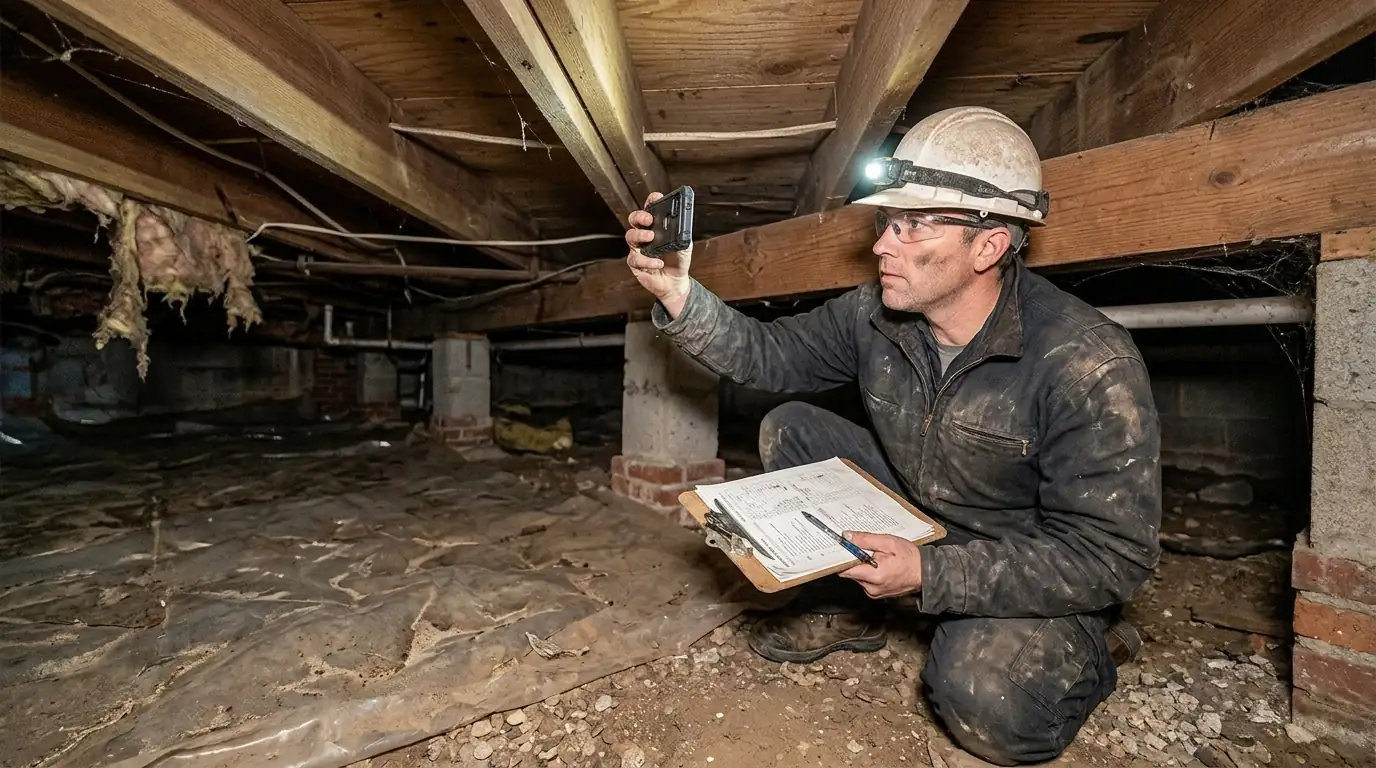
- Crawl space or slab perimeter, including piers, sill plates and subfloor
- Attic framing, eave blocking and accessible wall voids
- Garage, including the slab joint and attached framing
- Window and door frames, trim, sills and any wood-to-soil contact
- Exterior siding, fascia, decks, fences and outbuildings where in scope
- Fungal decay and the moisture conditions that caused it, which is often the most useful section
Note what is on that list besides termites. Decay, beetles and moisture conditions frequently carry more repair cost than the insects do, and buyers reading only for the word termite miss the expensive part.
Active versus historic, and why it decides money
A good report separates live activity from old, dry damage that stopped years ago. That distinction is where negotiations go wrong most often, because paying for treatment of a dead infestation benefits nobody, while skipping repair of structurally compromised wood because the insects are gone is its own mistake.
Live subterranean workers inside a broken mud tube, fresh frass reappearing after a cleared sill, or a tube rebuilt within days all read active. Dry, crumbling tubes that stay broken and empty galleries with no fresh frass read historic. The report should say which is which, with locations.
What it does not tell you
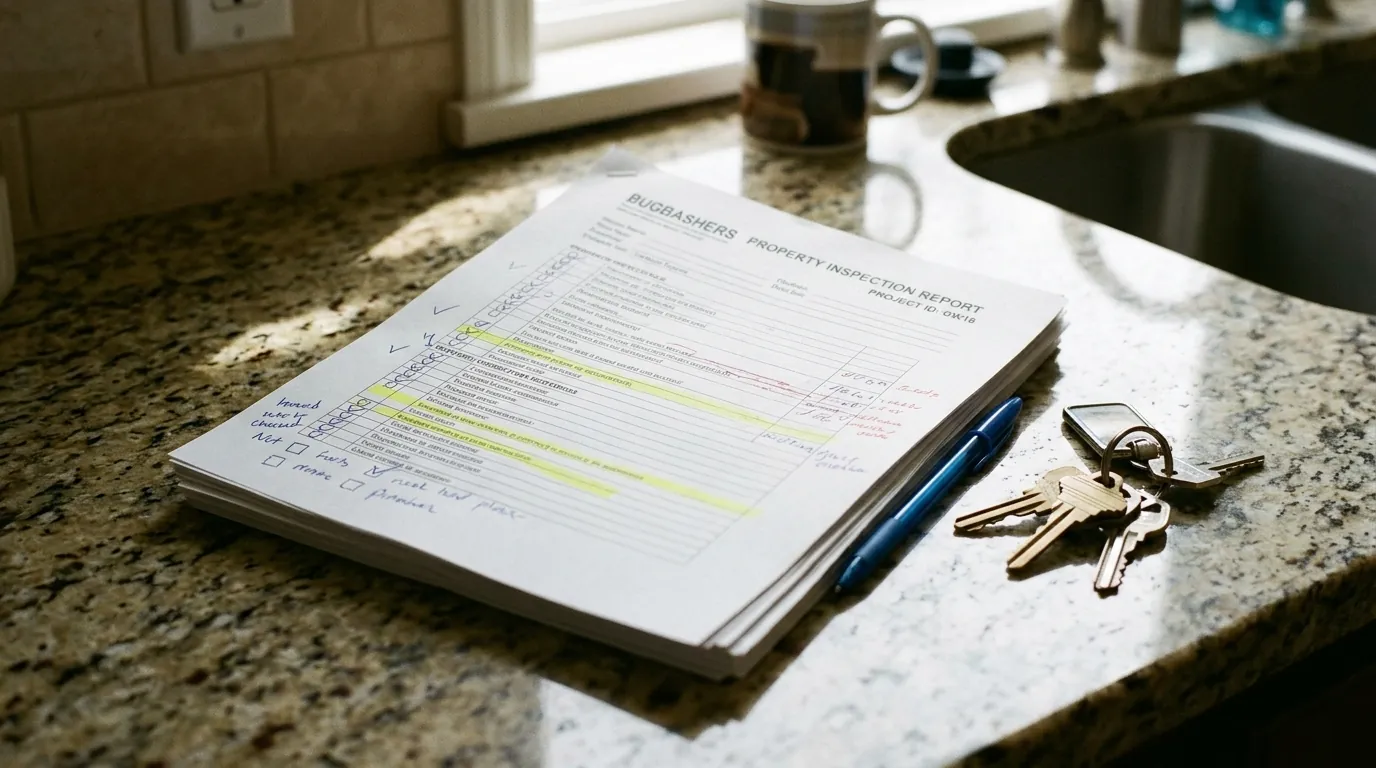
It reads what is accessible and visible plus what probing and sounding reveal. It does not see inside finished walls. A report that quietly omits a sealed crawl space section or a finished basement wall is less useful than one that lists those areas explicitly as inaccessible, so you know where the uncertainty sits.
It also does not predict. A clean report on a thirty-year-old home means no evidence found today, not immunity. In a valley where the roof rat is the most abundant rodent pest and termite pressure is constant, that distinction matters for how you plan the first year of ownership.
Using the findings
Reading the report before you negotiate
- Separate the active findings from historic damage; they justify different asks
- Check whether treatment and repair are priced separately, since carpentry is usually the larger number
- Look at the moisture section; correcting drainage or ventilation often prevents the issue recurring
- Note every area listed as inaccessible and decide whether any of them is worth opening before closing
- Compare any treatment quote against published California ranges rather than accepting it in isolation
On the last point, published California figures run roughly $345 to $1,900 for subterranean treatment and $920 to $13,440 for whole-structure fumigation depending on size. Those are planning figures, not quotes, but a number far outside them is a reason to ask what is driving it.
What to do in the first year after closing
Two things carry most of the value. Correct whatever moisture conditions the report flagged, because grading, drainage, irrigation spray against the wall and blocked crawl space vents are what invite the next problem. Those are usually cheap fixes relative to what they prevent.
Then set a rhythm. An annual or biennial inspection keeps a running record of what changed, which matters more on an older house with framing close to soil. If the report listed areas as inaccessible, note them and check them during any remodel that opens the space up.
Whose inspector
There is an obvious tension when the company writing the report also profits from the recommended treatment. It is not automatically a problem, and plenty of operators handle it properly, but an independent inspection is cheap insurance when the findings are substantial or the recommended work is expensive.
If you are selling instead, the same logic runs backwards: a pre-listing inspection lets you correct things on your own timeline rather than under a deadline with a buyer holding the report.