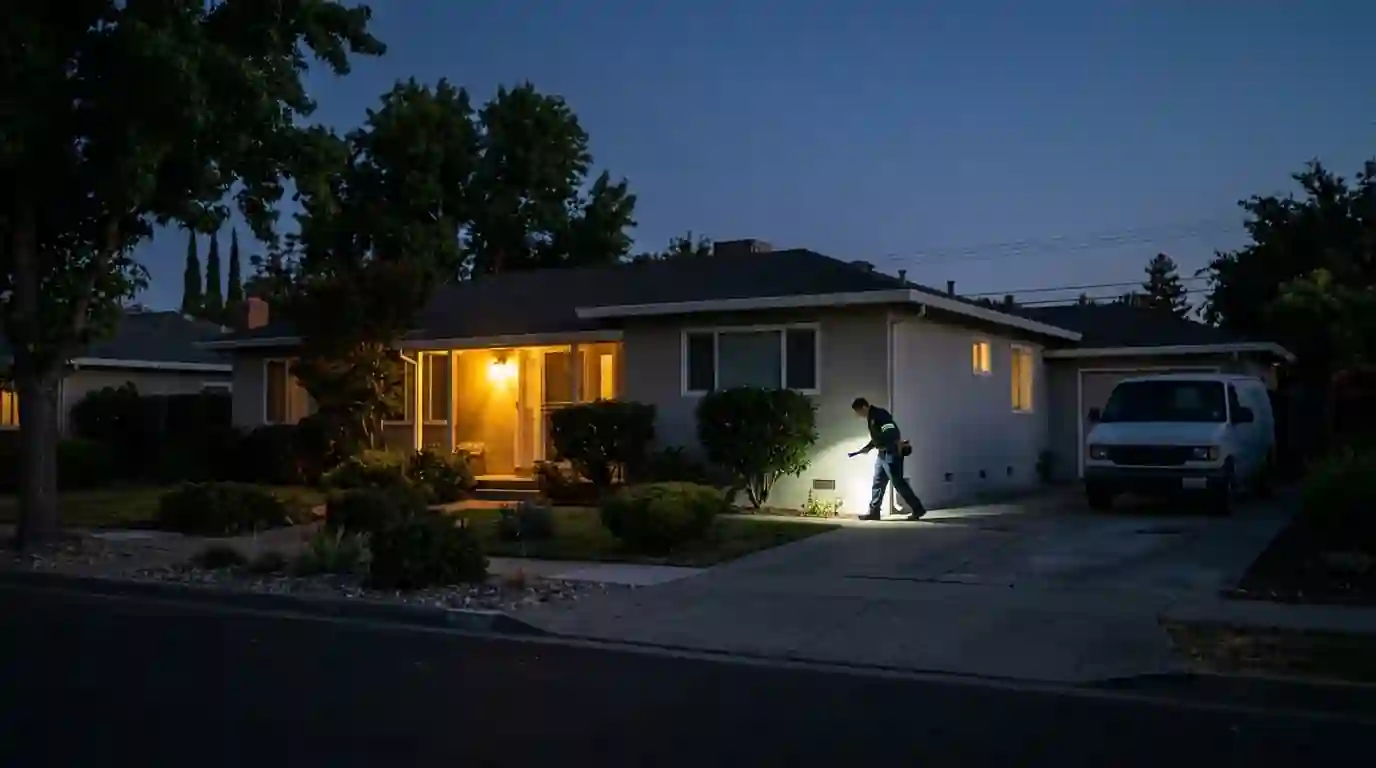
Short answer
House mice in a San Jose home get handled with placements and sealing together: tamper-resistant bait stations and traps go on the runways mice actually use, and the dime-sized gaps letting them in get closed so the population can't refill. Mice breed every three weeks, which is why a few droppings deserve a same-week response rather than a wait-and-see.
Mice live closer to you than rats do. They nest inside the kitchen they feed in, travel a few feet along walls, and squeeze through any opening a pencil fits: the gap under the garage door, the hole around a pipe under the sink, the weep screed at the stucco line. That short range is good news, because it means the evidence tells us almost exactly where to work.
The two halves of the job carry each other. Placements knock the current population down fast; sealing keeps the vacancy from refilling from the garage or the yard. Skip the sealing and you're renting the result instead of owning it.
What sets the price on mouse work
Mouse jobs price by placements, sealing scope and follow-ups, and the first visit fixes all three in a written plan.
| What moves the price | How it moves it |
|---|---|
| Active areas | A garage-only problem is smaller than kitchen, pantry and laundry together. |
| Sealing scope | A few pipe gaps differ from a full garage-door sweep and screed line. |
| Follow-up visits | Heavier populations need more reads before two clean ones land. |
| Construction type | Raised foundations add crawl space checkpoints slab homes don't have. |
| Attached neighbors | Shared walls can keep pressure on and extend the monitoring. |
| Ongoing prevention | Some homes roll close-out into a quarterly exterior plan; that's a choice, not a requirement. |
You get the placement count, sealing list and visit schedule priced in writing before work starts.
House mice
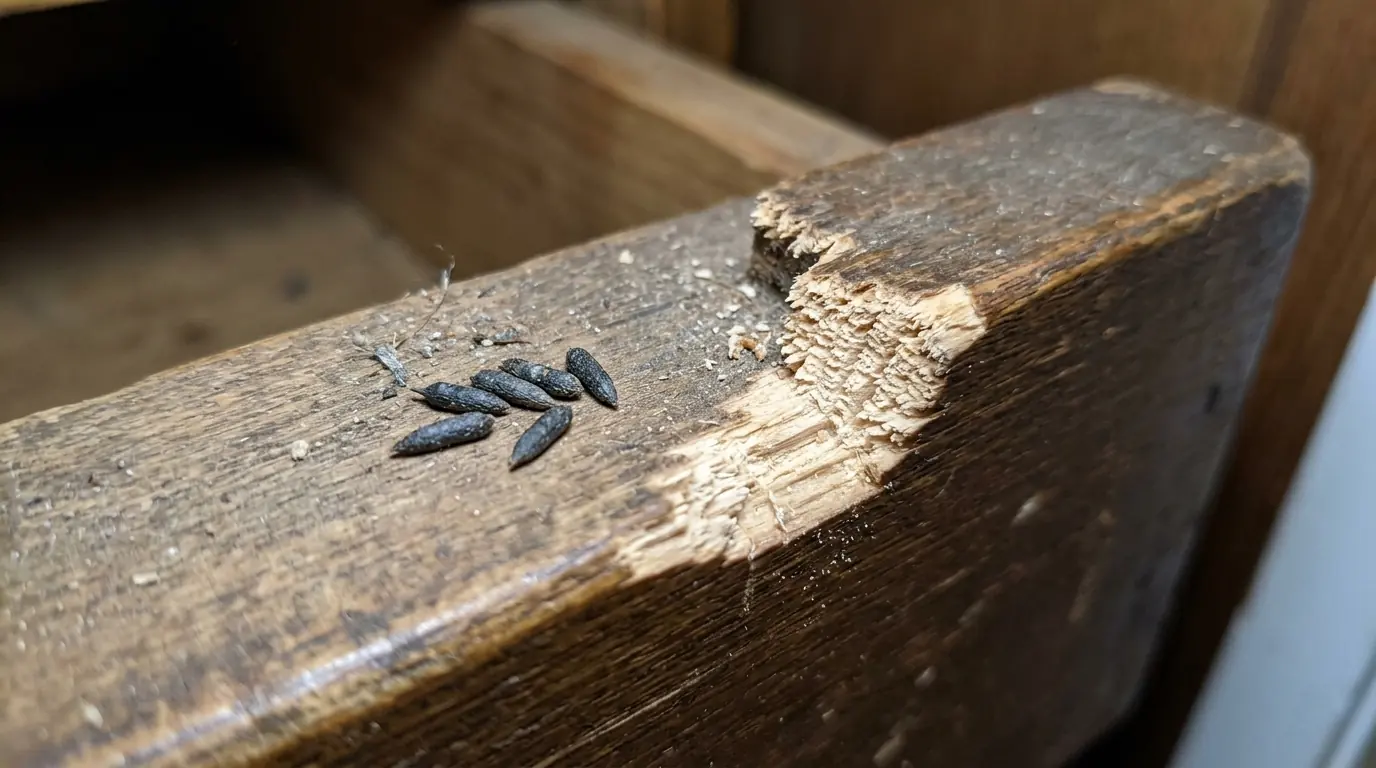
Identification matters because the treatments differ. House mouse droppings are rice-grain sized with pointed ends, a quarter the bulk of a rat's, and mice gnaw neat dime-sized holes where rats leave rough quarter-sized ones. Mice are also curious where rats are wary, so traps catch them quickly when placed tight along the runway walls they hug. If the droppings upstairs say roof rat instead, you want the rat program, and we'll tell you which you have on the first visit.
Kitchen and garage baiting
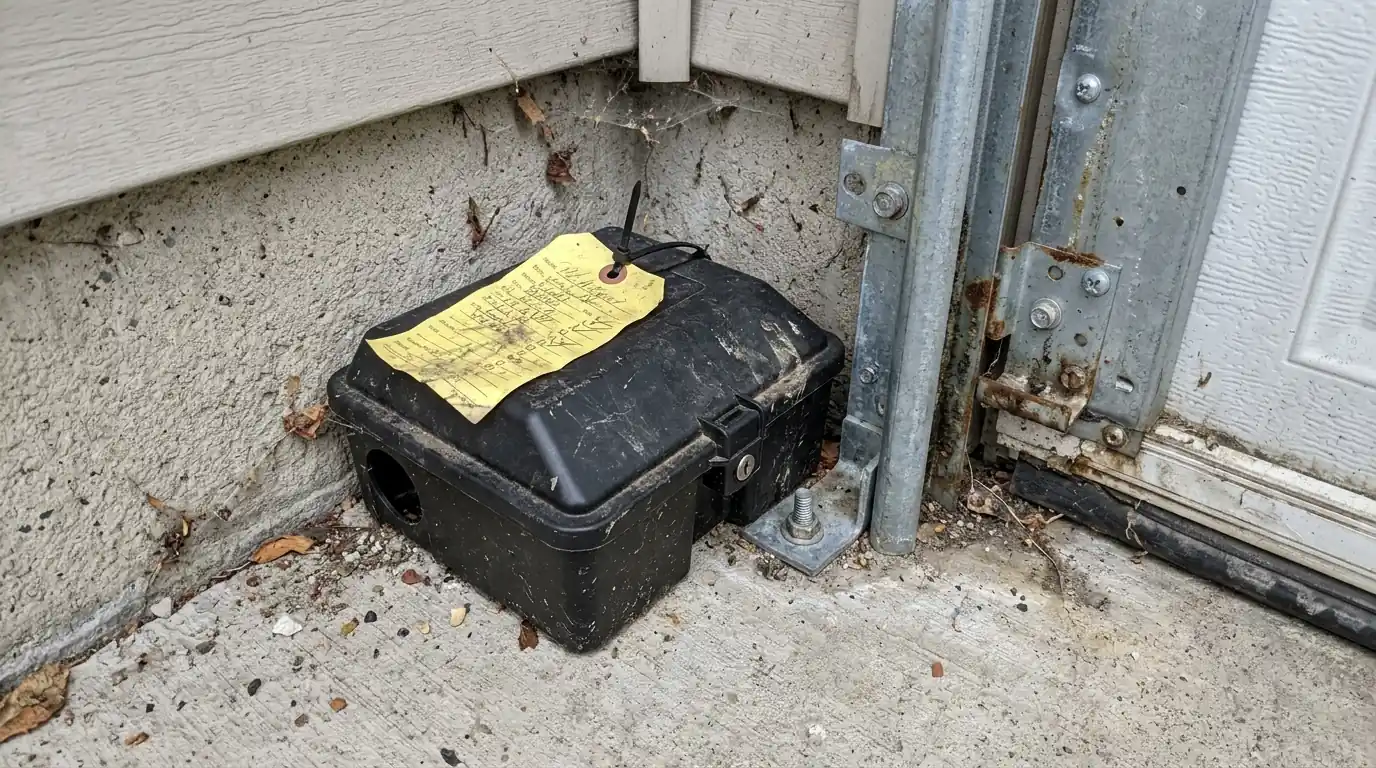
Placements go where the evidence is, not scattered by habit: secured, tamper-resistant stations along the garage wall lines and exterior, and snap traps rather than rodenticide inside kitchens, so nothing dies unreachable behind the cabinets. Stations are locked, anchored and labeled, which keeps kids, dogs and curious hands out of them. Follow-up visits read the take at each placement and shift them until activity reads zero.
The plan from first droppings to zero
Evidence read
Droppings, gnaw marks and rub lines confirm mice and map their runways.
Placements
Secured stations and snap traps go tight on the runways, kitchens kept rodenticide-free.
Seal the gaps
Pipe penetrations, door sweeps and screed gaps get closed with gnaw-proof materials.
Follow-up reads
Each visit counts the take and moves placements until activity stops.
Close-out
Two clean reads in a row and the job closes, with the sealing left in place for good.
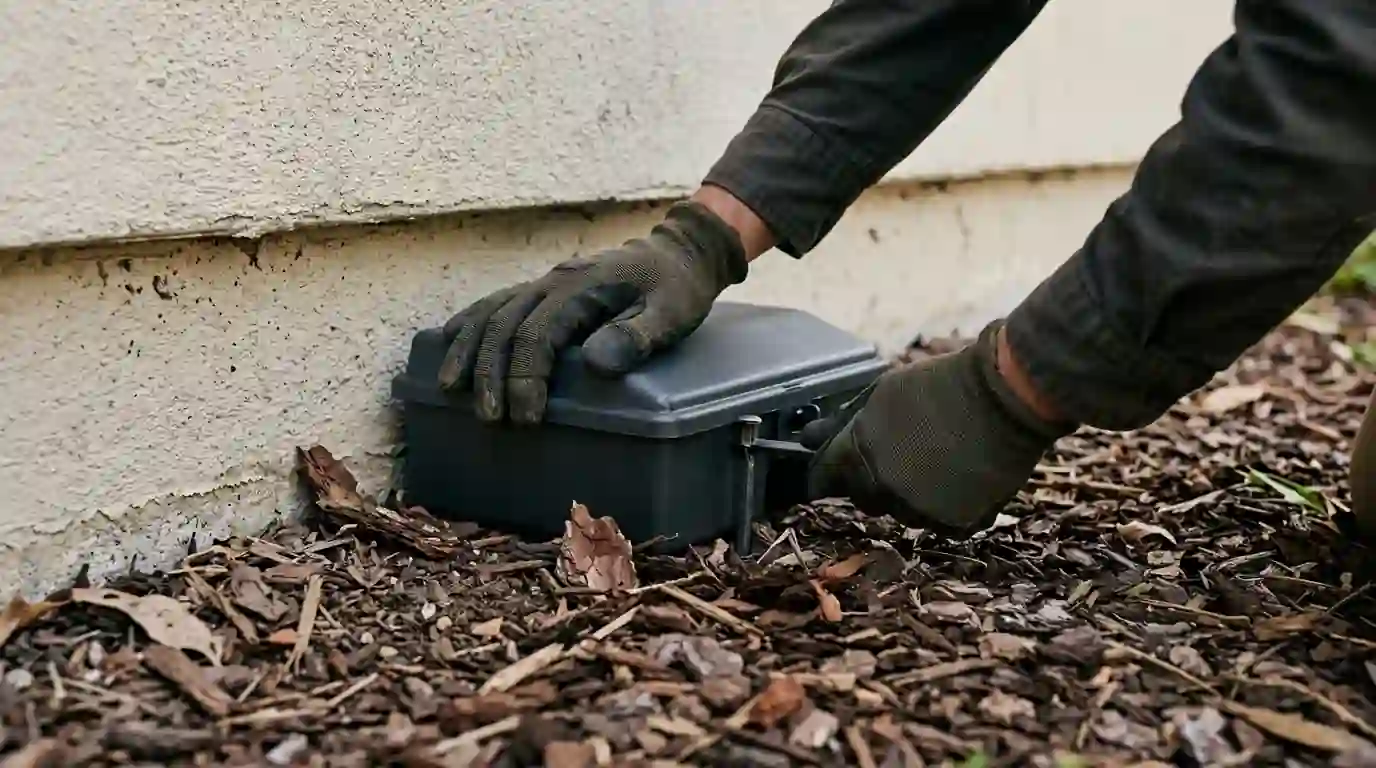
Droppings in the kitchen this morning? Same-week placements.
Call (669) 369-0489What we see around San Jose
House mice sit alongside Norway rats and roof rats as the three commensal rodents the Santa Clara County vector district tracks, and they're the one of the three that lives entirely at hand level, in the kitchens and garages people use every day. Local note worth acting on: our mild winters never force the seasonal die-back colder regions get, so a San Jose mouse population left alone in a garage simply compounds through the calendar instead of resetting each spring.
Related reading: seven signs of roof rats in an attic.