Short answer
A quarterly pest plan in San Jose means four scheduled exterior services a year that keep ants, spiders, roaches and occasional invaders from building pressure against the house. Most of the work happens outside, interior treatment is available when you want it, and anything that shows up between visits gets handled without an extra charge. No long contract.
What each scheduled visit includes
This is the standing scope. If a visit ever skips part of it, the service note will say why.
- Full exterior perimeter band treatment around the structure
- Eave, soffit and entry sweep, including web and nest removal
- Door frames, window frames and utility penetrations treated
- Harborage check: woodpiles, meter boxes, irrigation valve boxes, trash enclosures
- Rodent evidence check at the roofline and foundation
- Interior treatment on request, targeted rather than blanket
- A written service note with what was found and what was treated
- Free re-service between visits if activity shows up
The case for scheduled service in this valley is specific rather than general. Argentine ants run linked supercolonies that never leave, roof rats breed through our mild winters without a seasonal reset, and spiders and occasional invaders follow both. Against standing pressure like that, one-off treatments buy weeks.
A plan moves the fight outside. Each visit treats the perimeter band, sweeps eaves and door frames, clears webbing, and checks the harborage points that always start it: the woodpile, the irrigation box, the trash enclosure. The pests that genuinely do not need this, a one-off wasp nest or a spider flare-up, are better served by a single visit, and we will say so.
Quarterly service
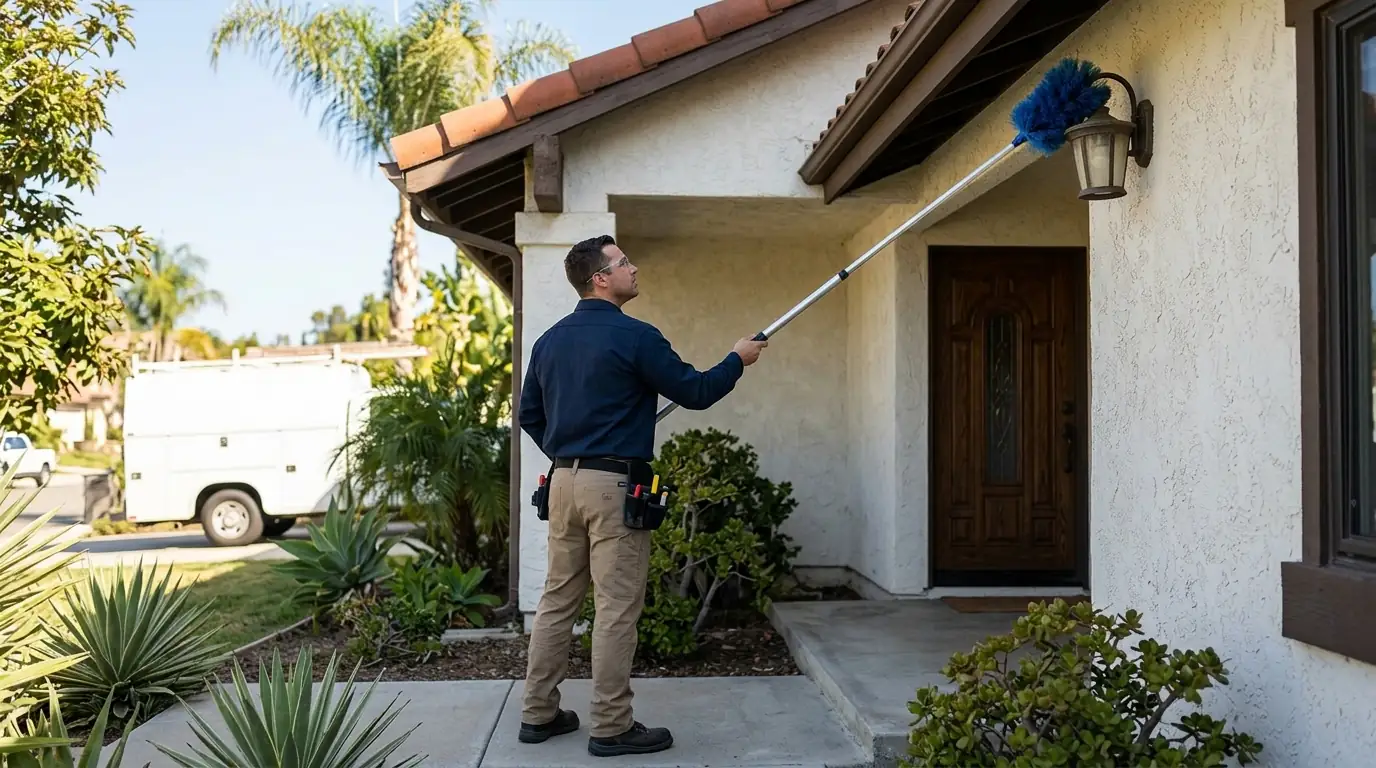
Four visits a year, timed to the seasons rather than to a billing calendar: spring as ants push indoors, summer for peak activity, fall as rodents and occasional invaders look for shelter, winter for the slower maintenance pass. Each visit is a full exterior treatment plus the eave and entry sweep, with interior work when you ask for it. Between visits, if something comes up, we come back out and handle it at no additional charge, because that is what makes scheduled service worth more than four separate calls.
Bi-monthly service
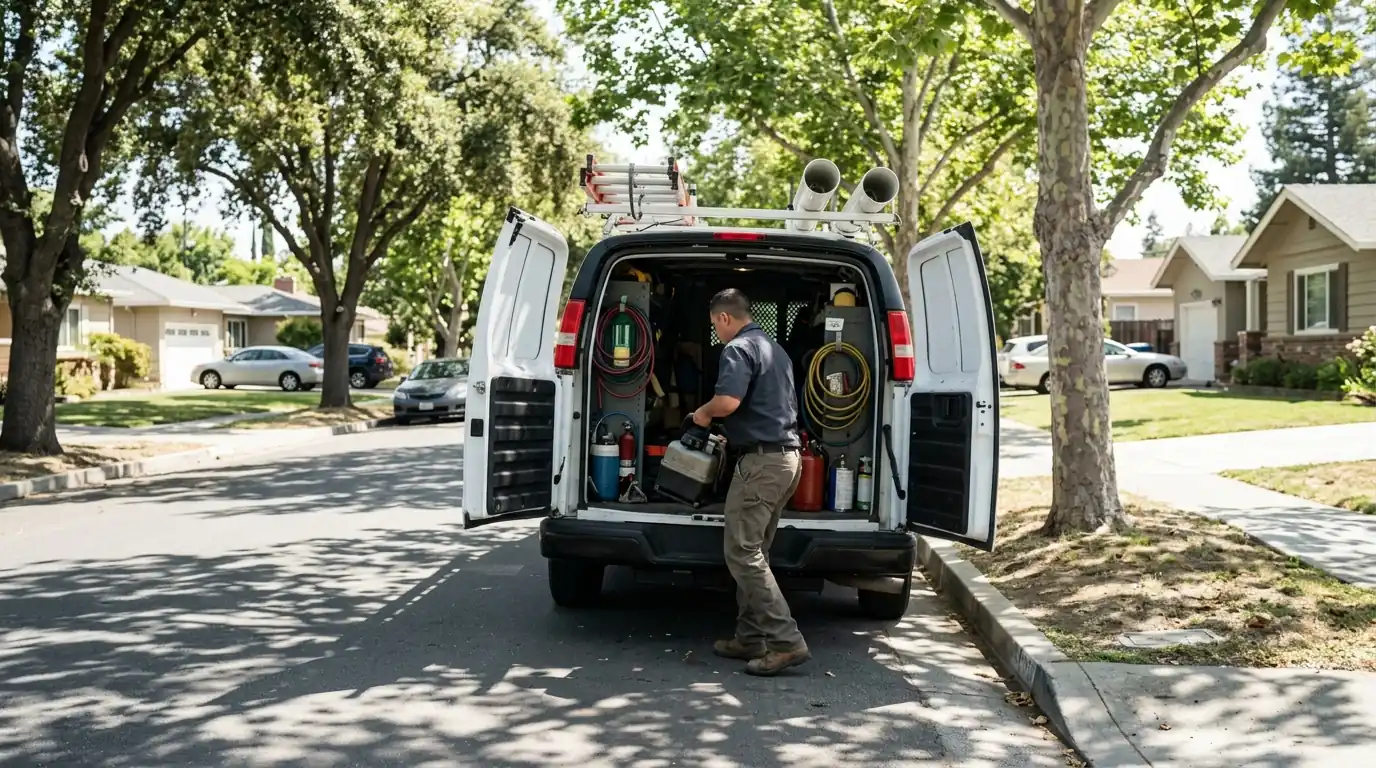
Six visits a year, the right cadence for properties under heavier pressure: homes backing onto creeks and open space, lots with mature fruit trees and dense canopy, or any property where the quarterly cycle keeps showing activity in the last few weeks before the next visit. The tighter spacing means the residual never fully lapses. We do not sell this as the default; we recommend it when the service history actually shows the gap, and plenty of homes step back down to quarterly after a season.
How a plan runs through the year
First service
A heavier initial visit knocks down what is already there, inside and out as needed.
Set the cadence
Quarterly or bi-monthly, based on your lot and what the first visit found.
Scheduled visits
Exterior band, eave sweep and harborage check every time, interior on request.
Between-visit calls
Something shows up, we come back out, no additional charge.
Review the history
Service notes build a record, and the cadence steps up or down based on it.
Same ants, same spring, every year? Put the pressure outside.
Call (669) 369-0489What we see around San Jose
Two local facts make the case here better than any sales pitch. Argentine ants run linked supercolonies across the valley year-round, so the outdoor population pressing on your house never actually goes away, and the roof rat is the most abundant rodent pest in Santa Clara County, breeding through winters that never force a die-back. Scheduled exterior service is simply the maintenance answer to pressure that has no off-season.
What a plan costs and what moves it
Plans are priced per visit by the property, not by a package tier, and the first service usually prices higher than the recurring ones.
| What moves the price | How it moves it |
|---|---|
| Property size | Perimeter footage and number of stories set the exterior work on every visit. |
| Lot conditions | Heavy landscaping, slopes and outbuildings add treated surface. |
| Starting conditions | An active infestation means a heavier initial service before the cycle settles. |
| Cadence | Bi-monthly costs more per year than quarterly and less than repeated emergency calls. |
| Pests included | General pest cover is standard; termites and wildlife are separate work. |
| Access | Locked gates, dogs and tight side yards affect how a visit has to be scheduled. |
Pricing is per visit with no long contract and no cancellation fee. If the plan stops being worth it, you stop it.
More on this in Pest Watch: how to choose a pest company.