Roof rats
Mature trees over the roof and aging vents give them food and entry together.
Coverage
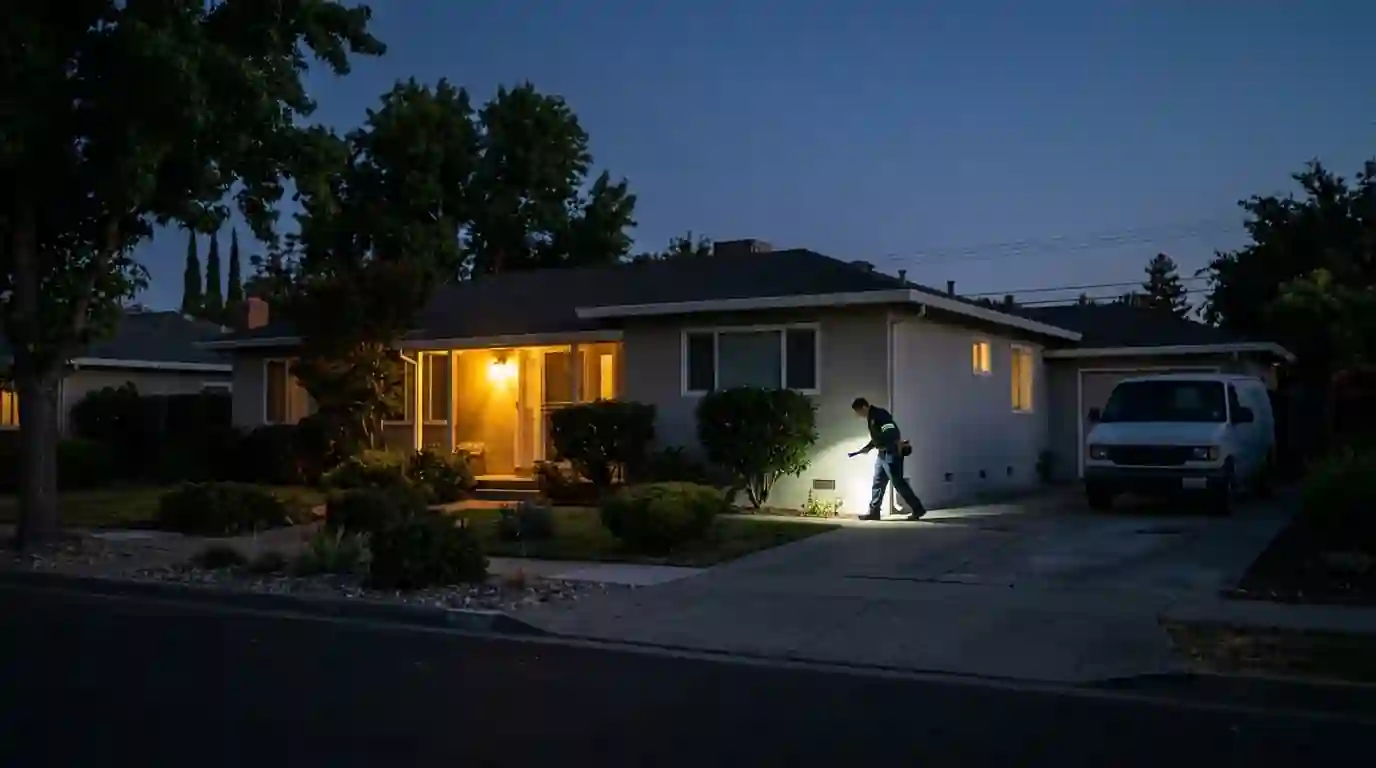
Cambrian is settled post-war housing with fifty years of landscaping around it, which is a reliable recipe for rodents at the roofline and ants at the foundation.
Local focus
Short answer
Pest control in Cambrian Park runs on the same catalog we use across the Bay Area, with the emphasis set by what this area actually produces: roof rats, subterranean termites and the conditions behind them. Phones are answered around the clock and crews route out from the San Jose service office.
The homes here are mostly from the fifties and sixties: raised foundations on many streets, original vents, and mature trees that now reach the roofline. Those are the conditions roof rats use, and the vents are usually the way in once they are up there.
Termite work shows up too. Framing on these homes is old enough and close enough to grade that subterranean activity turns up regularly, particularly where irrigation has been running against a foundation for decades.
What we see here
Mature trees over the roof and aging vents give them food and entry together.
Post-war framing close to grade with long-standing irrigation at the foundation.
Settled landscaping pressed against walls keeps trails coming.
Garages and eaves, especially where exterior lighting runs all night.
On the ground
Crews run out of the San Jose service office, and routing is built around the day rather than a fixed territory, so a wasp nest or a biting-pest call gets moved up regardless of which part of the coverage area it sits in. Inspections and scheduled service book within a few days.
Coverage here takes in the post-war residential streets, the blocks around the shopping corridors and the newer infill housing. If you are just outside what is listed, call anyway and we will tell you plainly whether we can route to you rather than taking a booking we cannot keep.
Local detail
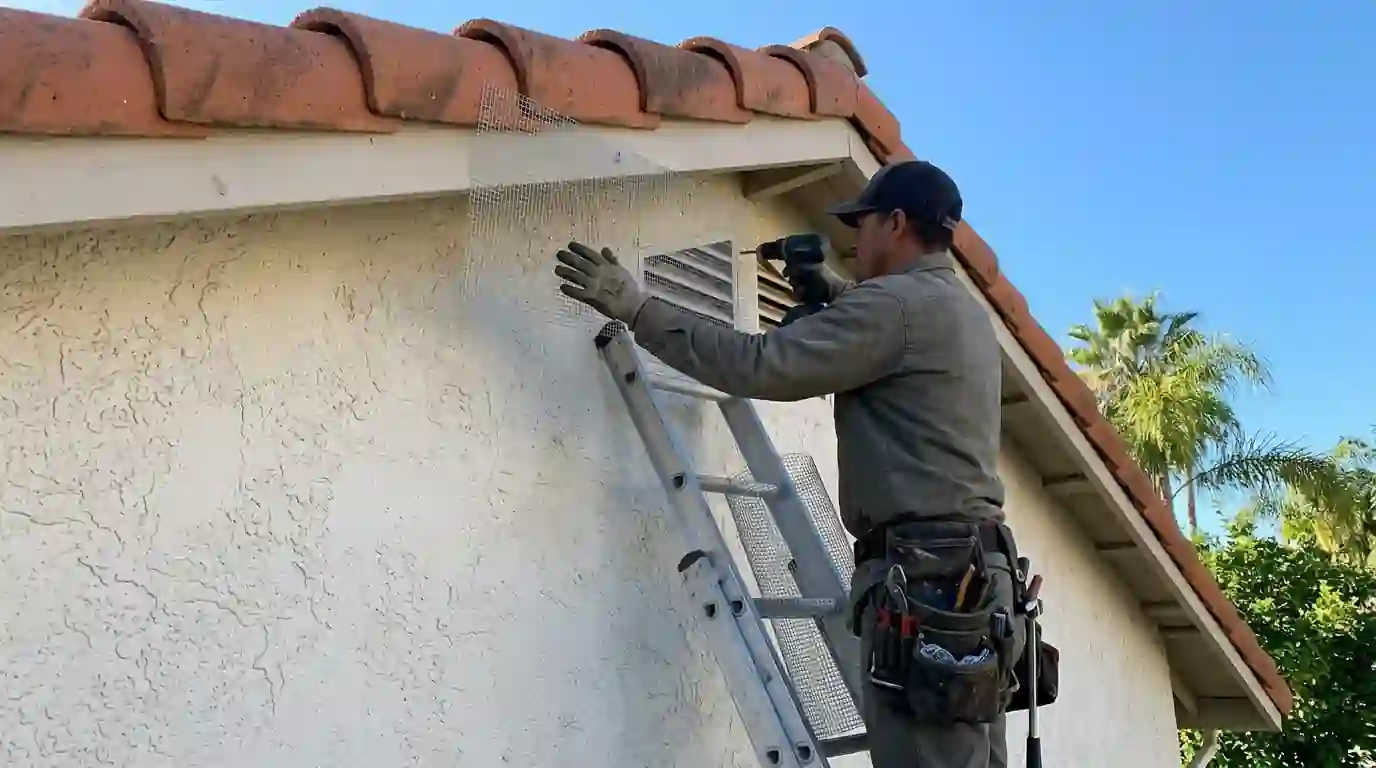
Foundation and attic vents installed in the fifties were never rodent-rated, and sixty years of weather has done the rest. Chewed or rusted screens are one of the most common findings on these streets.
Replacing them with properly fastened galvanized mesh, while keeping the airflow, is usually the single highest-value hour of work on the whole job.
The roof rat is by far the most abundant rodent pest in Santa Clara County, and Cambrian's combination of mature canopy and sixty-year-old vents is exactly what it exploits. The practical pattern on these streets is that trimming trees helps and sealing the vents and eave line finishes it, because fences and utility lines carry them the rest of the way.
Straight answers
Because fences and utility lines carry them too. Trimming plus sealed vents and eave lines is the combination that holds.
If the screens are chewed or rusted, yes. Patching a failed screen rarely holds, since the rat already knows the spot.
Yes. Framing close to grade plus decades of foundation irrigation is the usual setup, and first inspections here often find something.
Yes, and most visits on these streets end up covering both the exterior band and the roofline.
One number, answered around the clock, and a written note on what was found.
Call (669) 369-0489 any hourWhere to find us