Short answer
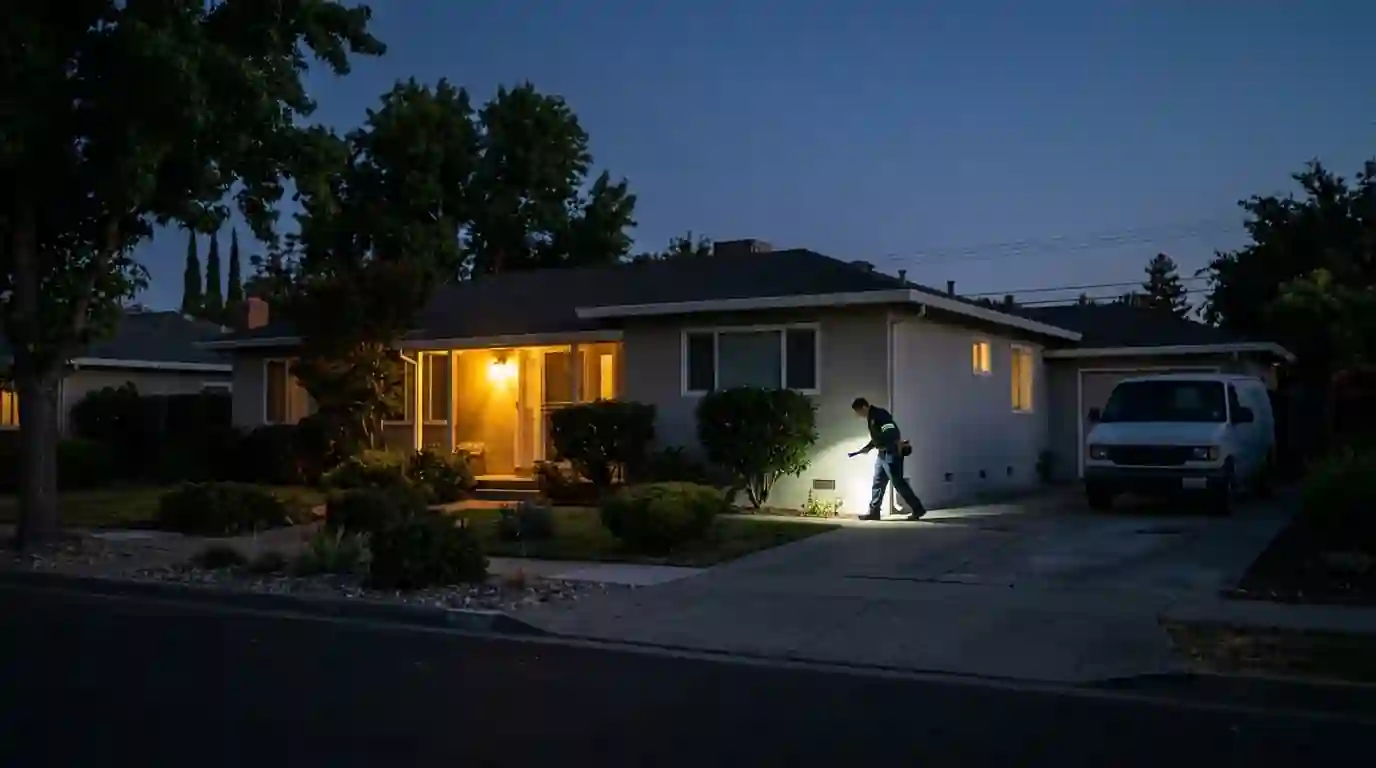
Mosquito problems in San Jose yards almost always trace to standing water: a plant saucer, a clogged gutter, a forgotten bucket. We inspect for those sources on the first visit, treat the foliage where adults rest during the day, and repeat on a schedule so the yard stays usable from spring into fall.
What a barrier visit actually covers
A mosquito visit is more inspection than spray. Adults rest on the underside of leaves in shade, so the treatment goes where they sit, not into the open air.
- Standing-water sweep of the whole yard, including saucers, toys and tarps
- Gutter and drain check where access allows
- Larvicide in water that can't be dumped, like fountains and drains
- Barrier application on shaded foliage, fence lines and under decks
- A written note on anything you need to fix, like a leaking spigot
- A return schedule matched to the season, usually every 3 to 4 weeks
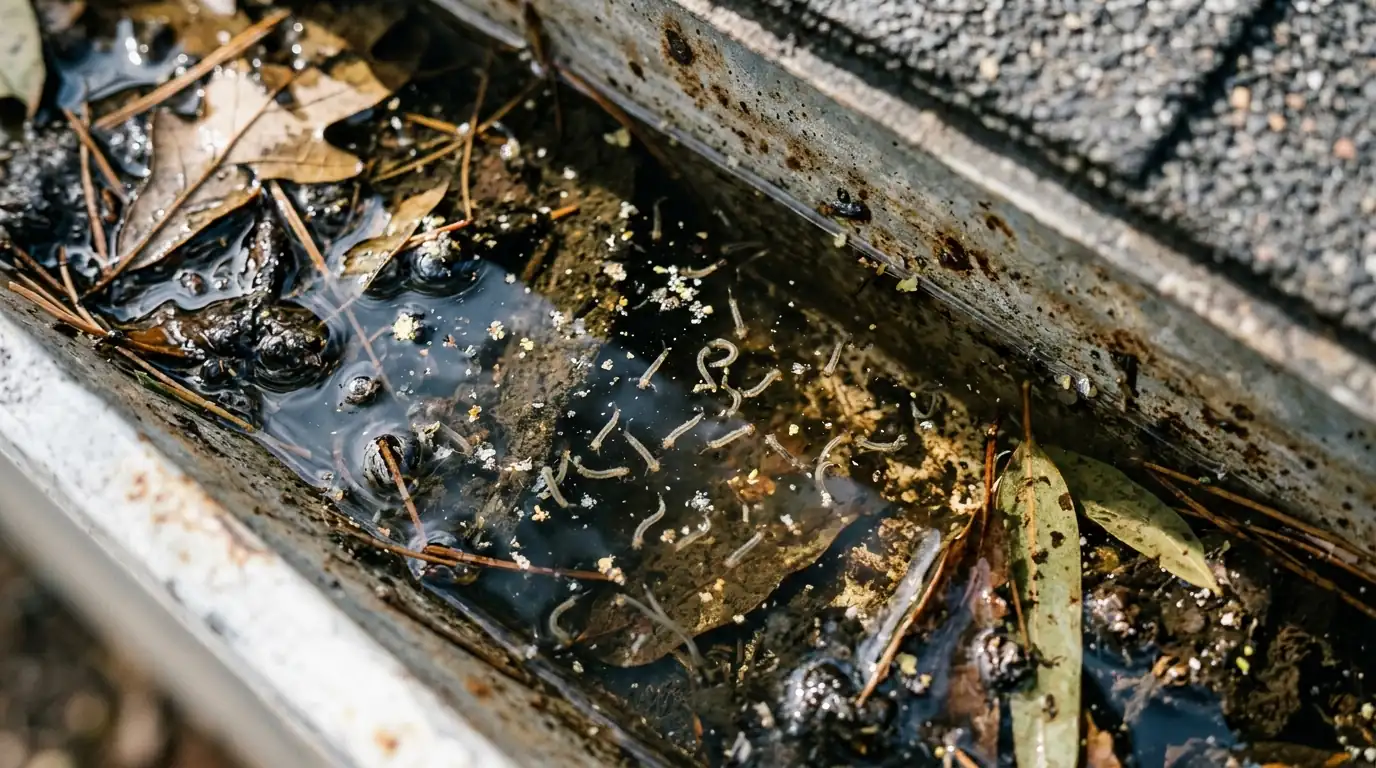
Mosquitoes don't travel far. The backyard species breed in small, still water and stay close to it, which is why one neglected fountain can ruin a patio while the neighbor two doors down sits out in peace.
That makes this one of the more fixable pest problems we handle. Remove or treat the water, knock down the resting adults, and the pressure drops within days. The catch is that new water keeps appearing after every irrigation cycle, so one-off sprays fade fast. A scheduled program holds the line; a single visit buys you a few quiet weeks.
Breeding-site reduction
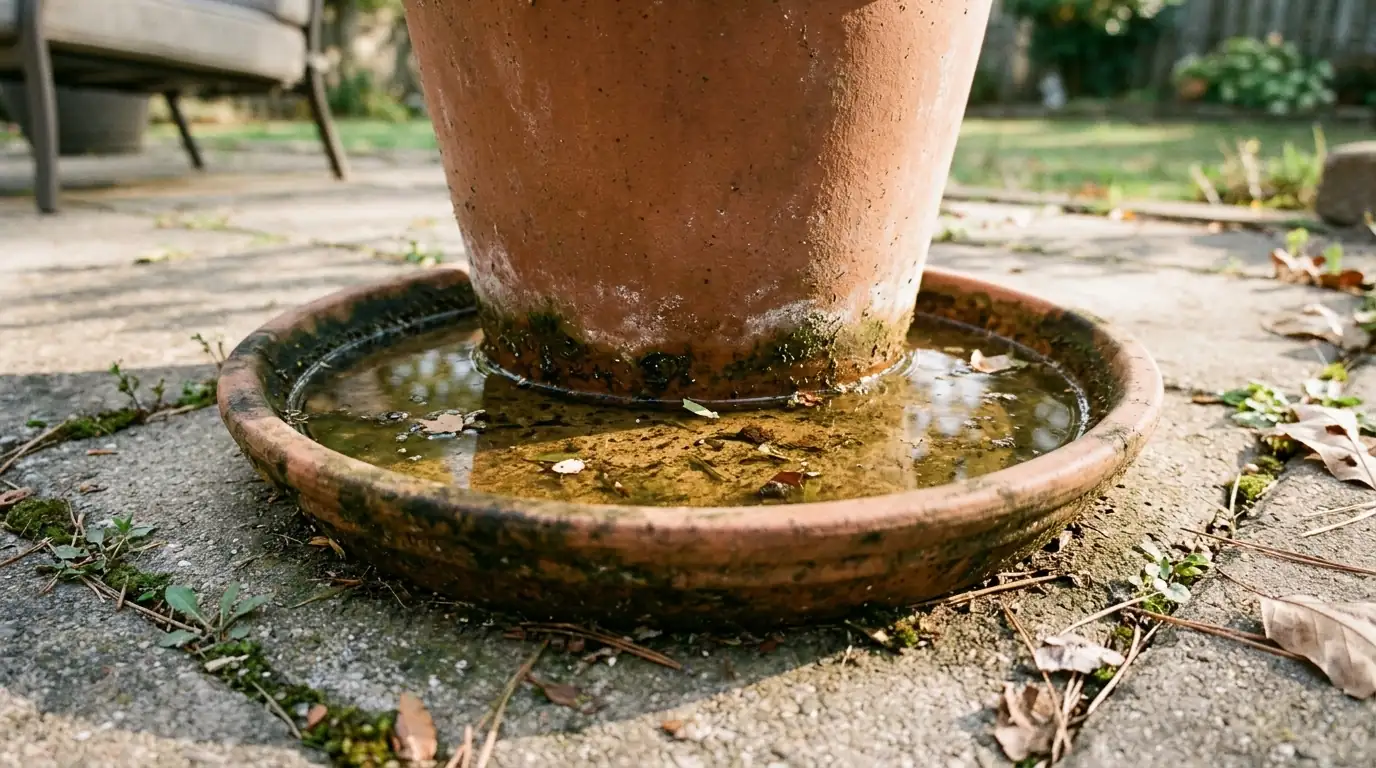
This is the part that actually ends the problem. We walk the property looking for anything holding water longer than four or five days: plant saucers, tires, kids' toys, tarps over firewood, low spots in French drains. What can be dumped gets dumped, and what can't gets a larvicide that stops larvae without harming birds or pets. Most San Jose yards we visit have two or three sources the owner walks past every day.
Seasonal barrier program
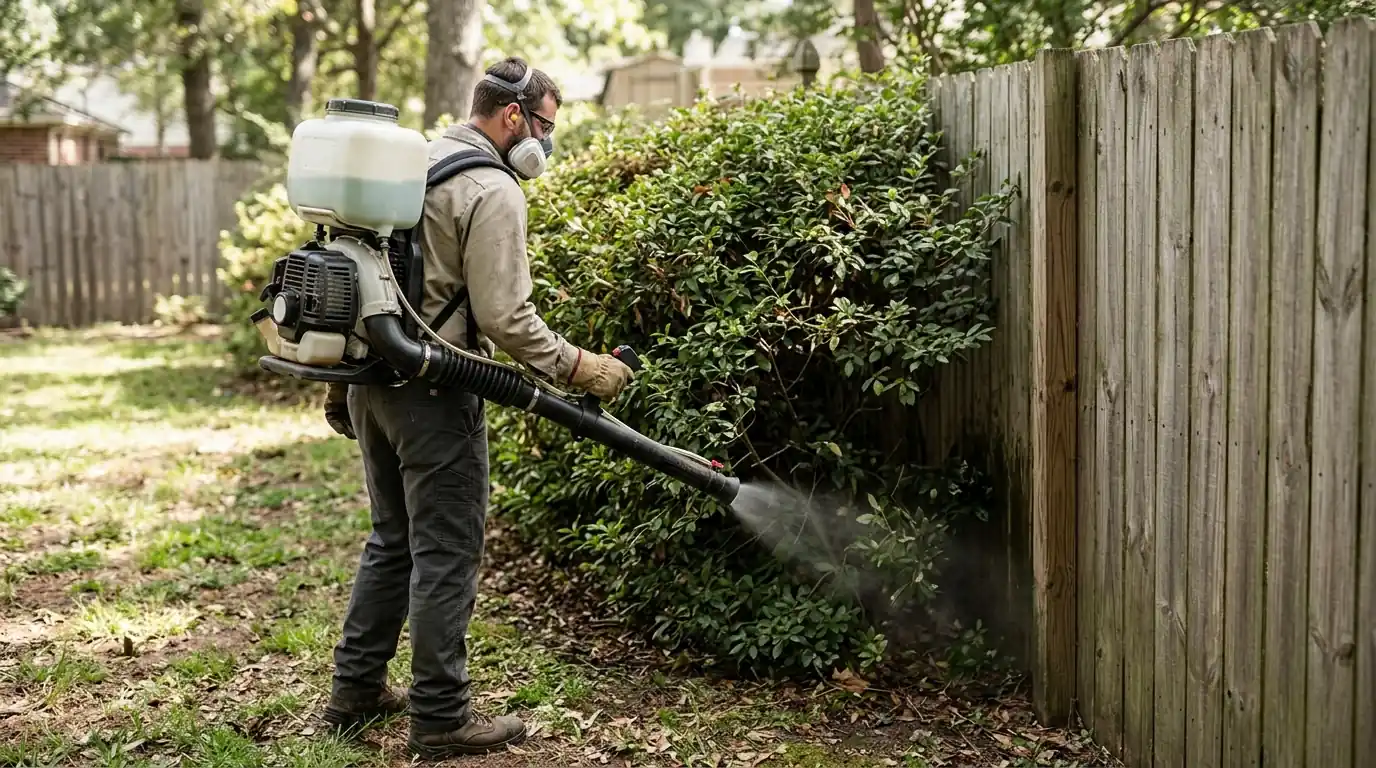
From roughly April through October we treat the shaded foliage where adult mosquitoes rest, on a 3 to 4 week cycle. The material bonds to leaf surfaces, so adults that land there don't survive to bite. Between visits the population keeps getting knocked back before it rebuilds. Homeowners hosting a graduation party or a backyard wedding can also book a single event spray two days ahead.
Why the fogger from the hardware store doesn't hold
Aerosol foggers kill the adults flying through the yard at that moment and nothing else. The larvae in the gutter hatch on schedule, and by the weekend the bites are back. Foggers also drift, which means your spray decisions land on the neighbor's vegetable bed.
The honest DIY move is water management: dump saucers weekly, keep gutters flowing, and run a mosquito dunk in any water feature. Do that and you've done half our job; the resting-foliage barrier is the half that takes professional material and reach.
How the first visit runs
Walk-through with you
You show us where you're getting bitten and when. Time of day tells us a lot about the species.
Source inspection
We check every water-holding spot on the property and note which ones are producing larvae.
Treat the water
Dumpable water gets dumped. Fixed water like fountains and drains gets a targeted larvicide.
Barrier application
Shaded foliage, fence lines and under-deck areas get the resting-surface treatment.
Season schedule
We set the return cycle and leave a note on anything that needs a permanent fix.
Backyard unusable by sunset? Get on this week's route.
Call (669) 369-0489What we see around San Jose
San Jose's dry summers actually work in your favor here: with little rain from June through September, nearly all the breeding water in a yard is water somebody put there, which means it can be found and managed. Irrigation runoff, fountains and plant saucers carry the season. The county vector district, serving 1.78 million residents across 15 cities, handles surveillance at the public level; inside your fence line is on you, and that's the part we cover.
What moves the price of mosquito service
Yard size and plant density drive the work more than anything else. A small patio lot with gravel beds takes a fraction of the time a quarter-acre with mature hedges does.
| What moves the price | How it moves it |
|---|---|
| Treatable vegetation | Dense hedges and groundcover mean more resting surface to cover each visit. |
| Water features | Ponds, fountains and drains need larvicide on every cycle, not just the first. |
| Lot size and slope | Bigger and steeper yards take longer to walk and treat thoroughly. |
| Visit frequency | A 3-week cycle costs more per season than 4-week, and holds better in peak summer. |
| One-time vs program | Single event sprays price higher per visit than a season schedule. |
| Neighboring sources | A green pool next door can mean extra larvicide work along the shared fence. |
We quote after seeing the yard, and the price covers the visit cycle you pick, not a contract you can't leave.
Worth reading alongside this: pest control around pets and kids.