Short answer
Raccoons in a San Jose attic get removed humanely, young included, and then the entry gets closed with material strong enough to stop a determined animal. A raccoon can pull apart a soffit, flatten insulation and chew wiring in weeks, so the response is prompt, and the exclusion is the part that keeps the attic yours.
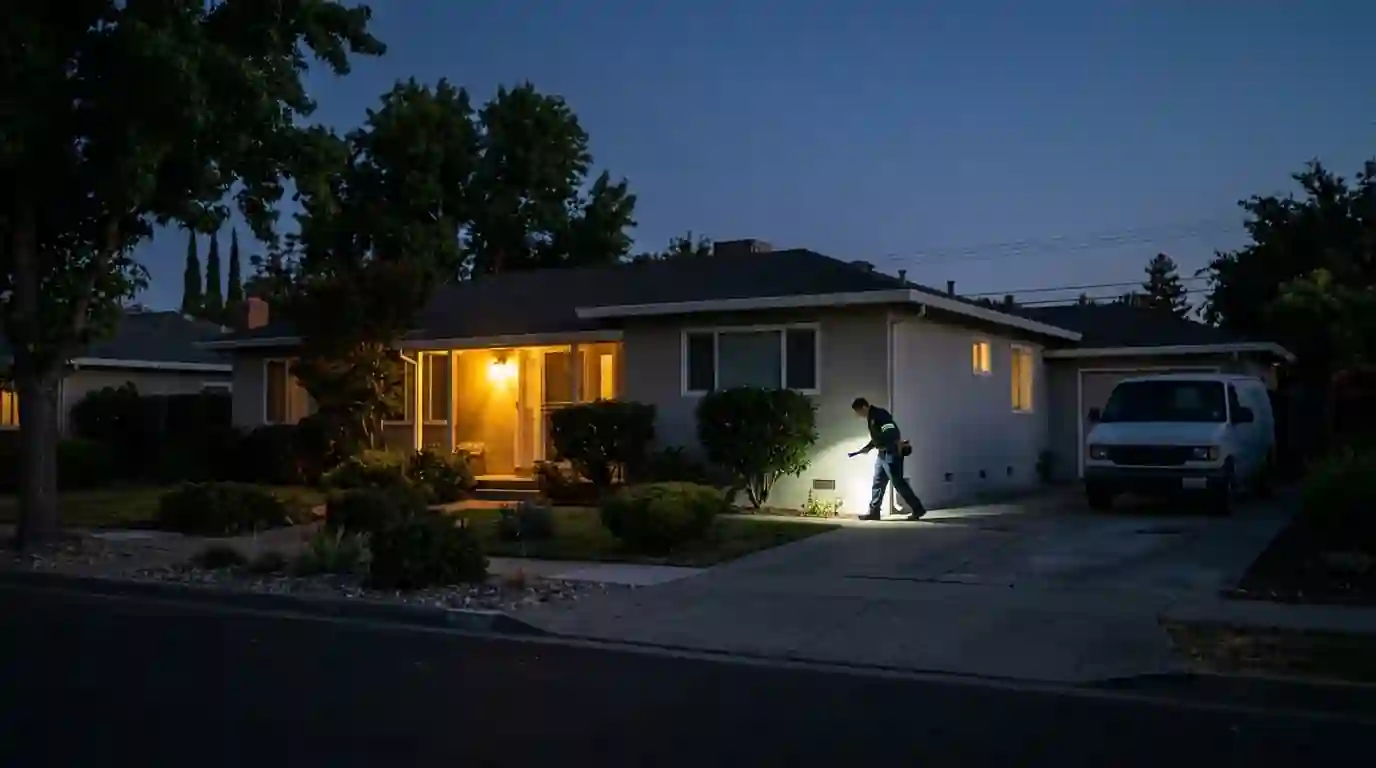
Raccoons are strong, dexterous and persistent, which is a bad combination for a roofline. They pull vent screens, lever up loose shingles, tear fascia boards and open soffit panels, then settle into insulation that gets flattened and fouled. Females looking for a safe den in spring are the most common version of this call, and that changes the approach entirely.
The three parts are removal, exclusion and cleanup. Skipping exclusion means the next raccoon uses the same hole, because that opening is now a known, advertised den site. Heavy infestations also leave an attic that needs proper cleanup before it is sound again.
From first noise to closed entry
Inspection
Rooflines, vents, soffits, chimney and the deck underside, with every opening documented.
Check for young
Season and den signs decide whether this is one animal or a family, before anything gets closed.
Removal
Humane removal handled in line with California regulations for the species.
Close the entry
Openings get repaired and reinforced with material a raccoon cannot lever or tear.
Assess the damage
Chewed wiring, soiled insulation and the cleanup decision get laid out with photos.
Attic removal
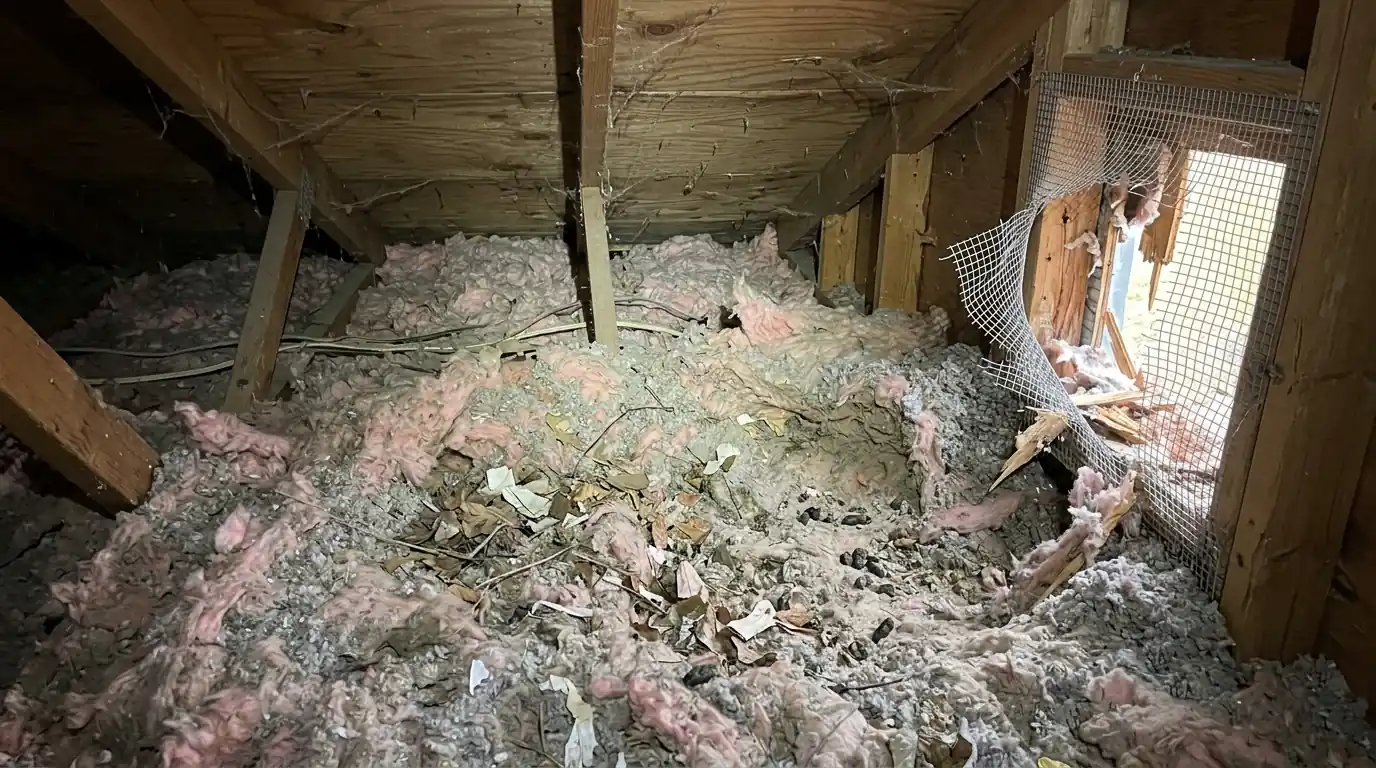
The attic job starts with finding every opening, not just the obvious one, since raccoons often maintain a second route. We check for young before anything is sealed, because a sealed mother will tear a new hole through your roof to reach her litter and that is a far worse outcome than the original problem. Removal is handled humanely and in line with California regulations, and the attic gets inspected for chewed wiring and flattened insulation while we are up there.
Deck and shed exclusion
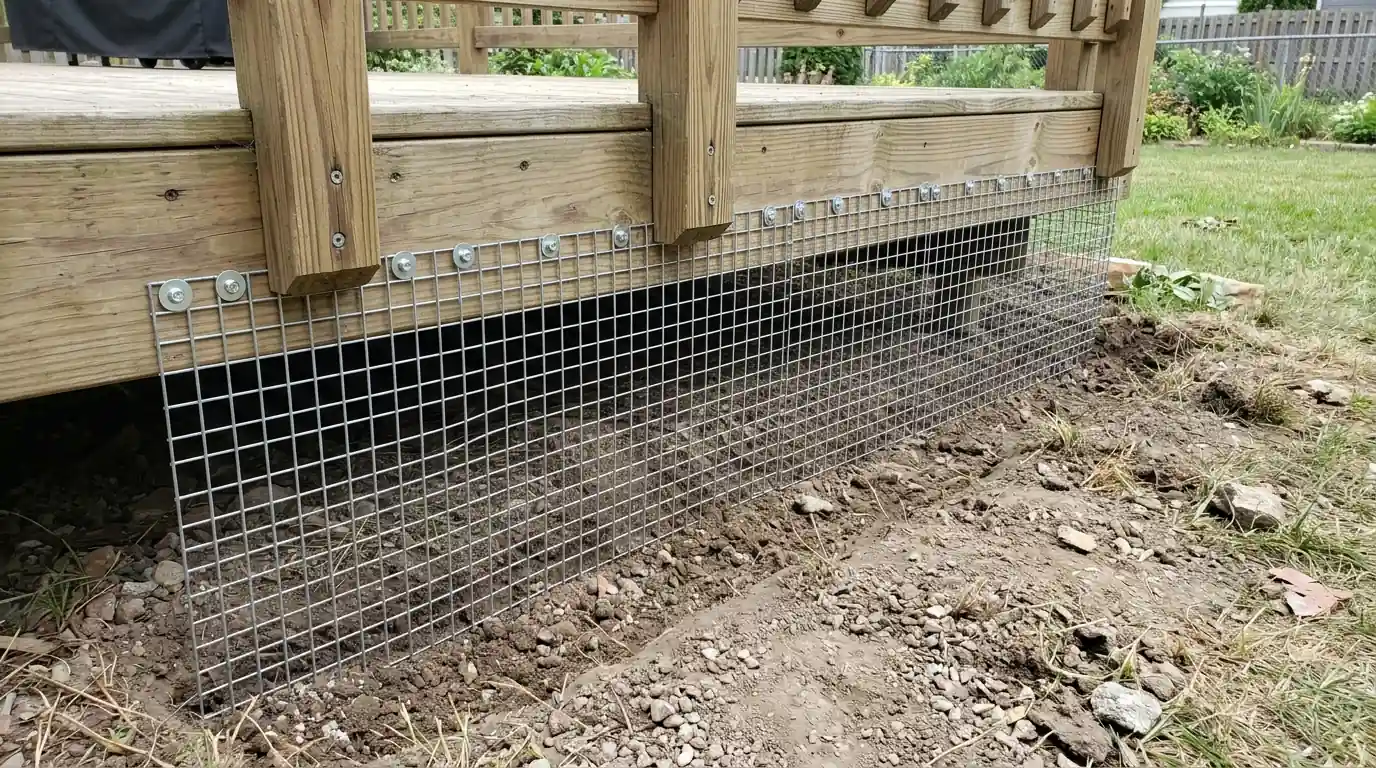
Under decks and sheds, raccoons want a dry cavity with a food source nearby, and the fix is both eviction and structure. Once the space is confirmed empty, heavy gauge screening gets trenched into the ground in an L-shape so digging does not reopen it, and loose skirt boards get reinforced rather than just replaced. Deck jobs often reveal the other half of the story too: a pet food bowl, an unsecured bin or a fruit tree that makes the yard worth the effort.
How long the whole thing takes
A single adult in an attic is usually resolved within a few days, with the exclusion going on as soon as the space is confirmed empty. Spring litters take longer by design: the young have to be mobile enough to leave with the mother, and rushing that creates a worse problem inside your ceiling. Exclusion work itself is typically a half day, longer when fascia or soffit damage needs rebuilding before anything can be anchored to it.
Hearing something heavy moving overhead? Call now, not next week.
Call (669) 369-0489What we see around San Jose
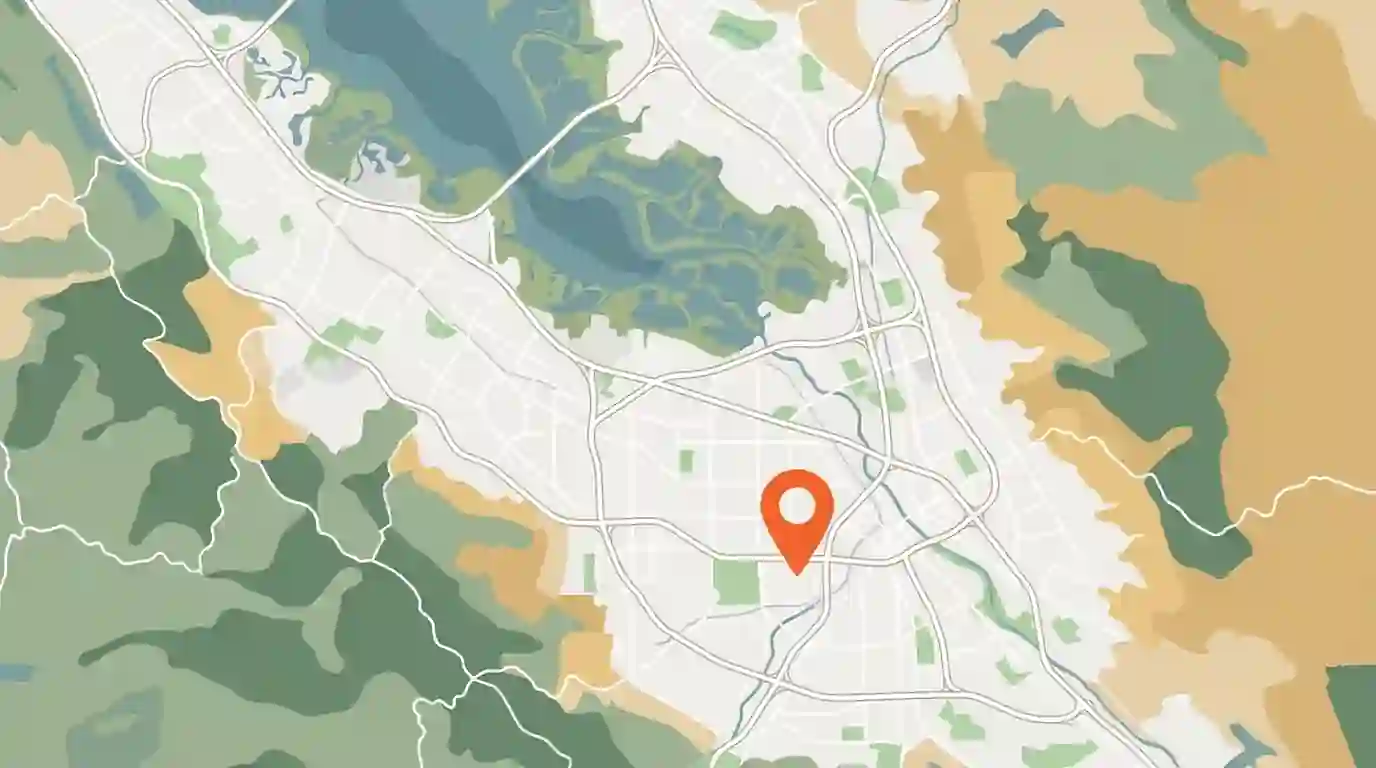
Raccoons thrive in San Jose's mix of creek corridors, mature trees and suburban yards, and they move along those green lines after dark the same way roof rats use fences and branches. Properties backing onto creeks and parks see the most repeat pressure, so for those homes exclusion matters more than removal: the next raccoon is already in the neighborhood, and what decides whether it uses your attic is whether the opening is still there.
What a raccoon job costs depends on
Wildlife work prices by time and structure, and raccoon jobs usually include repair work that rodent jobs do not.
| What moves the price | How it moves it |
|---|---|
| Number of animals | A lone adult differs from a mother with a litter that has to be handled together. |
| Entry damage | Torn soffits and fascia often need rebuilding before exclusion can be anchored. |
| Roof access | Two-story rooflines and steep pitches slow every part of the work. |
| Exclusion scope | One vent is a small job; a full deck perimeter trenched with screening is not. |
| Attic condition | Flattened, soiled insulation adds the cleanup conversation afterward. |
| Repeat pressure | Creekside and park-adjacent lots sometimes need reinforcement at more than one point. |
The quote covers removal and the exclusion together, because removal on its own does not finish anything.
If you want the background: how to tell what is in your attic.