Short answer
Commercial pest control in San Jose runs as a scheduled program with documentation, not as emergency calls. Service is timed around your operating hours, placements are mapped and recorded, and each visit leaves a written record an inspector or a corporate auditor can read. The right cadence depends on the facility type, and that gets set at the first walkthrough.
Businesses have constraints homes do not. You cannot treat a dining room at noon, you cannot have bait stations where customers see them, and when a health inspector asks for your pest records, a shrug is an expensive answer. Programs are built around those realities first and the pests second.
What stays constant across facility types is the structure of the work: a walkthrough that maps the vulnerable points, monitoring devices that turn activity into numbers rather than anecdotes, service timed to your hours, and a written record that accumulates into a history. Pests themselves are the same ones we handle in homes; the difference is the stakes and the paperwork.
What a commercial program costs
Commercial work is priced per visit against the facility and the cadence, and the walkthrough sets both before any number is quoted.
| What moves the price | How it moves it |
|---|---|
| Facility type | A restaurant kitchen needs a tighter cadence than a professional office. |
| Square footage | Treated and monitored area drives the time each visit takes. |
| Service frequency | Monthly, bi-weekly and weekly programs price accordingly. |
| Device count | Mapped stations and monitors are serviced individually on every visit. |
| Hours required | Overnight and pre-opening service is planned around your operation. |
| Documentation needs | Corporate audit or third-party standards sometimes add reporting detail. |
Programs are quoted after the walkthrough with the visit cadence and device count itemized, so the scope is clear before anything is installed.
Restaurants and food service
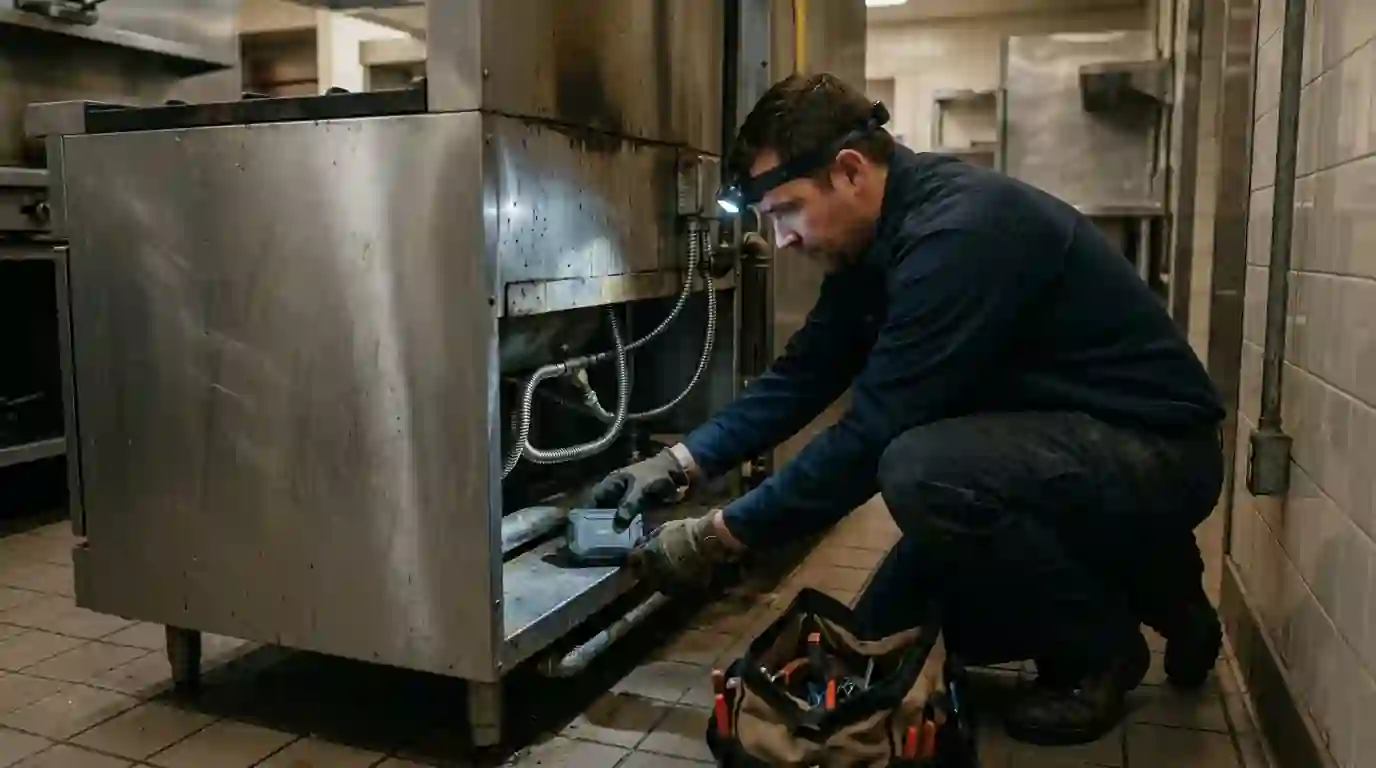
The highest-stakes version. Kitchens combine heat, moisture, food debris and constant deliveries, which is why German cockroach and fly pressure is relentless and why health inspections focus there. Service runs before opening or after close, with gel baiting in equipment voids rather than any spraying over food-contact surfaces, drain treatment on the lines that breed small flies, and monitors placed where activity shows first. Documentation is built for the inspection, and we flag the sanitation and structural items that keep driving activity.
Offices and retail
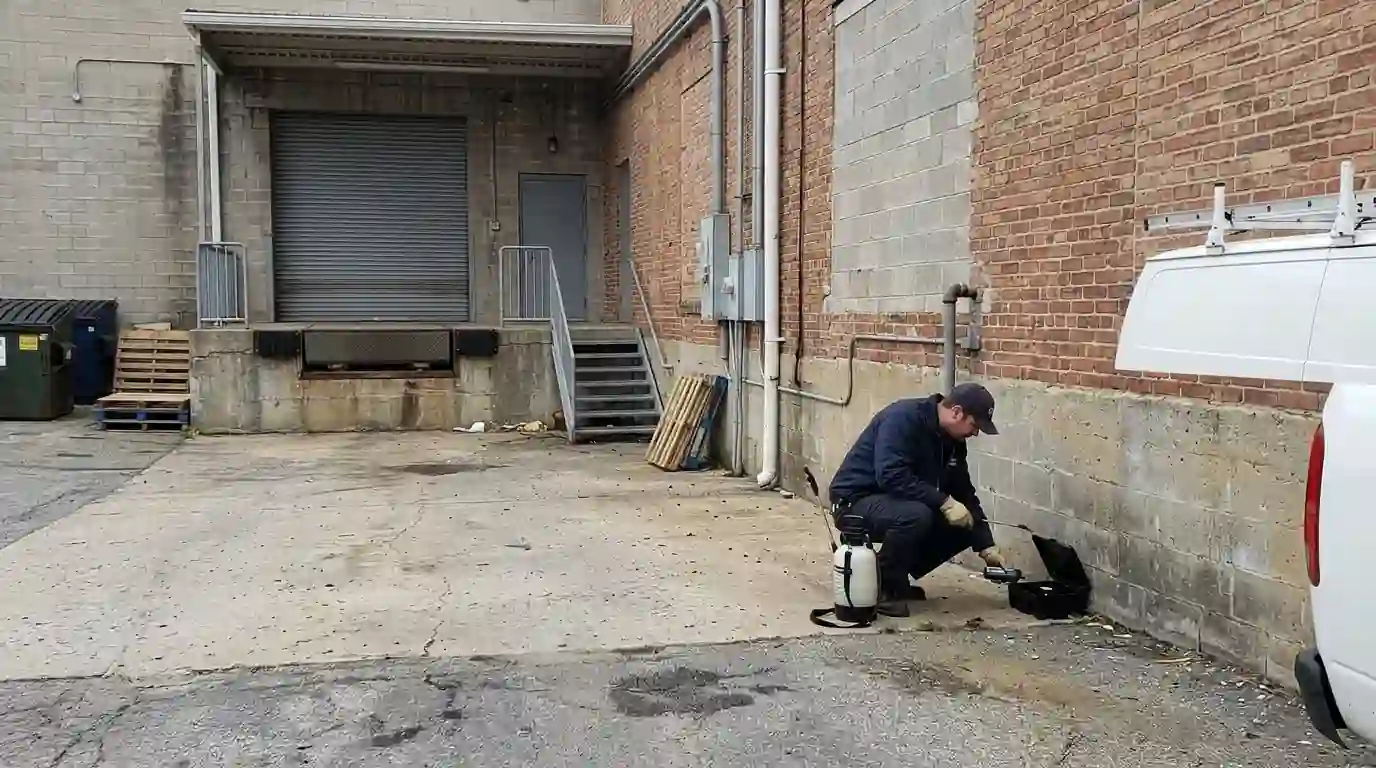
Lower pressure, higher visibility. The problems that matter here are the ones customers and staff see: ants in a break room, a mouse in a stockroom, spiders in a window display, occasional invaders after landscaping work. Service runs discreetly, usually outside business hours, with exterior perimeter work doing most of the job and interior placements kept out of sight. For retail, the loading dock and the back-of-house storage are almost always where the actual problem starts, and that is where the program concentrates.
Warehouses
Volume, open doors and pallets from everywhere. Warehouse programs focus on the perimeter and the dock: door sweeps and seals, exterior rodent stations on a mapped grid, and monitoring near receiving where incoming product introduces problems. Stored product pests arriving inside shipments are their own line of work, and finding them early is the entire value of monitoring in a large facility. Mapped station layouts with service records are standard, because large sites get audited on exactly that.
How a commercial program is set up
Facility walkthrough
The whole site gets read: receiving, storage, kitchen or back-of-house, exterior and roofline.
Build the program
Cadence, device placement and service timing get set to your operation, not a template.
Install and map
Monitors and stations go in on a recorded layout so every visit reads the same points.
Scheduled service
Visits run on your hours, with findings and actions written up each time.
Review the trend
Monitor counts over time show whether pressure is dropping, and the plan adjusts to that.
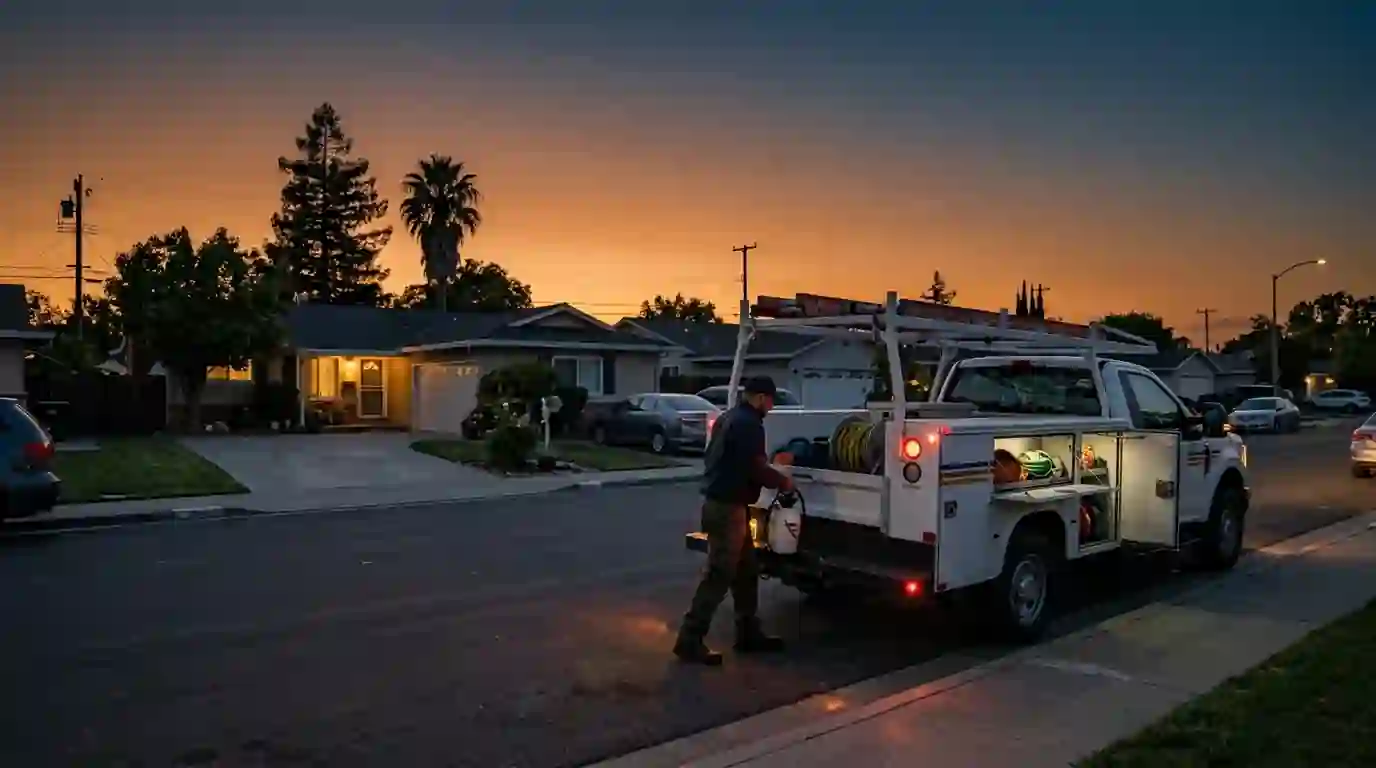
Inspection coming and no service records? Let us get a program running.
Call (669) 369-0489What we see around San Jose
German cockroach pressure runs extremely high across San Jose and the wider South Bay, and for food service that single fact sets the whole program. It is also why multi-tenant buildings need coordinated service: a restaurant doing everything right shares walls and plumbing chases with neighbors who may not be, and treating one unit while the adjacent one stays infested just resets the clock. We will say plainly when a building-wide conversation is the only thing that will work.
More on this in Pest Watch: pest control around pets and kids.