Short answer
A dead animal in a San Jose home gets found by narrowing before cutting: odor intensity, fly activity and the structure's own layout point at the spot, and access is usually possible from an attic, crawl space or soffit without opening finished walls. Once out, the contaminated material goes with it and the area gets treated, because the odor lives in what soaked in, not just the body.
This call has a clock on it. Odor peaks over days and can last weeks in a sealed cavity, and the blow flies that found the carcass first will hatch in your house shortly after. Most are rats that took bait elsewhere, or wildlife that got into a space it could not get out of.
The two useful parts of the job are precision and finishing. Precision means locating before opening anything, because nobody wants three exploratory holes in a hallway. Finishing means treating the fluids and the material that absorbed them, and then dealing with the way in, since an animal that got in there once marks a route others will use. That last part usually hands off to sealing work.
Signs it is a carcass and not a plumbing issue
Odor peaking then fading
Decomposition smell builds over days then fades; sewer gas stays steady.
Flies at one window
Blow flies at a single window or light fixture point at the cavity behind it.
A localized hot spot
The smell is dramatically stronger in one three-foot stretch of wall or hallway.
Staining on drywall
A yellow-brown patch on a ceiling or wall marks where fluids reached the surface.
Beetle or maggot activity
Larvae appearing on a floor below an attic or inside a closet track back to the source.
Recent rodent work nearby
A trapping or baiting program in the last couple of weeks makes a carcass likely.
What happens from the first call
Describe it on the phone
When it started, where it is strongest and whether flies are showing up narrows things before we arrive.
Narrow the location
Odor gradient, fly activity, staining and the cavity layout get read together.
Access and remove
Entry is taken from the least visible side; the carcass and nesting material come out bagged.
Treat the area
Contaminated insulation out, surfaces cleaned, enzyme deodorizer applied at the source.
Close the route
The entry point that let the animal in gets flagged and sealed so it does not happen twice.
Wall and crawl space location
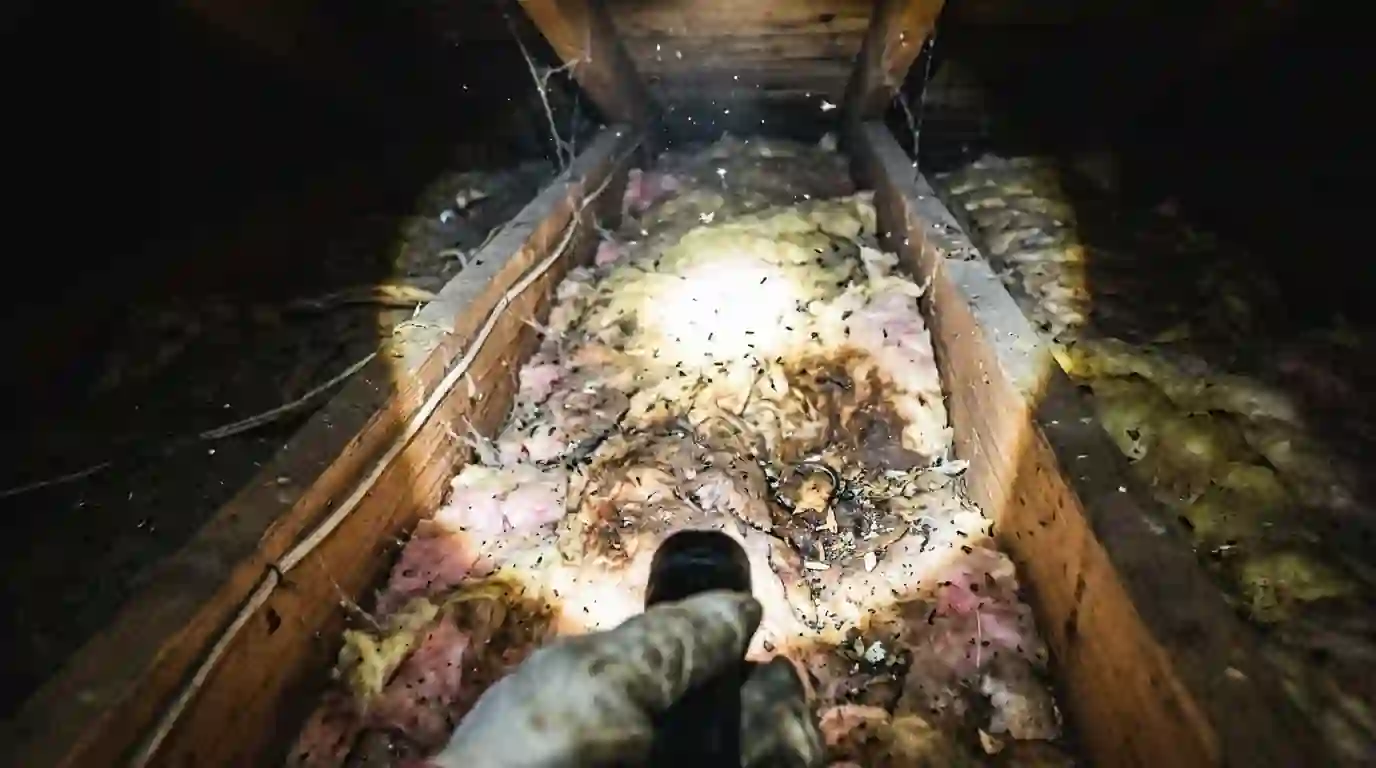
Locating is most of the skill. We read odor gradient room to room, fly concentration at windows and vents, staining on drywall and ceilings, and the structure's cavity map, since animals die where they get stuck or nested. In crawl spaces and attics the carcass is usually visible once the right bay is reached. Inside a finished wall we narrow to one cavity before anything is opened, from the least visible side.
Deodorizing
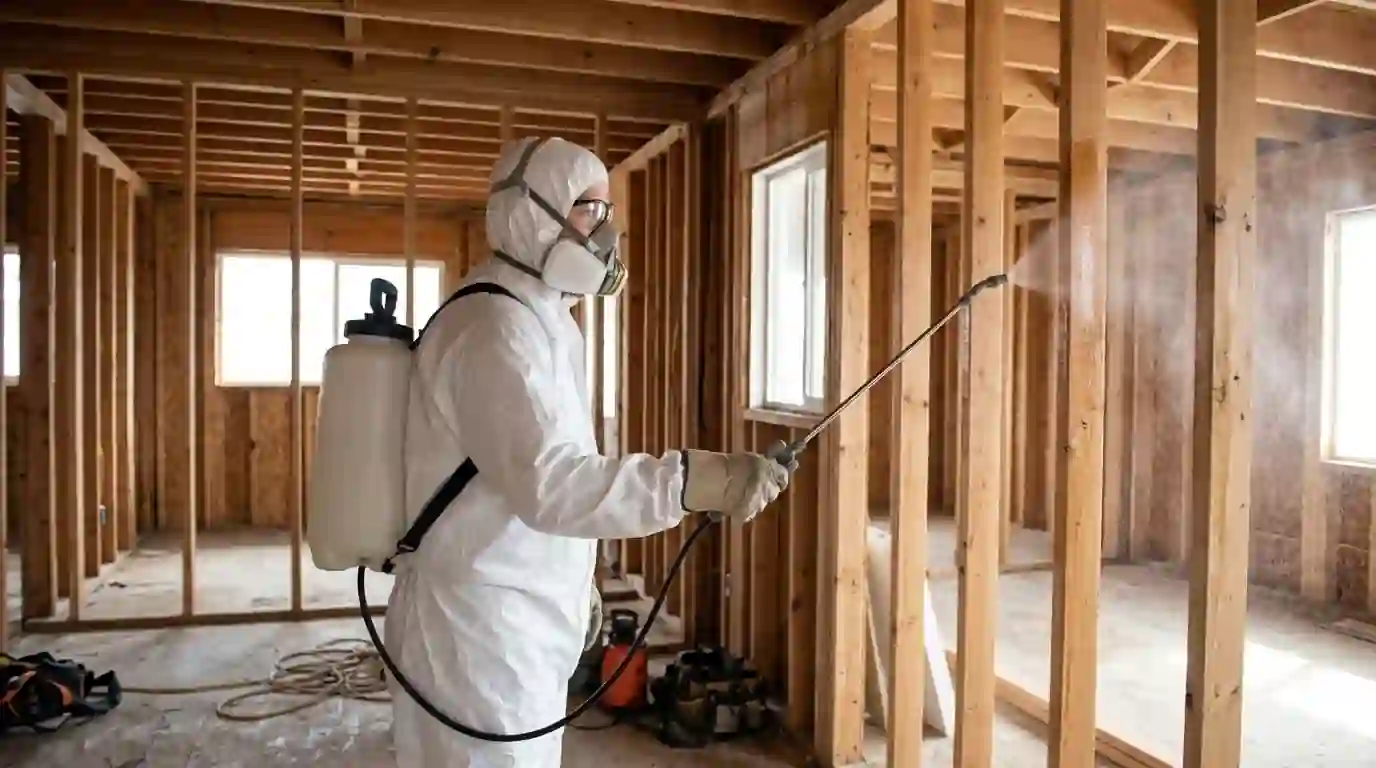
Removing the animal is half of it. Fluids soak into insulation, framing and drywall, and that material keeps the house smelling for weeks after the carcass is gone. Contaminated insulation comes out, surfaces get cleaned and treated with an enzyme product that breaks odor compounds down rather than covering them, and we check for maggot and beetle activity. Masking sprays buy hours; source treatment ends it.
How quickly this can be dealt with
Most are same-day or next-day visits, because waiting makes the cleanup worse. Locating takes thirty to ninety minutes depending on how enclosed the space is; removal and deodorizing usually finish in the same visit. Where the carcass sits behind tile or cabinetry, we explain what access requires before any cutting, so the decision is yours.
Smell getting worse by the hour? The line is answered right now.
Call (669) 369-0489What we see around San Jose
Most of these calls in San Jose trace back to the same animal that dominates everything else here: the roof rat, by far the most abundant rodent pest in Santa Clara County. A rat that took bait in a garage or a neighbor's yard often dies inside a wall or attic bay days later, which is one of the clearest arguments for trapping over baiting in an occupied home. The second common source is wildlife that got into a crawl space and could not find its way back out.
What the price depends on
This is locate, access and treat work, and the access part is what varies most between jobs.
| What moves the price | How it moves it |
|---|---|
| Where it is | An attic or crawl space carcass is straightforward; a sealed wall cavity is not. |
| Search time | Faint or diffused odor takes longer to narrow than a sharp localized one. |
| Access required | Cutting and patching finished surfaces adds work beyond the removal itself. |
| Contamination spread | Soaked insulation and subfloor mean more material out and more treatment area. |
| Animal size | A rat is a different cleanup from a raccoon or an opossum. |
| Follow-on sealing | Closing the entry route is quoted with the job rather than left for later. |
We give the access plan and the price before anything is opened, so nothing about the invoice is a surprise.
Worth reading alongside this: how to tell what is in your attic.