Short answer
Attic cleanup after rodents in a San Jose home means removing the droppings and urine-soaked insulation safely, sanitizing the framing, and restoring the insulation, in that order. The scent trail rodents leave actively recruits the next ones, so cleanup is part of keeping the attic empty, not a cosmetic extra. We do it suited, contained and HEPA-filtered.
A rodent infestation is a sanitation event. Months of droppings and urine sit in and under the insulation, the materials rodents tunneled through have lost their insulating value, and everything carries the pheromone scent that tells the next rat in the neighborhood this attic worked out fine for the last one.
The work is sequenced deliberately: it only makes sense after trapping is done and entry points are sealed, because cleaning an attic rodents can still enter is paying twice. When those steps are closed, the cleanup resets the space to what it was before they arrived.
What drives the cleanup price
Cleanup is priced by volume and access: how much contaminated material, how hard it is to reach, and how much insulation goes back in.
| What moves the price | How it moves it |
|---|---|
| Contamination extent | One corner nest and a whole-attic infestation are different days of work. |
| Insulation removed and replaced | Material out plus new material in is the biggest line on most quotes. |
| Attic vs crawl space | Crawl spaces add vapor barrier work and tighter access. |
| Access and pitch | Low rooflines and tight hatches slow every step. |
| Dead animals found | Carcass removal and localized odor treatment add scope when discovered. |
| Insulation depth target | Bringing an under-insulated attic to current standards costs more and pays back on bills. |
No published market range exists for this work the way it does for termite jobs, so the quote comes from the assessment, itemized.
Dropping removal
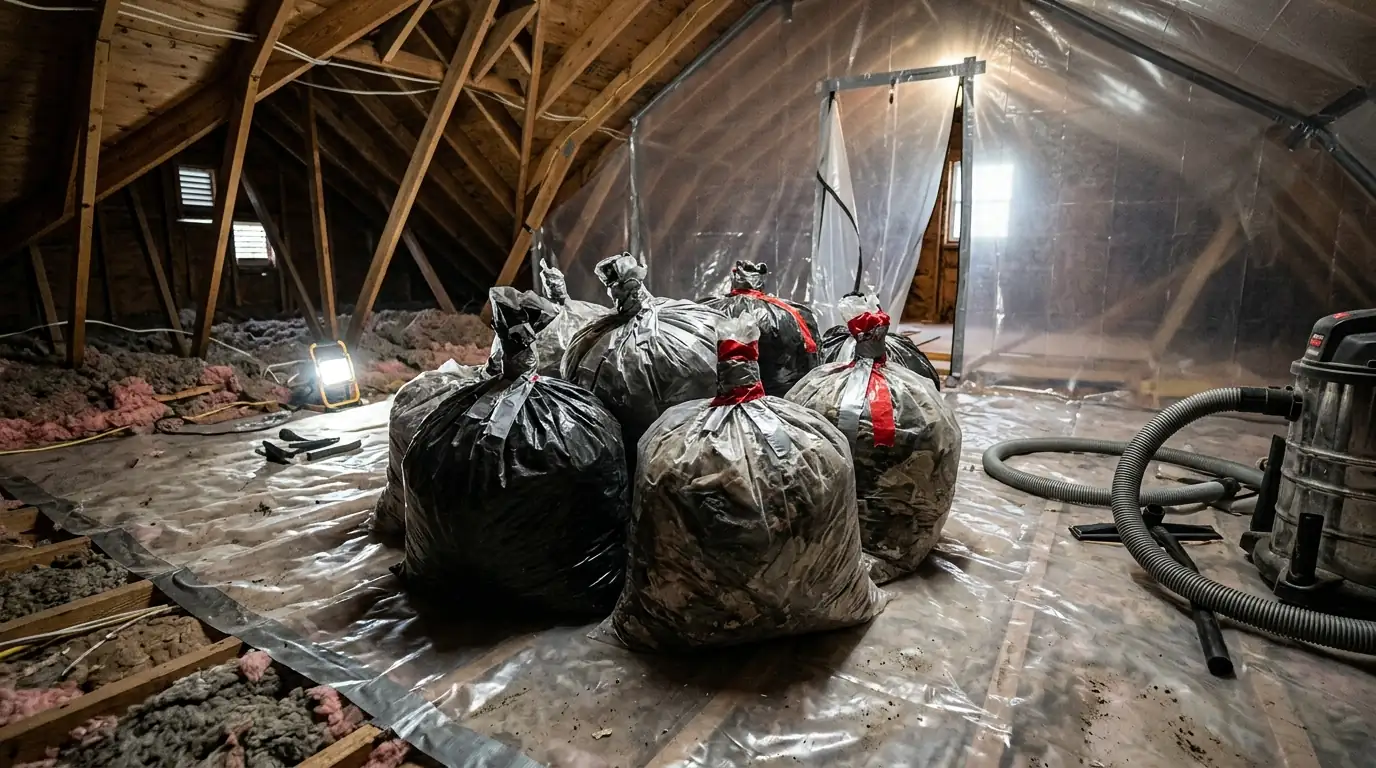
Dry sweeping rodent droppings puts dust you don't want airborne into the air, which is why the professional version looks different: the area is misted with disinfectant first, waste is HEPA-vacuumed rather than swept, and everything leaves the attic in sealed bags through a contained route. We work suited and respirated, and the living space below stays isolated from the attic air for the duration.
Insulation replacement
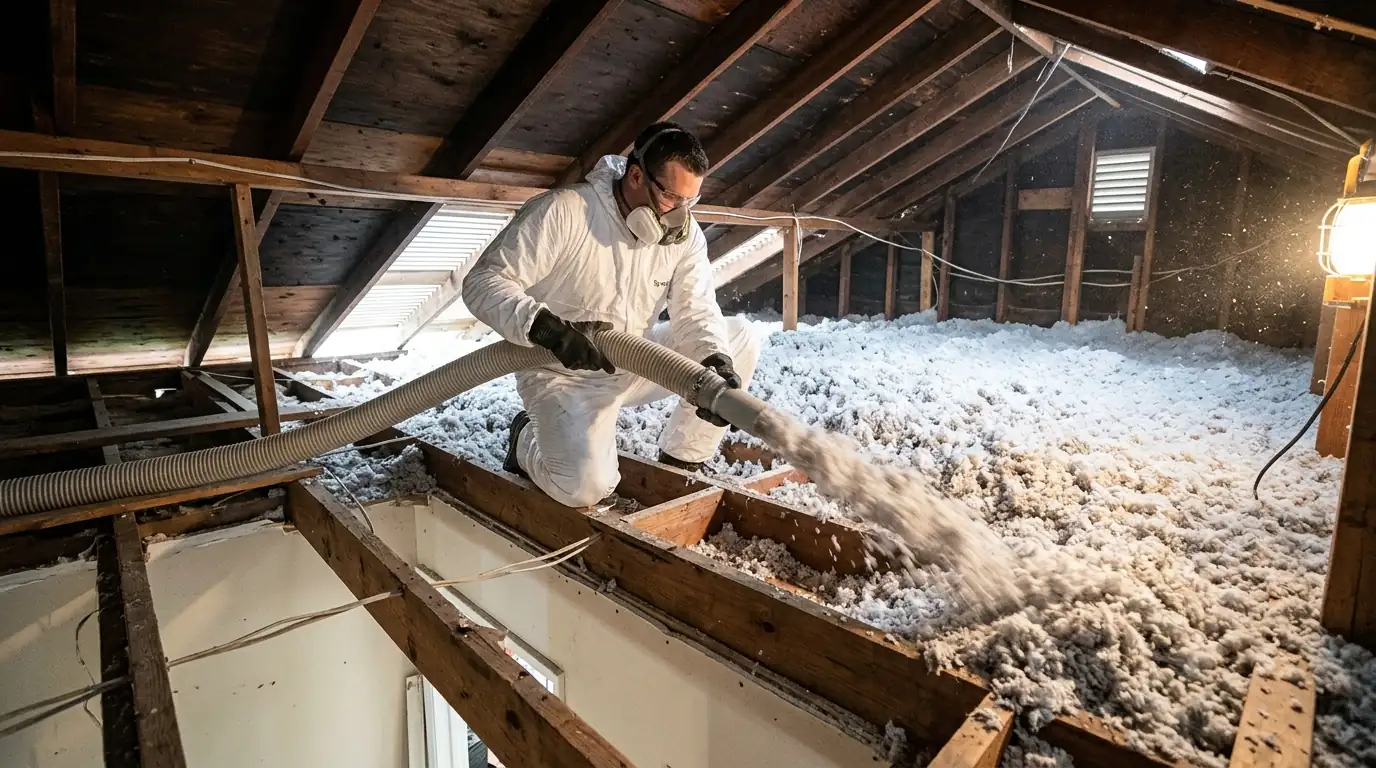
Insulation rodents have nested and tunneled through is both contaminated and compressed, and compressed insulation barely insulates. Soiled batts and blown material get bagged out, the deck gets cleaned, and new insulation goes in at current depth standards, which on older San Jose homes often means the attic ends up better insulated than before the rodents showed up. If only one section is soiled, we replace the section and say so.
Sanitizing
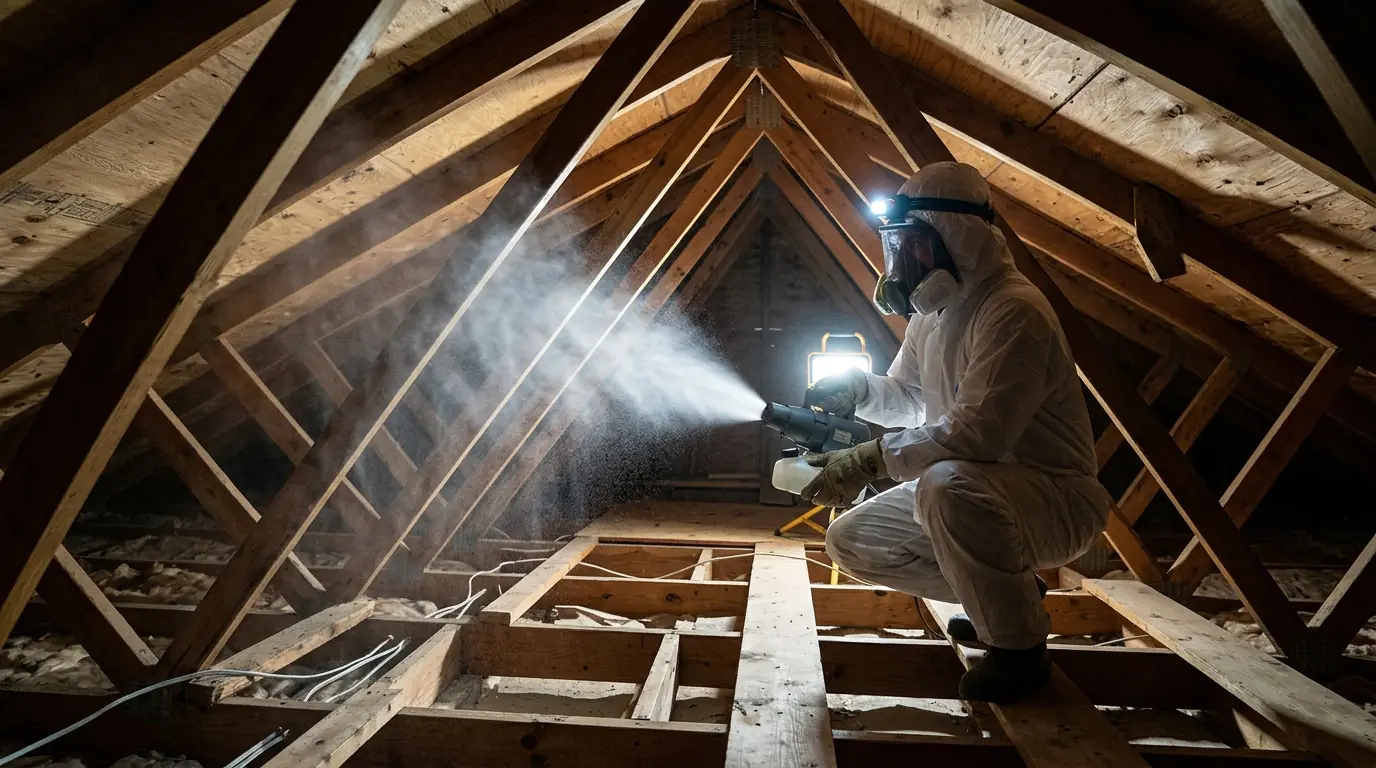
With waste and soiled material out, exposed framing and the attic deck get treated with a disinfectant and deodorizing application that neutralizes bacteria and breaks down the urine proteins carrying the scent trail. This is the step that protects the trapping work: an attic that no longer smells like rodent territory stops advertising itself. Ventilation points get checked while we're up there, since stale, damp attics invite more than rodents.
What the cleanup visit includes
Scope is where cleanup quotes differ wildly between companies, so here is ours in plain terms.
- Containment sheeting and isolation of the work area from living space
- Disinfectant pre-mist before any material is disturbed
- HEPA vacuuming of droppings and debris, never dry sweeping
- Bag-out of soiled insulation through a protected route
- Sanitizing and deodorizing application on framing and decking
- New insulation installed where material was removed
- A photo record of before and after, since you shouldn't have to climb up to verify
How the job runs top to bottom
Assessment
We map the contamination, check that trapping and sealing are truly finished, and quote the real scope.
Containment
The attic hatch and work route get sheeted so nothing migrates into the house.
Removal
Droppings, debris and soiled insulation come out HEPA-vacuumed and bagged.
Sanitize
Framing and decking get the disinfectant and deodorizing treatment.
Restore
New insulation goes in and the photo record lands in your inbox.
What we see around San Jose
There's a health angle specific to this county worth knowing: rat mites are a common problem across Santa Clara County precisely because commensal rodents are so abundant, and when a rat dies or leaves an attic, the mites that fed on it come looking for whoever lives below. A proper cleanup removes the nesting material they shelter in, which is why bites that start after the rodents are gone usually point at an attic that was trapped but never cleaned.
Related reading: seven signs of roof rats in an attic.