Short answer
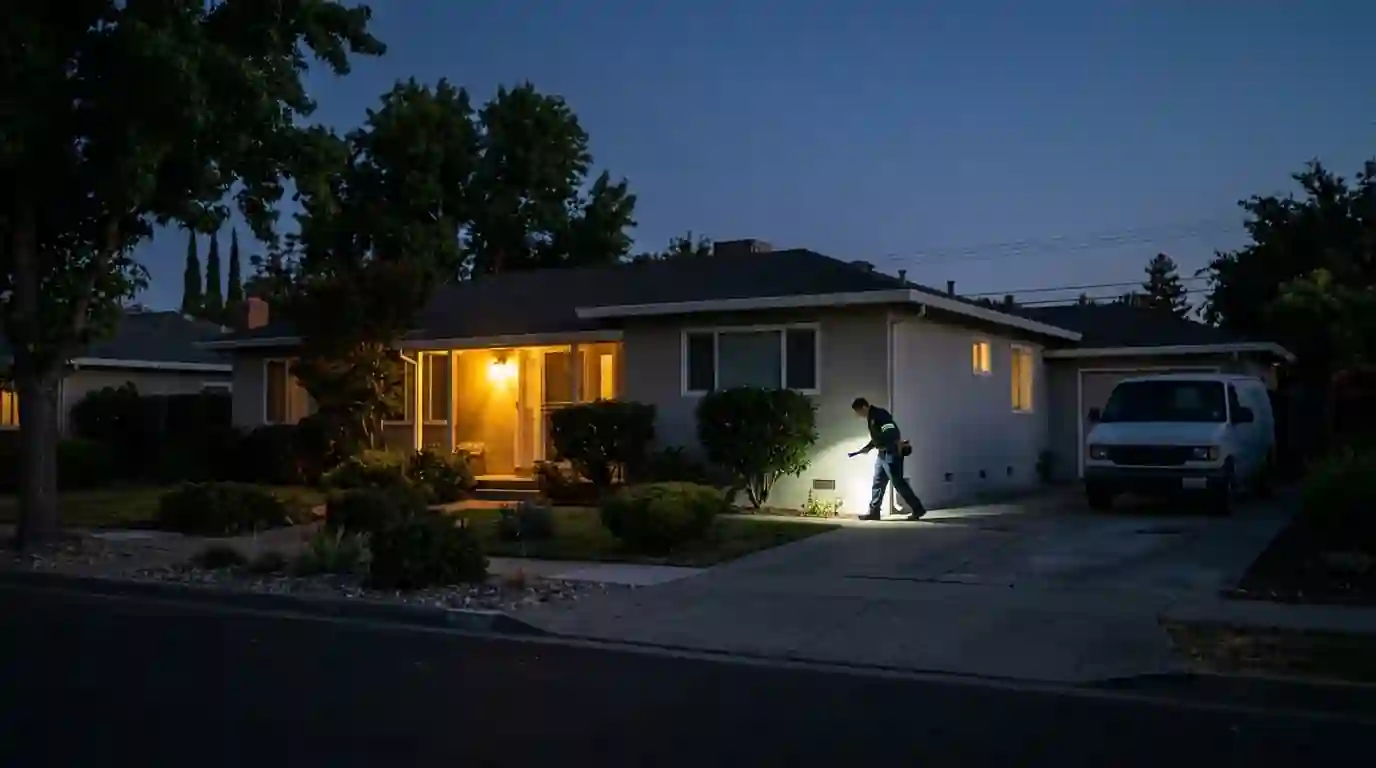
Tick control for a San Jose yard targets the habitat, not the lawn: the brush lines, tall-grass edges and leaf-litter shade where ticks quest for a passing host. We treat those zones on a seasonal cycle and show you the mowing and clearance changes that shrink the habitat for good. Open lawn in full sun needs almost nothing, and we won't spray it for show.
What a tick visit covers
Each visit is a habitat pass, not a lawn spray, and the checklist reflects that.
- Walk of the lot's shade, moisture and vegetation transitions
- Band treatment of edges, brush lines and leaf litter zones
- Under-deck and shaded structure perimeter check
- Pet rest areas and dog-run fence lines included
- Written notes on mowing height, litter cleanup and buffer gaps
- Next-cycle date set to the season, not a fixed habit
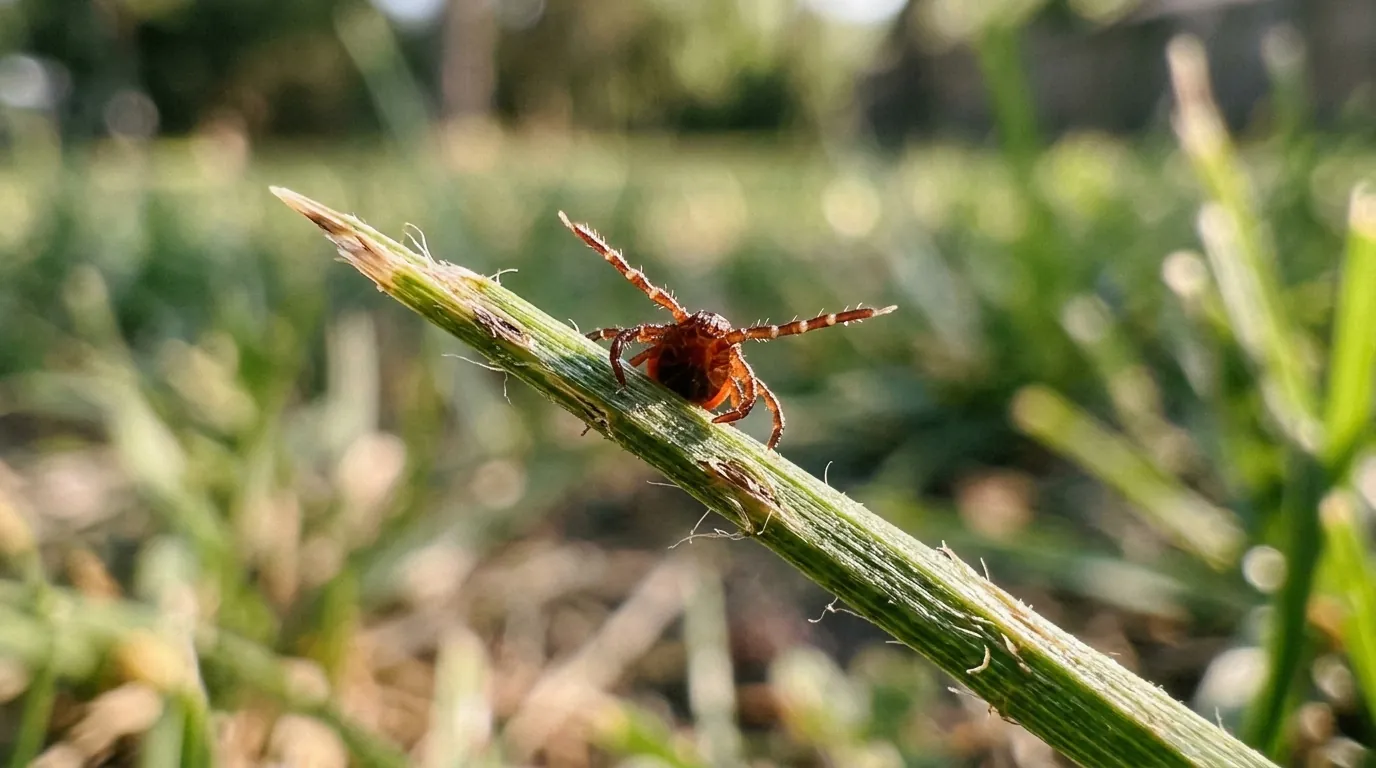
Ticks are ambush hunters. They climb grass stems and brush tips at the edges of a yard, hold their front legs out, and wait, a behavior called questing, for a dog, a deer or an ankle to brush past. That biology is the whole treatment map: sunny open turf is hostile territory to them, while the shaded, unmowed margin along the back fence is home.
Yards backing onto creeks, trails and open hillsides carry the real pressure, because wildlife re-seeds the edge continuously. For those properties the honest plan is treated zones plus habitat change, on a schedule, through the warm months.
Yard barrier treatment
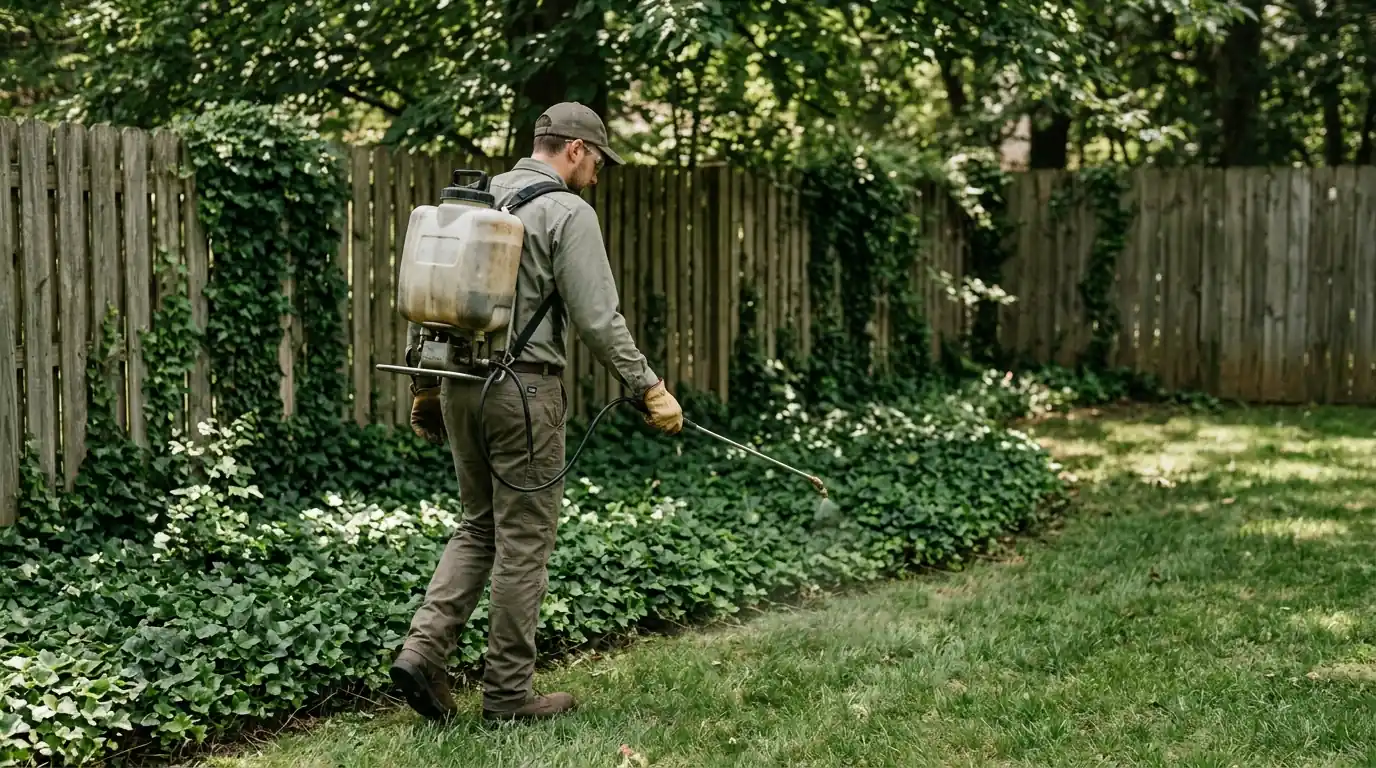
A targeted application goes onto the zones ticks actually occupy: the mow line where turf meets planting beds, leaf litter under shrubs, shaded fence lines and the first few feet of any slope vegetation. We work it as a band around the usable yard rather than a blanket over it, which concentrates material where it earns its keep and leaves open lawn and play areas out of the equation. Re-treatments run on a seasonal cycle from spring through the fall questing peak.
Brush line treatment
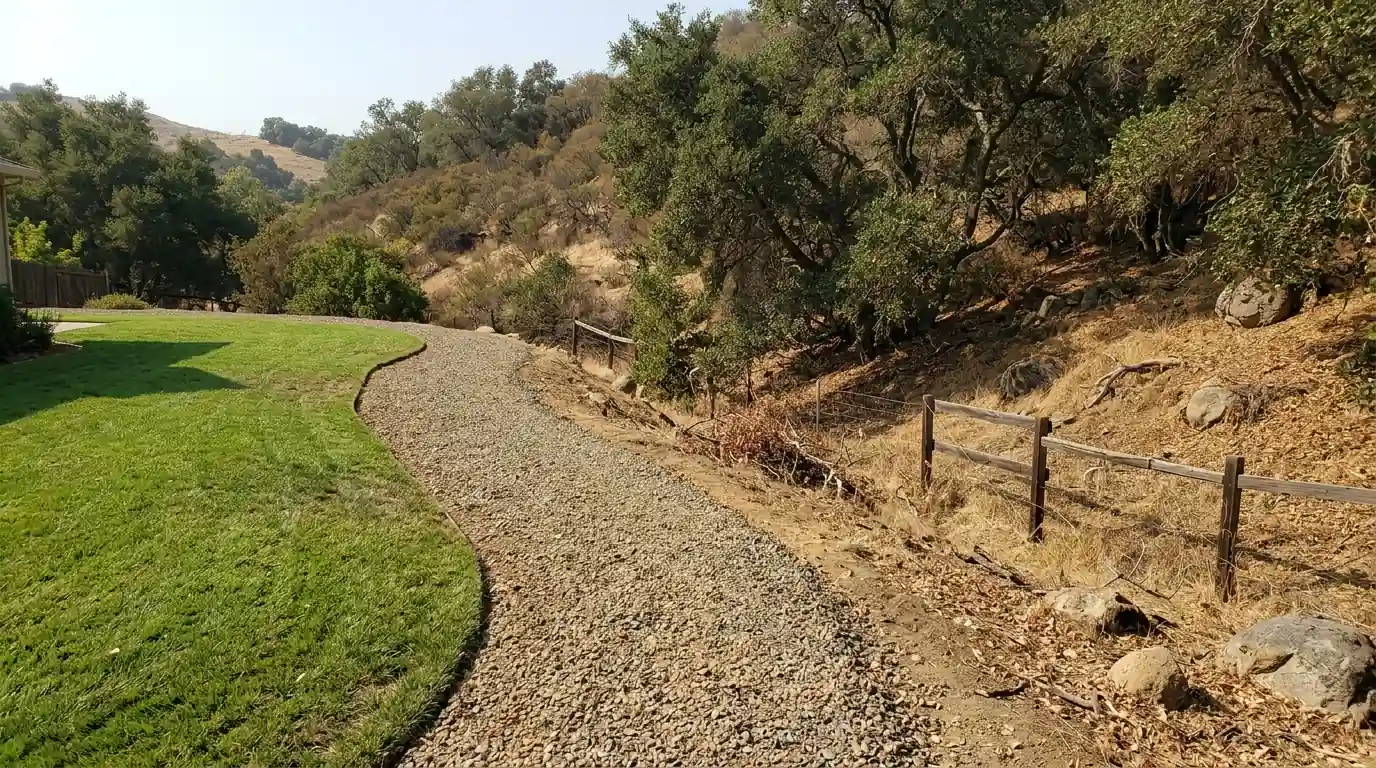
Where a yard backs onto open space, the brush interface is the front line. We treat the transition strip, the fence line vegetation, trail edges the dog patrols and the brush face itself where legal and accessible, and we pair it with clearance advice: a mowed or graveled buffer of a few feet between wild growth and usable yard cuts tick crossings more than any spray. On creekside lots we keep materials well back from the water line and say exactly where that line is.
What works at the hardware store and what doesn't
Over-the-counter granules broadcast across open lawn mostly treat ground ticks don't use. Your mower is genuinely the stronger DIY tool: short grass in sun dries ticks out, and clearing leaf litter removes the humid layer their larvae need.
Where DIY falls short is the edge band itself. Getting material into brush faces and litter at the right rate without soaking everything else takes equipment and label knowledge, and that strip is the whole game on an open-space lot.
How the season gets managed
Habitat walk
We map where ticks can live on your lot and, just as useful, where they can't.
First treatment
Edges, brush lines and litter zones get the band application.
Buffer advice
You get the short list of clearance changes that shrink the habitat permanently.
Seasonal cycle
Re-treatments track the spring and fall activity peaks, not the calendar for its own sake.
Check the catch
Fewer ticks on the dog is the real metric, and we ask about it every visit.
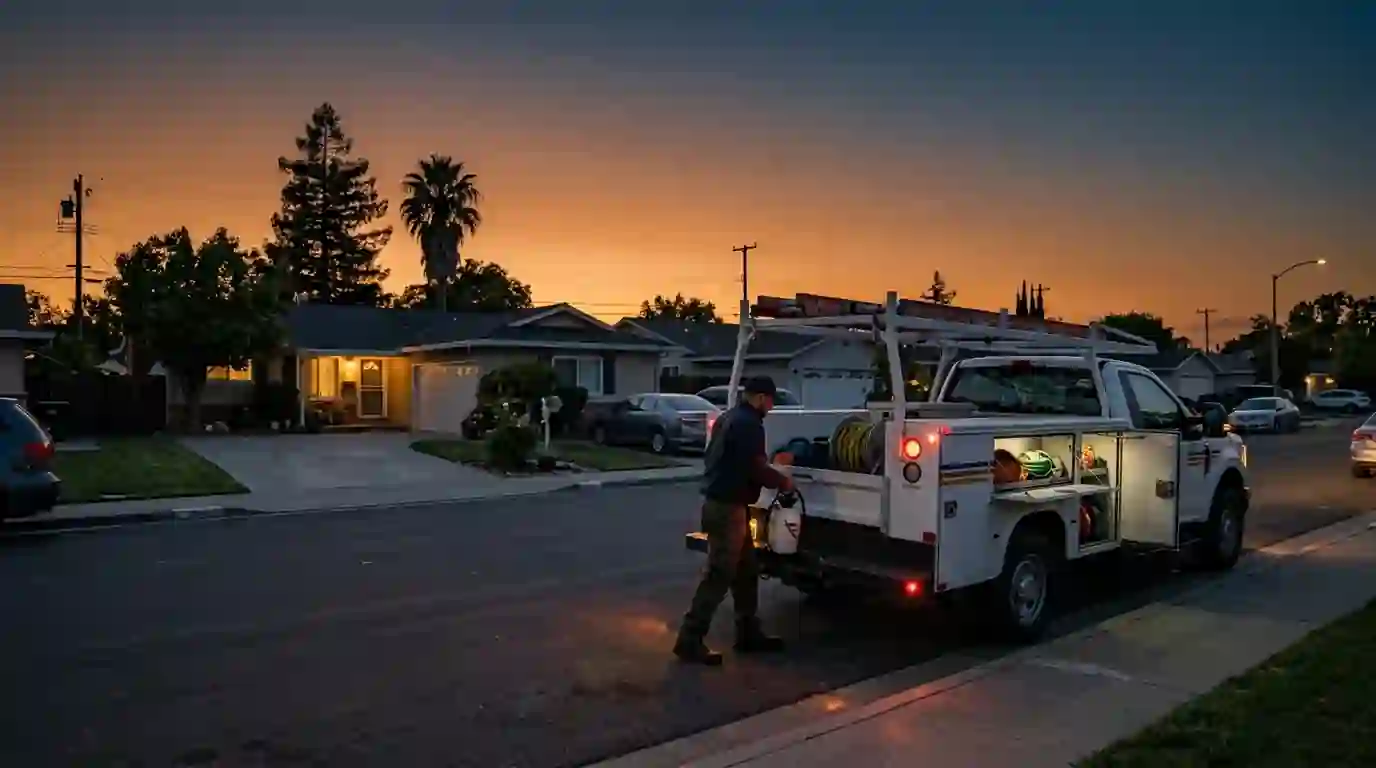
Pulled another tick off the dog tonight? Put the edge on this week's route.
Call (669) 369-0489What we see around San Jose
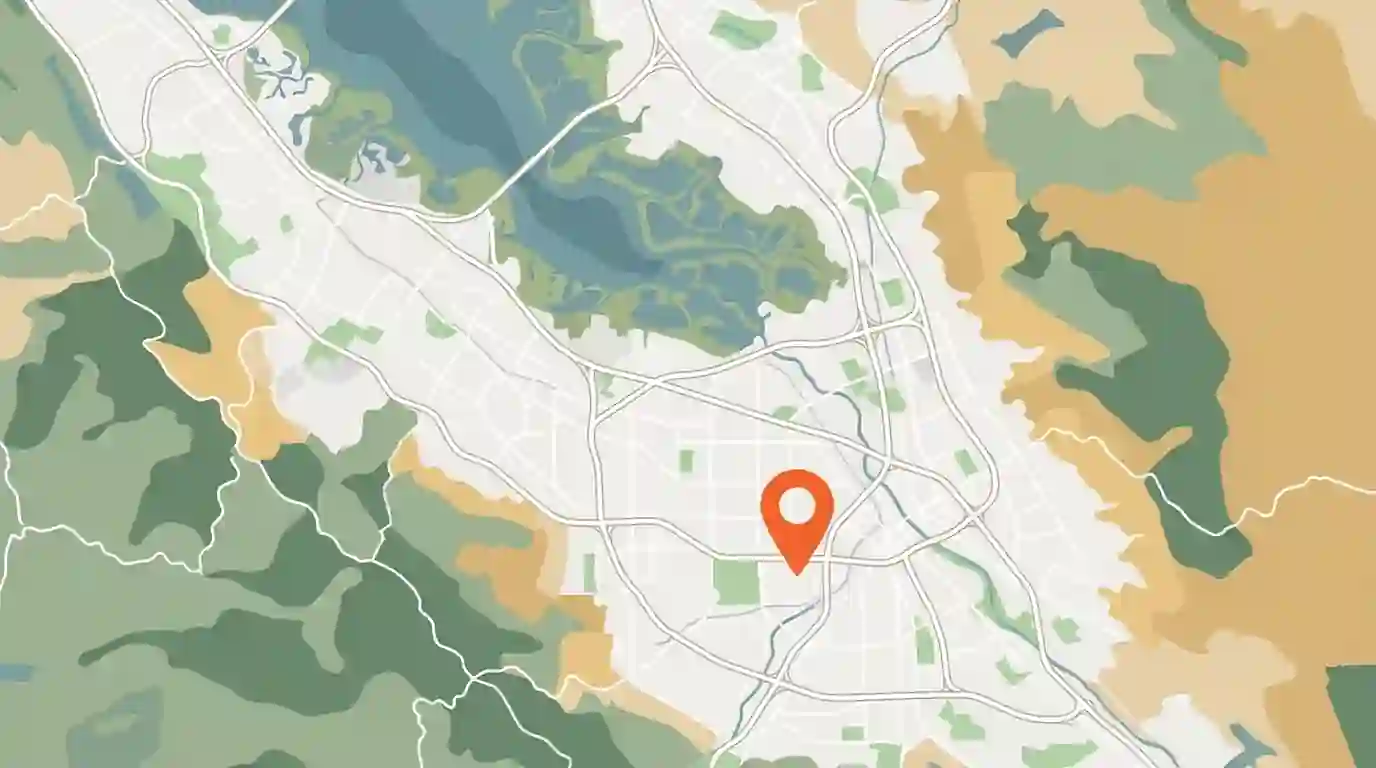
San Jose's tick pressure is a geography story. Flat interior neighborhoods with fenced lawns see little of it, while homes along the creek corridors and against the foothill open space on the valley's edges pick up ticks year-round, with the western black-legged tick most active in the cool, green months. That's the backwards part worth knowing locally: our tick season peaks when the hills are green, so winter and spring hikes and yard edges deserve more caution here than the dead-dry heat of August.
What moves the price of tick service
The treatable edge, not the lot size, is the unit of work, and two identical acreages can price very differently because of it.
| What moves the price | How it moves it |
|---|---|
| Edge footage | A yard wrapped in brush line costs more per visit than one with a single back fence. |
| Terrain | Slopes and creekside banks slow the application and need more care. |
| Vegetation density | Heavy ivy and litter layers take more material and time than clean beds. |
| Visit cadence | Peak-season cycles run tighter than shoulder months. |
| Buffer condition | Lots that adopt the clearance advice often step down to lighter service. |
| Pets and livestock | Working around kennels, runs and coops shapes product choice and timing. |
The quote follows the habitat walk and is priced per cycle, so lighter seasons cost less instead of averaging out against you.
Related reading: pest control around pets and kids.