Short answer
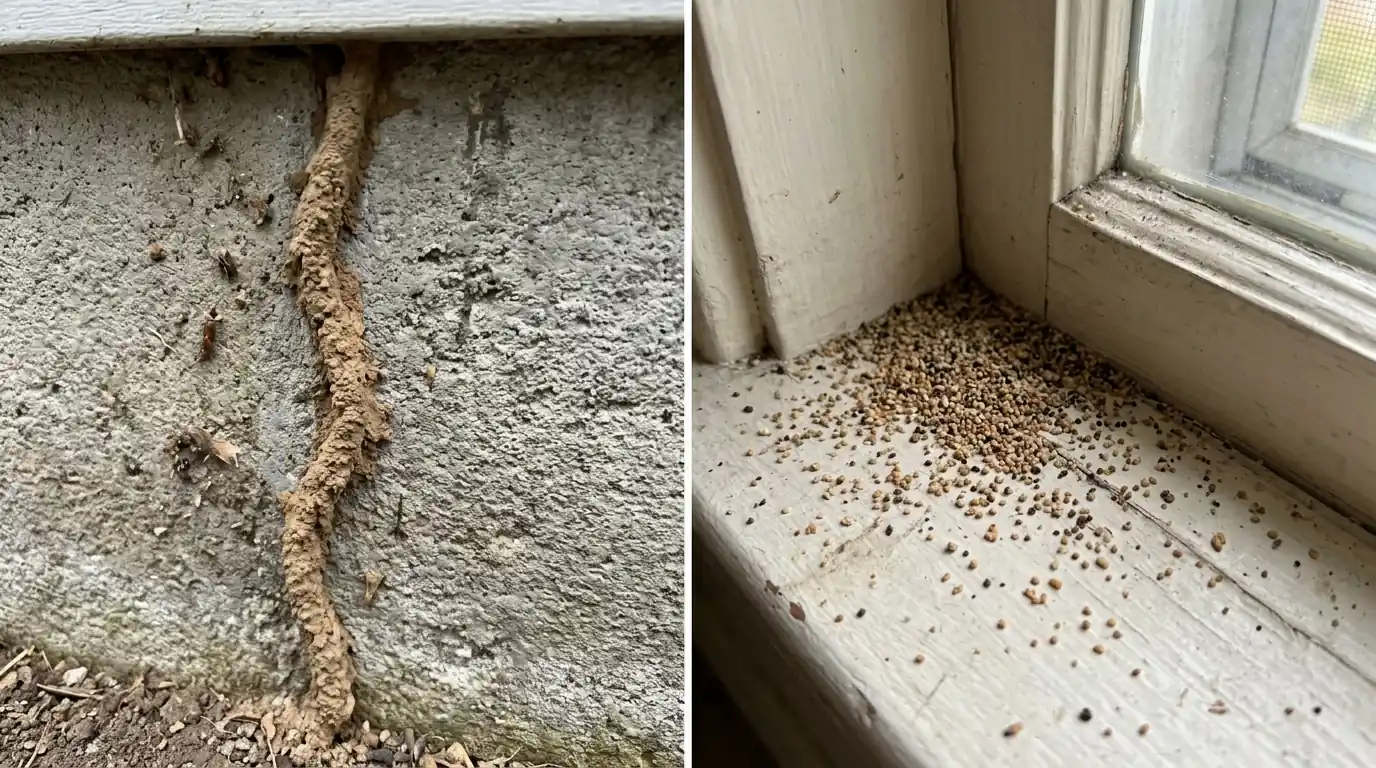
Subterranean termites nest in soil and travel into wood through mud tubes, so treatment goes into the ground as a liquid barrier or a bait system. Drywood termites live entirely inside the wood with no soil contact and leave hard pellet frass, so treatment is either local injection or whole-structure fumigation. Mud tubes mean subterranean; pellets mean drywood.
Both eat wood and both do real structural damage, which is where the similarity ends. Everything about detection, treatment and cost follows from one question: does the colony live in the ground or inside the wood?
The core difference in one paragraph
Subterranean termites need soil contact and moisture. Their colony lives underground, sometimes under a neighboring property, and workers commute into your framing through protected mud tubes they build up foundation walls and piers. Drywood termites need none of that. A pair of swarmers enters a crack in fascia, an attic vent or a piece of furniture, and the entire colony lives inside that wood for its whole existence.
What each one leaves behind
- Subterranean: pencil-width mud tubes on foundations, piers and plumbing; damaged wood packed with soil; swarmers flying in daylight after warm rain
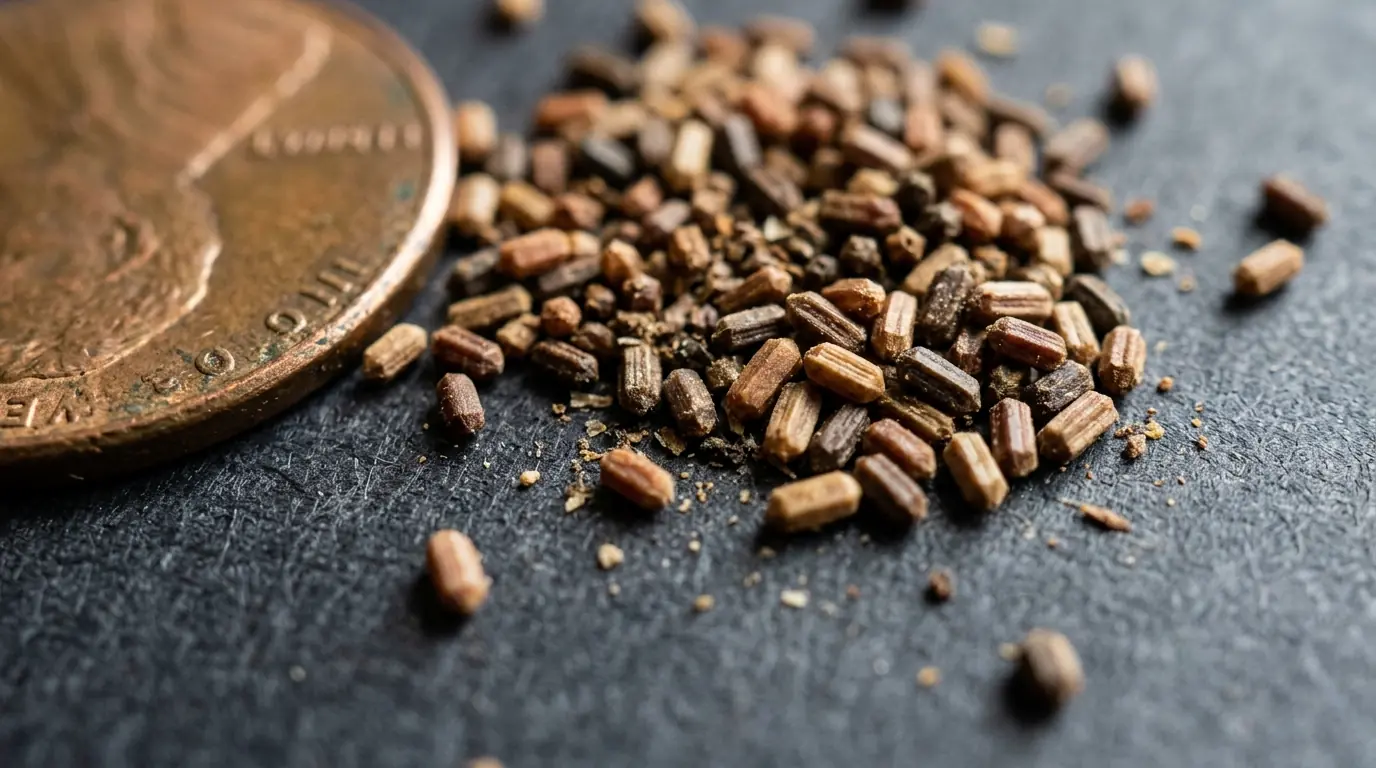
- Drywood: hard six-sided pellets like coarse sand under pin-sized holes; clean galleries with no mud lining; swarmers often flying toward evening
- Both: hollow-sounding wood, blistered surfaces, shed wings near windows
The frass test is the fastest one you can do yourself. Vacuum a sample area clean and watch it. Pellets reappearing within a few weeks mean an active drywood colony above. Mud tubes get the same treatment: break an inch out of one, and a rebuilt tube within days means active subterranean workers.
Why the treatments cannot swap
Because you have to reach the colony where it lives. Treating the wood for a subterranean infestation leaves the colony in the soil untouched and it simply rebuilds. Treating the soil for a drywood infestation accomplishes nothing at all, because nothing in that colony ever touches the ground.
Published California planning ranges
- Subterranean treatment: commonly $345 to $1,900, with soil barriers around $5 to $12 per linear foot
- Whole-structure fumigation: commonly $920 to $13,440, roughly $1 to $3 per square foot
- Targeted or local treatments: a few hundred dollars up to about $2,500, averaging near $575
Those are published market figures for planning rather than quotes. What they show clearly is why the identification matters financially: the two paths have different shapes entirely, and being told you need the expensive one for the wrong species is an expensive mistake.
Which one is more likely at your address
In San Jose, both are common and finding both in one house is not unusual. Subterranean activity concentrates in older neighborhoods where framing sits close to soil, including the pre-war housing in areas like Willow Glen and Naglee Park. Drywood evidence turns up most in orchard-era homes with original old-growth framing, where frass sifts onto window sills from framing that has been in place a century.
Newer slab construction is not exempt; it just moves the subterranean entry points to plumbing penetrations and slab expansion joints rather than crawl space piers.
What each treatment path actually involves
For subterraneans, a liquid soil barrier means trenching along accessible foundation edges, rod injection where hardscape covers the line, and drilling through slabs and porches where nothing else reaches. Bait systems skip the trenching entirely, using in-ground stations on a measured spacing that the colony feeds from until it collapses, at the cost of months rather than days.
For drywood, local treatment means drilling into mapped galleries and injecting, which works only as well as the mapping. Fumigation covers every colony including the ones no inspection can see, at the cost of two to three nights out of the house and prep work. Neither is automatically right, and a company that only ever recommends one is describing its equipment rather than your structure.
What to do with what you found
Save a sample. A tablespoon of frass in a bag, or a photo of a broken tube with the live workers visible, identifies the species in seconds and saves inspection time. If what you actually found was a cloud of winged insects, start with the swarmer guide instead. Then book the inspection rather than the treatment, because the structure may hold evidence of both, and a plan built on one visible symptom tends to miss the other.