Short answer
A termite inspection in San Jose is a full-structure walk: crawl space or slab perimeter, attic framing, garage, window and door frames, exterior wood contact and the moisture conditions behind all of it. It is priced by the time the structure takes rather than by what gets found, and treatment, if any is warranted, is quoted separately.
The reason inspection and treatment get quoted separately is not administrative. An inspection is information: somebody walks the structure, probes suspect wood, documents what is there and tells you what it means. If the person doing that is also the person whose price goes up when more is found, the information is worth less. Keeping them separate is what makes the findings trustworthy.
What the inspection actually covers
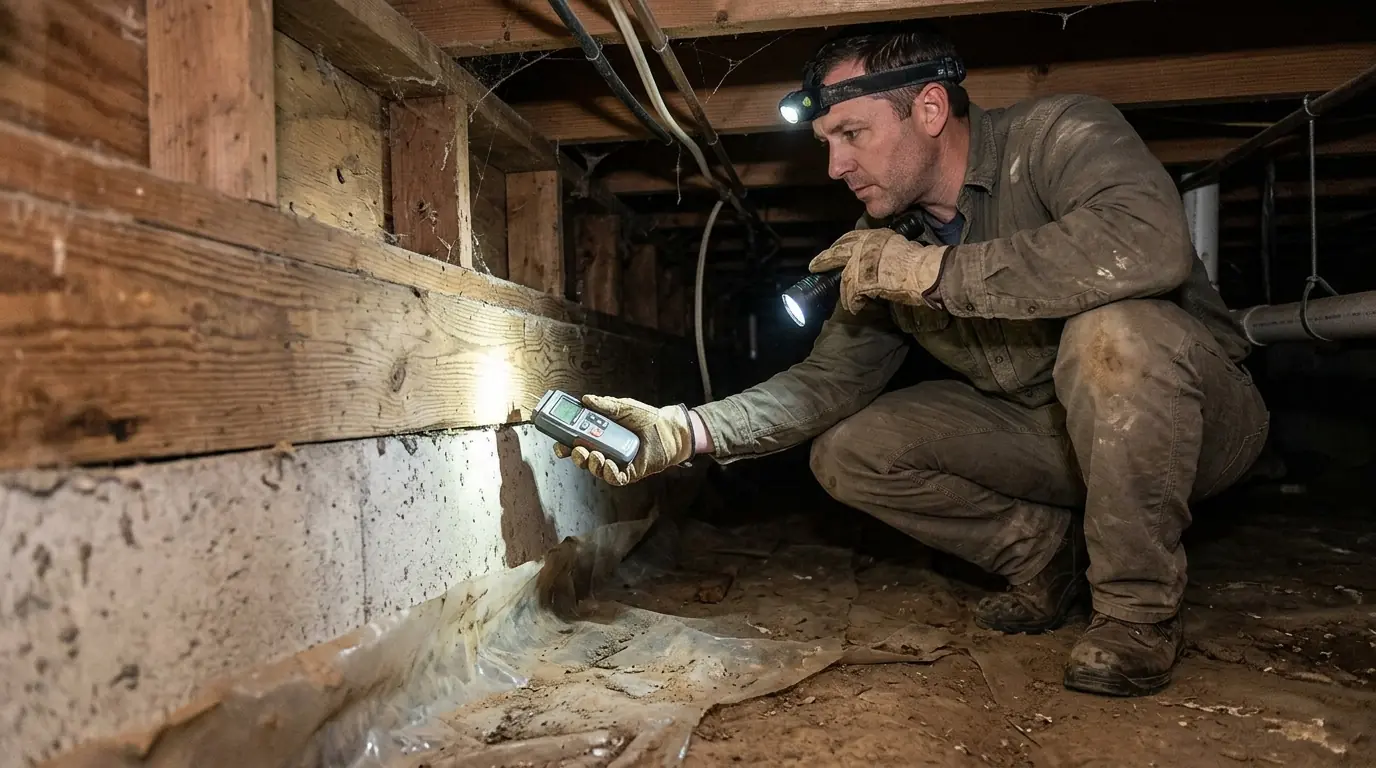
A real inspection on a single-family home takes one to two hours, longer on larger structures or where access is tight. Most of that time is spent in the two places nobody looks: the crawl space and the attic.
- Crawl space or slab perimeter, including piers, sill plates and subfloor
- Foundation walls and plumbing penetrations, checked specifically for mud tubes
- Attic framing, eave blocking and any accessible wall voids
- Garage, including the slab joint and attached framing
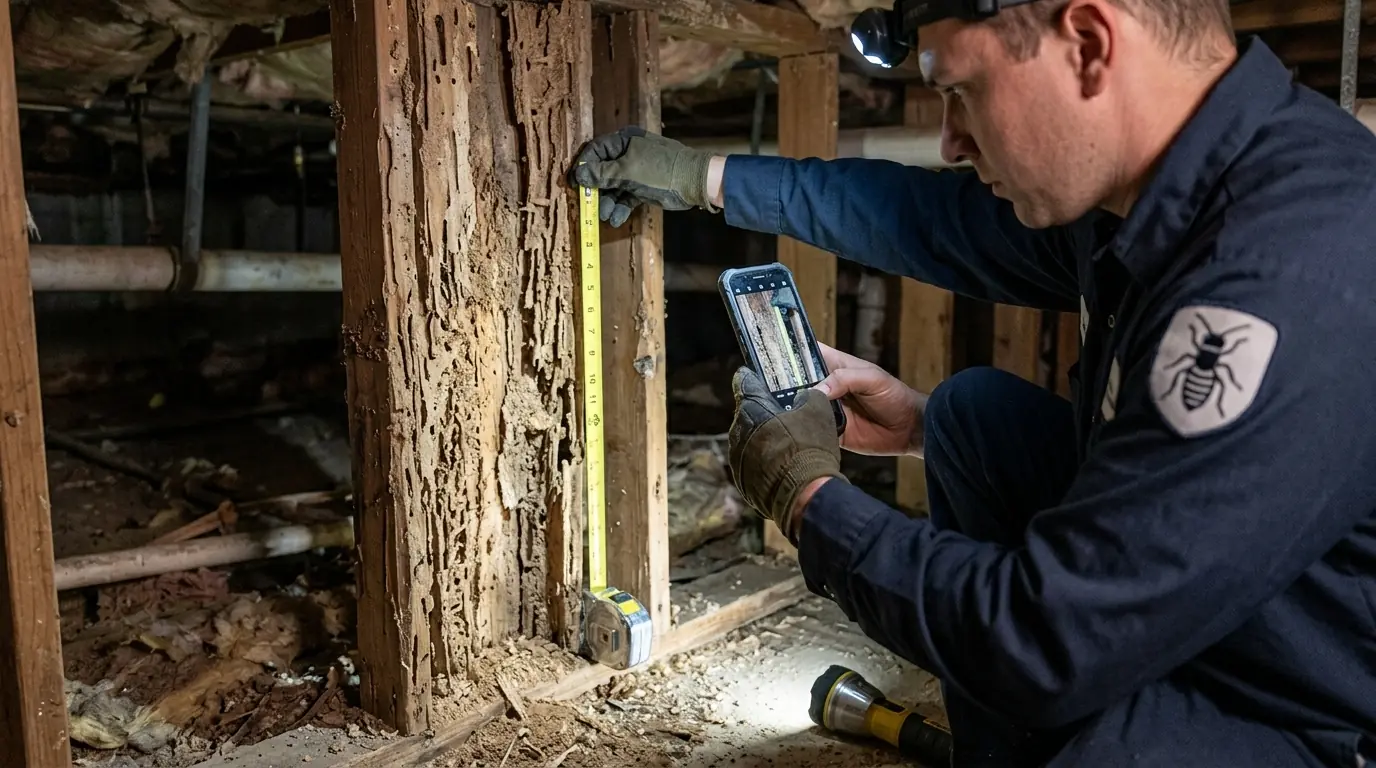
- Window frames, door frames, trim and sills for frass and galleries
- Exterior siding, fascia, decks, fences and any wood-to-soil contact
- Moisture conditions: leaks, grading, ventilation, irrigation spray against the wall
The output is a written record of findings by location, with active evidence separated from historic. That distinction matters more than people expect, because paying to correct old, dry damage that stopped years ago is money that belongs in your repair budget instead.
What moves the inspection price
Inspections are priced by the time the structure takes, and that varies more than square footage alone suggests. The things that actually move it:
- Square footage and additions. More structure takes longer, and homes with several additions have more junctions to read.
- Crawl space access. Tight, blocked or partially inaccessible crawl spaces slow the most important part of the walk.
- Number of structures. A detached garage, ADU or outbuilding is a separate inspection area.
- Report type. A transaction report documenting findings by location takes more desk time than a homeowner check.
- Timeline. Escrow deadlines sometimes mean working around other people's calendars.
How the published treatment ranges relate
Once an inspection finds something, the conversation moves to treatment, and this is where the numbers people have seen online come in. Published California figures are wide for a reason: the method and the structure size drive everything.
Published California planning ranges
- Subterranean termite treatment: commonly $345 to $1,900, with soil barriers around $5 to $12 per linear foot of foundation
- Whole-structure fumigation: commonly $920 to $13,440, roughly $1 to $3 per square foot
- Whole-home treatment: commonly $1,800 to $2,500
- Targeted treatments: a few hundred dollars up to around $2,500, averaging near $575
Those are planning figures from published market data, not a quote. What they are genuinely useful for is calibration: if someone quotes a whole-structure fumigation on a modest home at the very top of that band, or a subterranean treatment far below it, you have a reason to ask more questions.
What an inspection cannot tell you
Worth being clear about the limits, because a report that implies more certainty than it has is a liability for everyone. An inspection reads what is accessible and visible, plus what probing and sounding reveal through a surface. It does not see inside a finished wall.
What a good report does instead is note where the evidence suggests activity behind a finished surface, so you know which areas carry uncertainty and can decide whether to open something up. Inaccessible areas, a sealed crawl space section, a finished basement wall, a built-in cabinet run, get listed as inaccessible rather than quietly treated as clear.
When to book one even with no symptoms
Annually or every other year is a reasonable rhythm here, sooner if you see frass, swarmers or mud tubes. Older homes with framing close to soil benefit from the tighter cycle, and so does any house that has never been checked, which in this valley is a surprising number of them.
The other common trigger is a transaction. If you are buying, the inspection is not optional in any practical sense, and the report you get is a negotiating document as much as a technical one.