Short answer
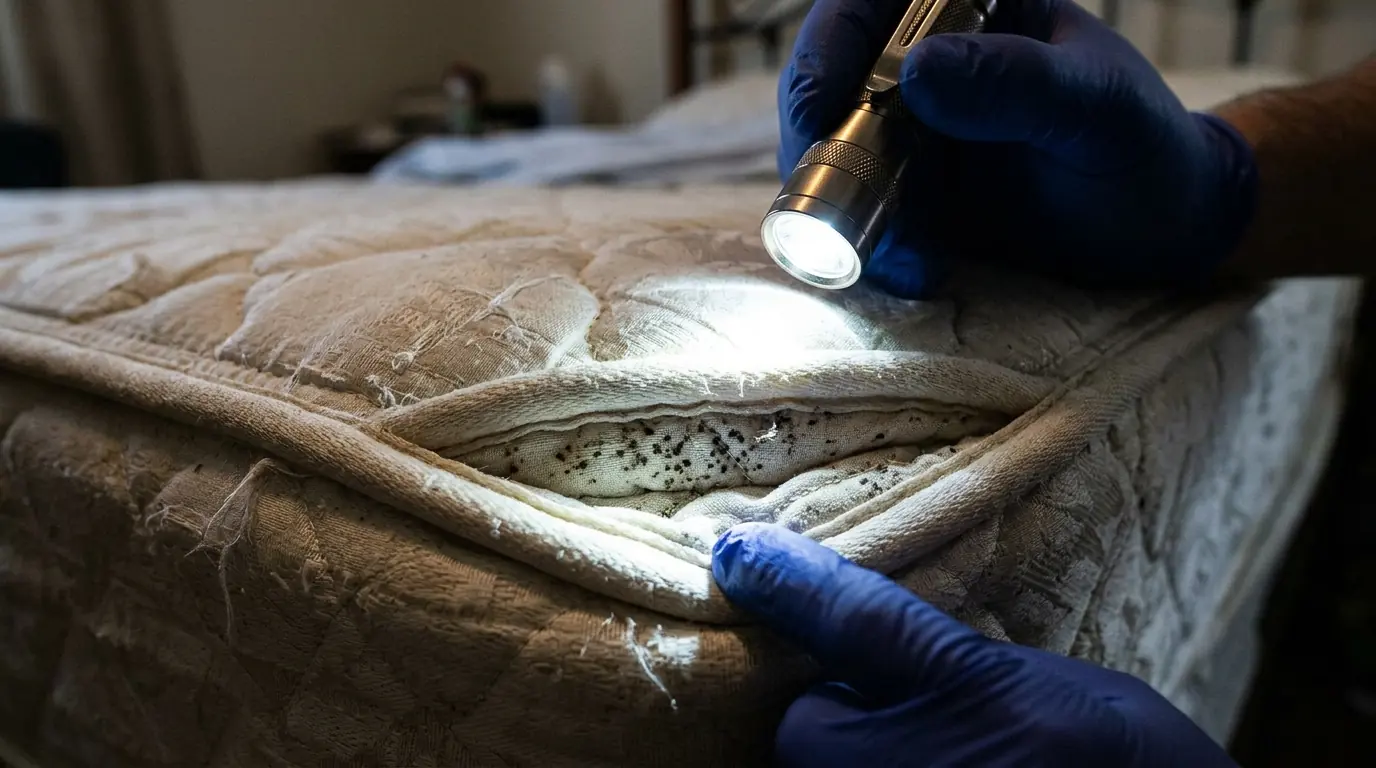
Confirming bed bugs means finding physical evidence, not just bites: dark pepper-like fecal spotting along mattress seams, translucent shed skins at frame joints, rust-colored smears on sheets, or live insects the size of an apple seed in screw holes and slat gaps. Bites alone confirm nothing, because fleas, carpet beetle reactions and hives all look similar.
Bites are the reason people start looking and the worst evidence to decide on. Reactions vary enormously between people, including partners sleeping in the same bed, and plenty of other things produce similar marks. Physical evidence is what settles it, and it is specific enough that finding it is unambiguous.
The five things worth looking for
- Fecal spotting. Black pepper-sized dots along mattress piping, box spring edges and frame joints. They smear reddish-brown if you wipe one with a damp cloth.
- Shed skins. Translucent amber casings, bug-shaped and empty, near harborage. Nymphs shed five times, so an established infestation leaves plenty.
- Blood smears. Small rust-colored streaks on sheets from bugs crushed in your sleep.
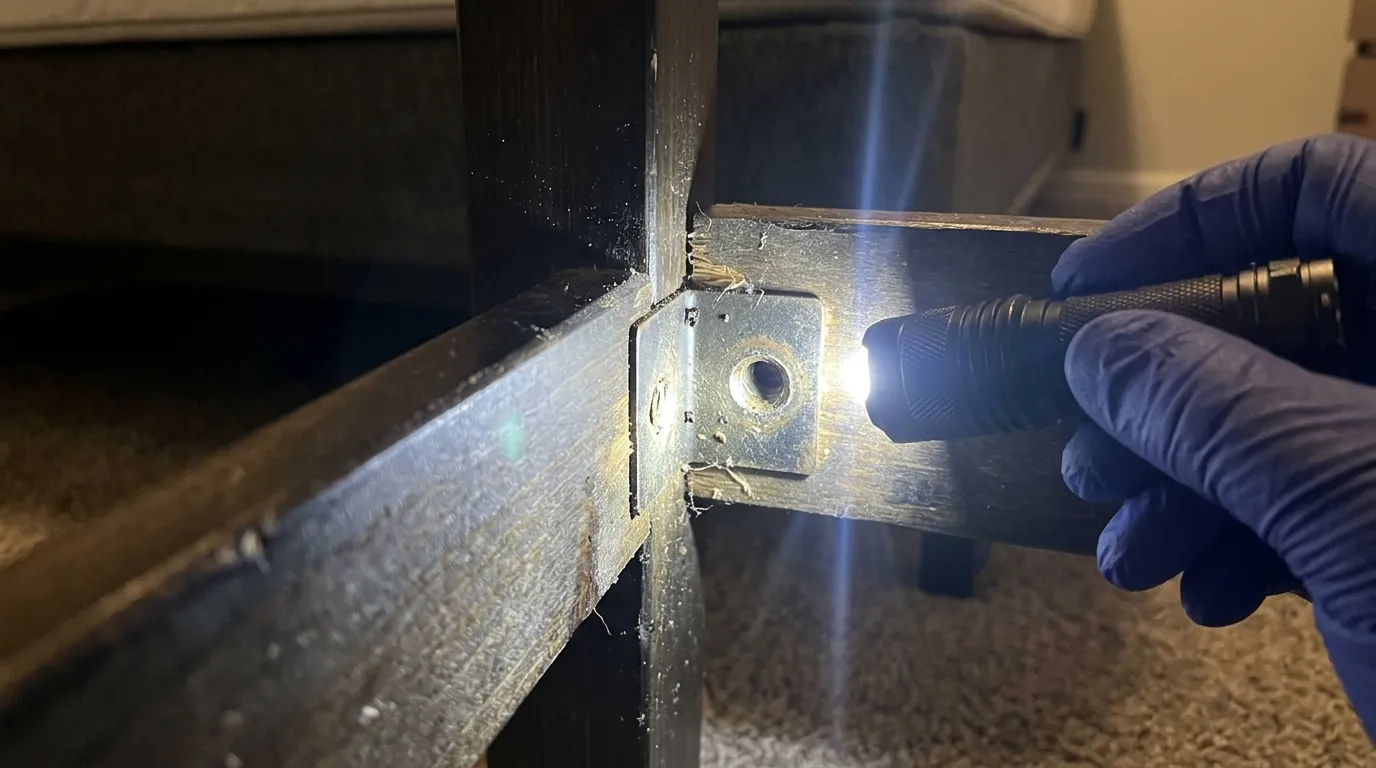
- Live insects. Adults about the size and shape of an apple seed, flat and reddish-brown, usually tucked into screw holes, slat gaps or seam folds rather than out in the open.
- Eggs. Pinhead-sized, pearly white and glued into crevices. Hard to see without magnification but conclusive when you do.
Where to check, in order
Work outward from the bed, because bed bugs harbor as close to a sleeping host as the furniture allows. Strip the bedding into a bag before you start rather than onto the floor.
- Mattress seams and piping, all four sides, including the underside corners
- Box spring edges and the underside, lifting the dust cover where it is stapled
- Bed frame joints, bolt holes, slat ends and the back of the headboard where it meets the wall
- The nightstand: drawer runners, joints and the underside
- Upholstered seating in the room, seams and under cushions
- Baseboard behind the headboard and the edge of carpet where it meets the wall
- Behind wall art and loose outlet covers in the immediate area, in heavier cases
What the evidence pattern tells you
Where you find it matters as much as whether you find it. Evidence confined to the mattress and frame generally means a newer infestation, which is good news for the scope of treatment. Evidence spread to nightstands, nearby seating and baseboards means an older one that has had time to expand, and treatment will need to cover more of the room.
Finding evidence in more than one bedroom is the signal that changes the plan from a room-level job to a whole-home one, and in an apartment it is the signal that neighbors need checking too.
What not to do while you work this out
Four things that make it worse
- Do not move belongings or sleep in another room; that spreads the infestation to a second harborage
- Do not fog or spray; store foggers scatter bed bugs deeper into walls and into neighboring rooms
- Do not throw out the mattress yet; dragging an infested mattress through the house seeds the route it travels
- Do not start laundering everything you own in a panic; targeted hot washing and drying after a plan exists works better
The one genuinely useful thing to do before an inspection is to put interceptor cups under the bed legs. They cost very little, they catch bugs moving to and from the bed, and they turn a question into a count both for you and for whoever inspects.
Where they come from, and what that means for you
Bed bugs travel on belongings rather than through walls from the garden. Luggage, used furniture, a visiting backpack, a moving truck, a shared laundry room. That is the whole list in practice, and it is why nothing about having them reflects on how you keep your home.
It does mean the inspection often identifies which room they started in, which hints at the route. If the evidence is heaviest in a guest room, or in the room where a secondhand chair landed, that is usually your answer. In apartments, evidence concentrated along a shared wall points at a neighboring unit and changes the treatment plan from unit-level to building-level.
When to call someone
Once you have physical evidence, or once you have bites that keep appearing and cannot find anything after a careful check. Professional inspection is better at the second case than anyone with a phone flashlight, and a confirming inspection that finds nothing is a genuinely useful result rather than a wasted call.