Short answer
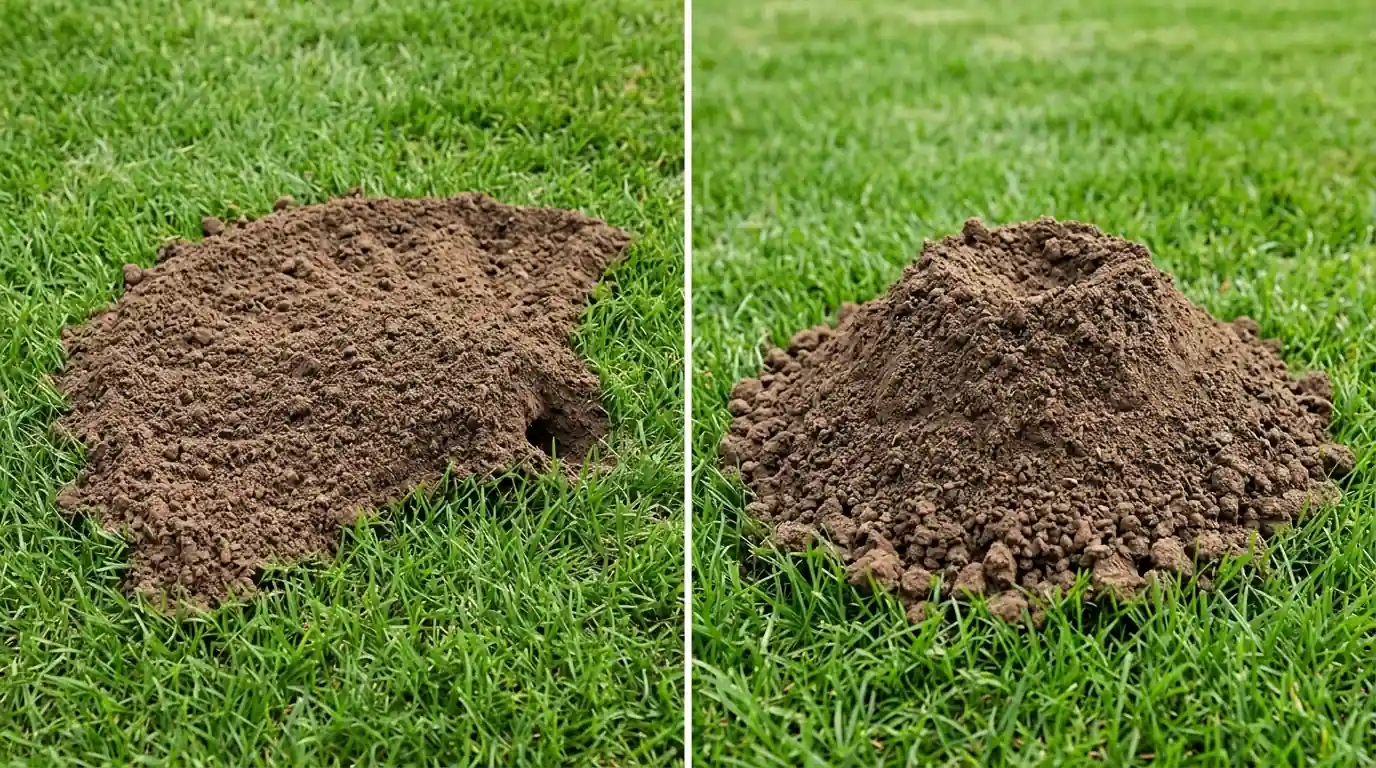
Fan or crescent-shaped mounds with a plugged hole off to one side mean pocket gophers, which eat roots and pull whole plants under. Round volcano-shaped mounds with the hole in the middle mean moles, which eat grubs and worms and only damage roots by tunneling past them. The trapping differs completely, so the identification comes first.
People use both names interchangeably and then buy the wrong traps. The animals are not related, do not eat the same things and do not use the same tunnel structure, so getting this right before anyone sets anything saves a week of catching nothing.
Start with the mound
- Gopher: a fan or crescent of soil, with the entrance plugged and sitting off to one side rather than in the middle. Soil comes out in fine, sorted clods.
- Mole: a round, symmetrical volcano with the hole at the center, often with coarser chunks. Moles also push up long surface ridges you can feel give way underfoot.
- Vole: no real mounds at all. Voles leave clean surface runways through grass and groundcover, usually under cover rather than in open lawn.
Then look at what is being eaten
Gophers are herbivores. They eat roots, bulbs and whole small plants, which is why the classic sign is a plant wilting and then disappearing downward. They also chew drip lines and poly tubing, which shows up as a mysterious wet patch or a dry zone in the irrigation.
Moles are insectivores. They are hunting grubs and earthworms and have no interest in your plants at all. Root damage from a mole is collateral: tunneling undercuts roots and dries them out, which looks like plant damage and is not feeding damage.
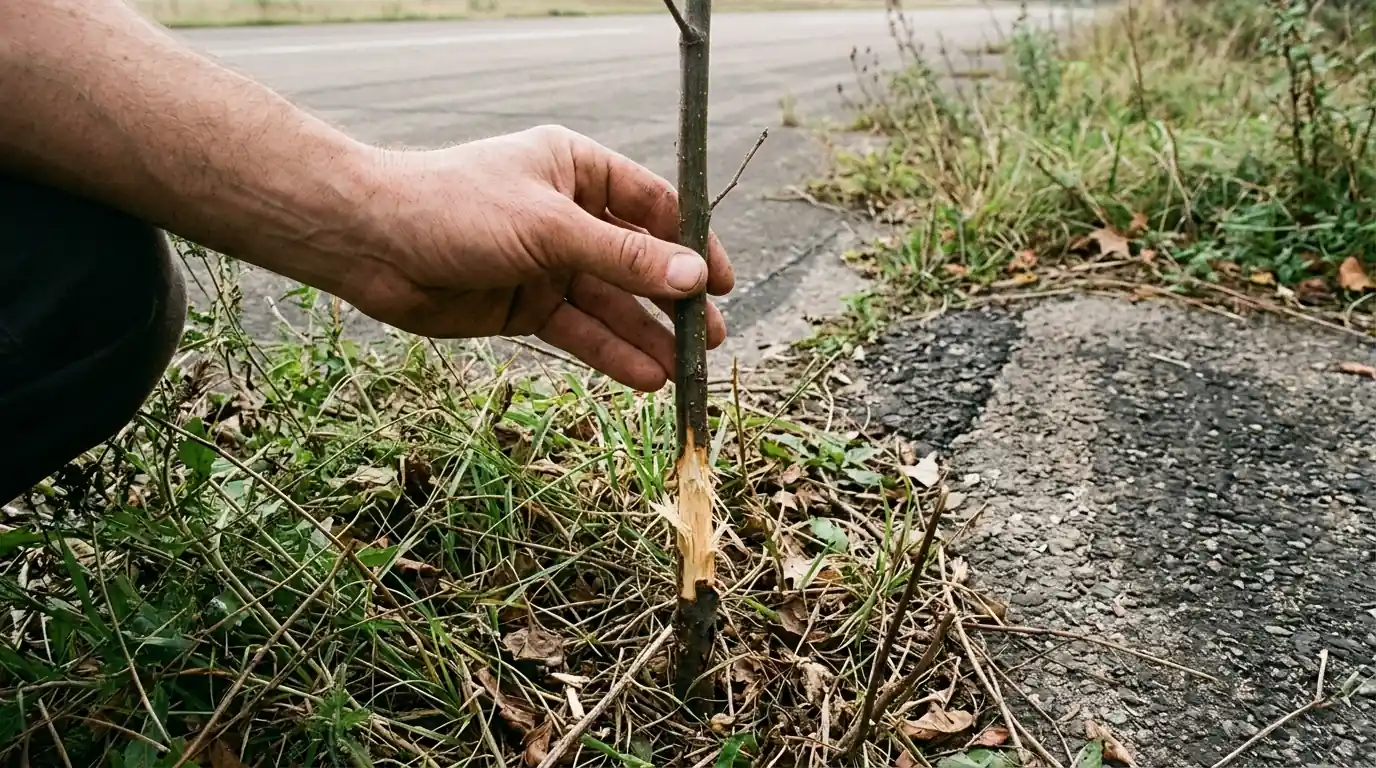
Voles do eat plants, and specifically they strip bark from the base of young trees and shrubs. Girdled bark all the way around a young trunk is the one sign that is unmistakably vole and never gopher or mole.
Why the identification changes the trapping
Gopher trapping goes into the main runway, found by probing a few inches down on the plugged side of a fresh mound, with traps set in pairs facing both directions and the opening sealed against light. Mole trapping works deep runs rather than the meandering surface ridges, which are often used once and abandoned, so a trap in the wrong tunnel sits there all week catching nothing.
Vole work is different again: surface runways under pulled-back groundcover, paired with removing the cover itself, because the runway only exists where something hides it.
Quick identification summary
- Fan-shaped mound, plugged hole to one side, plants vanishing downward = gopher
- Round volcano mound, raised surface ridges, plants wilting but intact = mole
- No mounds, clean runways under cover, bark stripped from young trunks = vole
- Chewed irrigation line with a wet patch = usually gopher
What actually works, and what does not
Trapping on active runs is the method with a real success rate for all three. Sonic spikes and vibrating windmills are the most common thing we find already installed in yards that still have active tunnels; the animals tunnel straight past them.
Habitat changes help more than gadgets. Deeper, less frequent watering reduces the near-surface worm activity that keeps moles feeding high. Pulling mulch and groundcover back from the base of young trees removes the covered approach voles need. Wire baskets around root balls at planting prevent most gopher losses on new plantings, and buried hardware cloth under raised beds does the same at scale.
Reading the tunnels themselves
Beyond mounds, the tunnel structure is diagnostic. Gophers maintain a main runway a few inches down connecting feeding laterals, and they plug every opening, which is why you rarely see an open gopher hole. Moles run two systems: shallow feeding ridges that meander and are often abandoned after one use, and deeper highways that get repaired every time.
That difference is why trap placement matters so much. Collapse a short section of tunnel and come back the next day: a repaired section is an active run worth trapping, and one that stays collapsed is a tunnel the animal has already finished with.
How long it takes
A single gopher in a yard is usually cleared within days once the active runway is found, and the mounds can be tamped back as soon as trapping is done. Properties bordering fields or creek banks see new animals arrive afterward, which is why those lots often do a spring check rather than waiting until the lawn is a map of mounds again.