Short answer
Roof rats in a San Jose attic usually show up as night scratching overhead, half-inch pointed droppings, grease rub marks at eave junctions, gnawed fruit left hanging on trees, chewed wiring or insulation, a musky smell near openings, and pets fixating on one ceiling line. The roof rat is the most abundant rodent pest in Santa Clara County, so the odds favor it over anything else.
Almost every one of these calls starts the same way: something moving across the ceiling after dark. What separates a roof rat from a mouse, a squirrel or a raccoon is the combination of height, timing and the evidence left behind, and those are easy to read once you know what each one means.
1. Scratching overhead in the first hours after dark
Roof rats are nocturnal climbers that nest high and commute at dusk. Quick, light scurrying across the ceiling starting shortly after dark is the signature. Slow heavy movement around dawn reads raccoon or opossum instead, and daytime scampering in walls often means squirrels.
2. Half-inch droppings with pointed ends
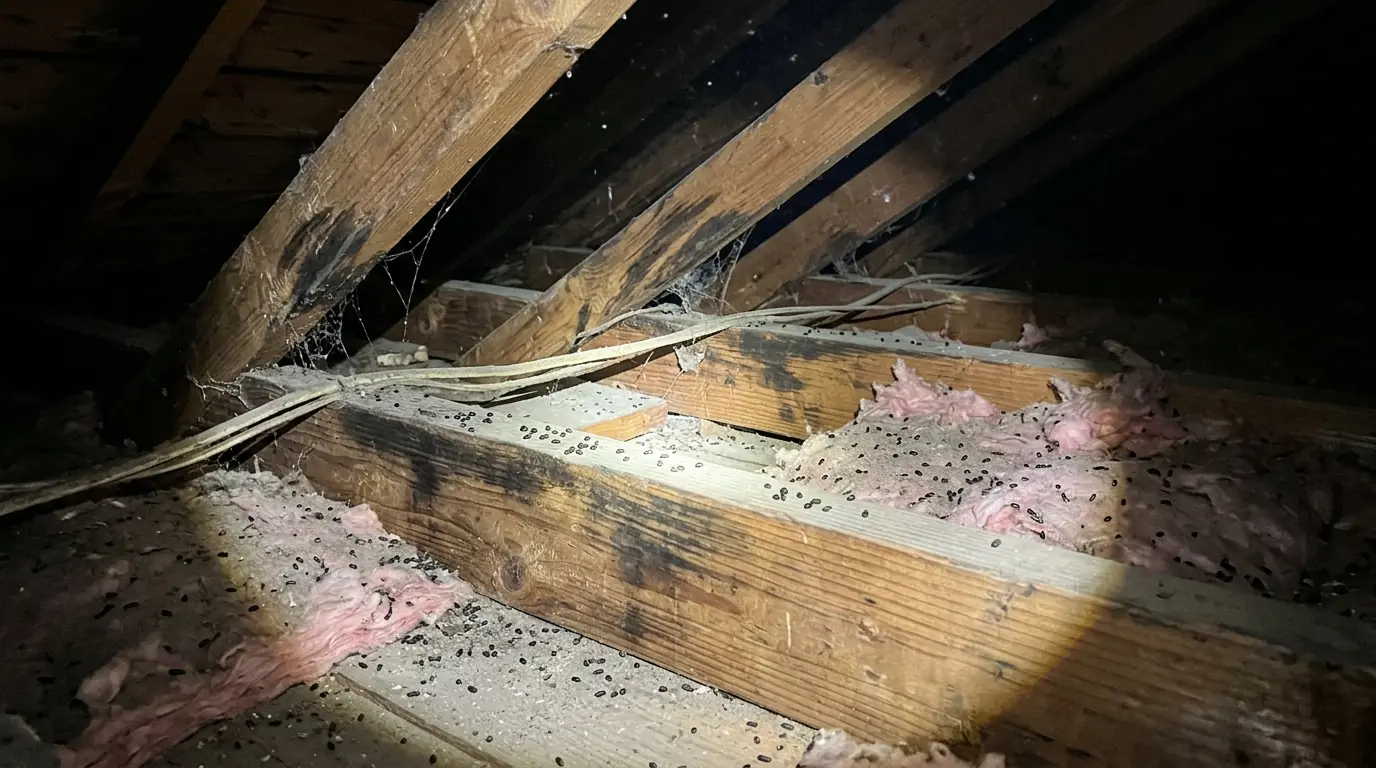
Roof rat droppings run around half an inch with tapered ends, scattered rather than piled. Mouse droppings are a quarter of that size. Norway rat droppings are blunter and found at ground level rather than on rafters and the water heater platform.
3. Grease rub marks at eave junctions
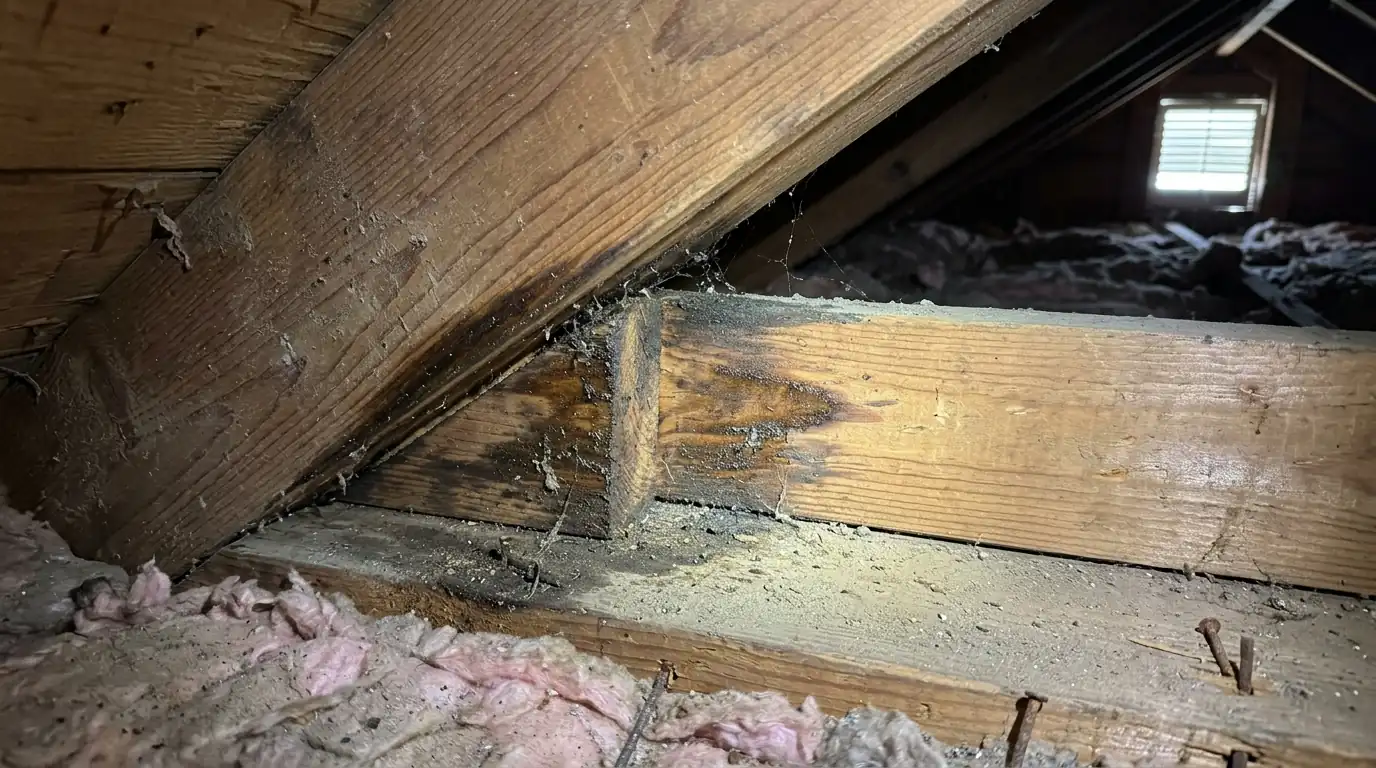
Rats travel the same routes nightly and leave dark smudges where fur meets wood repeatedly. Those marks are the most useful finding in an attic, because they trace the exact entry point rather than just confirming presence.
4. Hollowed fruit still hanging on the tree
A classic valley sign. Roof rats feed in the canopy and leave oranges and lemons eaten out while still attached, with the rind intact. Squirrels knock fruit down; roof rats eat it in place.
5. Chewed wiring, ducting or insulation
Incisors grow continuously, so rats gnaw constantly. Stripped wire insulation, torn flexible duct and tunnelled batt insulation all indicate an established population rather than a recent arrival, and chewed wiring is the reason this is more than a nuisance problem.
6. A musky smell around a vent or opening
Urine marking builds up at frequently used openings. A distinct musky odor near an eave vent, a pet door or a wall penetration usually means heavy traffic through that exact spot.
7. Pets tracking something along one ceiling line
A dog or cat staring at the same stretch of ceiling every evening has mapped the runway for you. Take it seriously; animals locate the route faster than people do.
What the local numbers say
- The roof rat is by far the most abundant rodent pest in Santa Clara County
- The county vector district logged about 1,340 reported rat sightings in 2020, which only counts people who reported
- Mild winters mean no seasonal die-back, so populations compound year-round
- Published San Jose rodent proofing runs roughly $300 to $800 or more depending on entry point count
How they get in
Roof rats are climbers, so the entries sit higher than people expect. Branches and vines touching the roof, fence lines running to the eave, utility lines, and the gap where two roof planes meet are the usual routes, and once on the roof they need about a quarter-sized opening to get inside.
The common openings are unscreened or chewed attic vents, gaps at the fascia and eave blocking, failed vent screens on dryer and bath exhausts, and the junction where a dormer or addition meets the main roof. Those are the spots the rub marks lead to, which is why a technician who finds the smudges can find the hole.
What to do once you have two or three of these
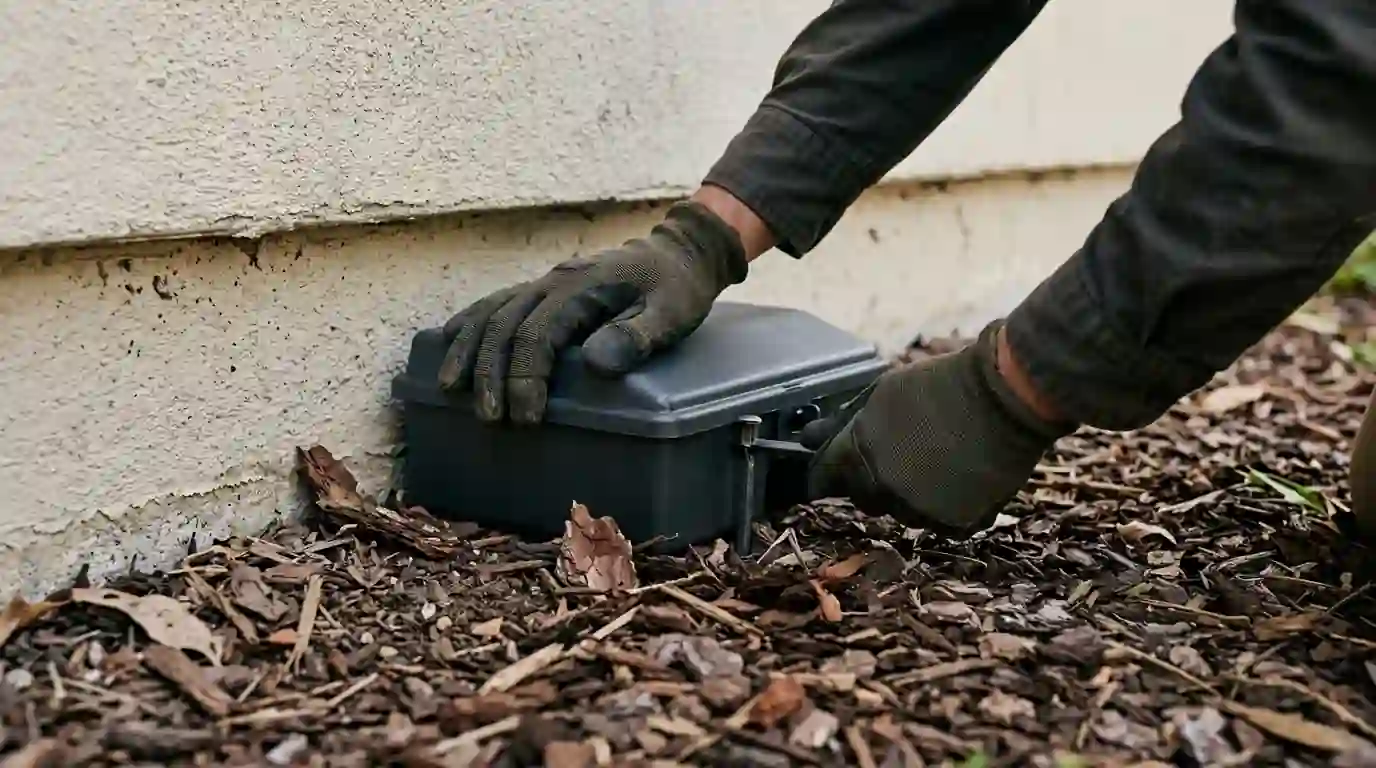
Two things in order: trap the population that is already inside, and seal the entries that let them in. Trapping without sealing is a treadmill, because the yard always holds more rats than the attic does. Sealing without trapping leaves whatever is inside, inside.
Skip the bait in an occupied home. Rodents that die in wall voids become a weeks-long odor problem you cannot reach, and bait does nothing about the open eave gap that started it.
If the attic has been occupied for months, the cleanup conversation follows the trapping. Droppings, soiled insulation and the scent trail left behind actively recruit the next rat, which is why clearing it out is part of keeping the attic empty rather than a cosmetic extra.