Short answer
Quick scurrying after dark means roof rats. Heavier bursts in daylight, especially early morning, mean squirrels. Slow, deliberate movement around dawn and dusk means raccoons or opossums. Rapid chittering at dusk with animals streaming out of a roof gap means bats, which is a protected, legally timed job.
Nearly every attic call starts the same way: something is moving up there and nobody knows what. The good news is that the three questions that narrow it, when, how heavy, and what did it leave, can be answered without going into the attic at all.
Start with the clock
- Shortly after dark, quick and light. Roof rats, commuting along joists and wall tops. The most common answer by a wide margin.
- Early morning and late afternoon, heavier bursts. Tree squirrels, which are active in daylight and sound far bigger than they are.
- Around dawn and dusk, slow and deliberate. Raccoons or opossums. If it sounds like something walking rather than running, it probably is.
- At dusk, rapid chittering and a stream leaving the roofline. Bats, emerging for the evening and returning before dawn.
- Steady scratching inside a wall at any hour. Possibly a bird or a trapped animal, which changes the urgency.
Then look at what it left
Droppings are the other reliable identifier, and you can usually find them without a full attic crawl by checking the top of a water heater platform, the garage ceiling line or wherever insulation has been disturbed near the hatch.
- Roof rat: about half an inch, pointed ends, scattered rather than piled
- Mouse: a quarter that size, often in small concentrations
- Squirrel: larger, rounded ends, often with chewed nut or seed debris nearby
- Raccoon: much larger, frequently in one latrine area rather than scattered
- Bat: small, crumbly when dry, often accumulating in one spot directly below the roost
Damage tells you too
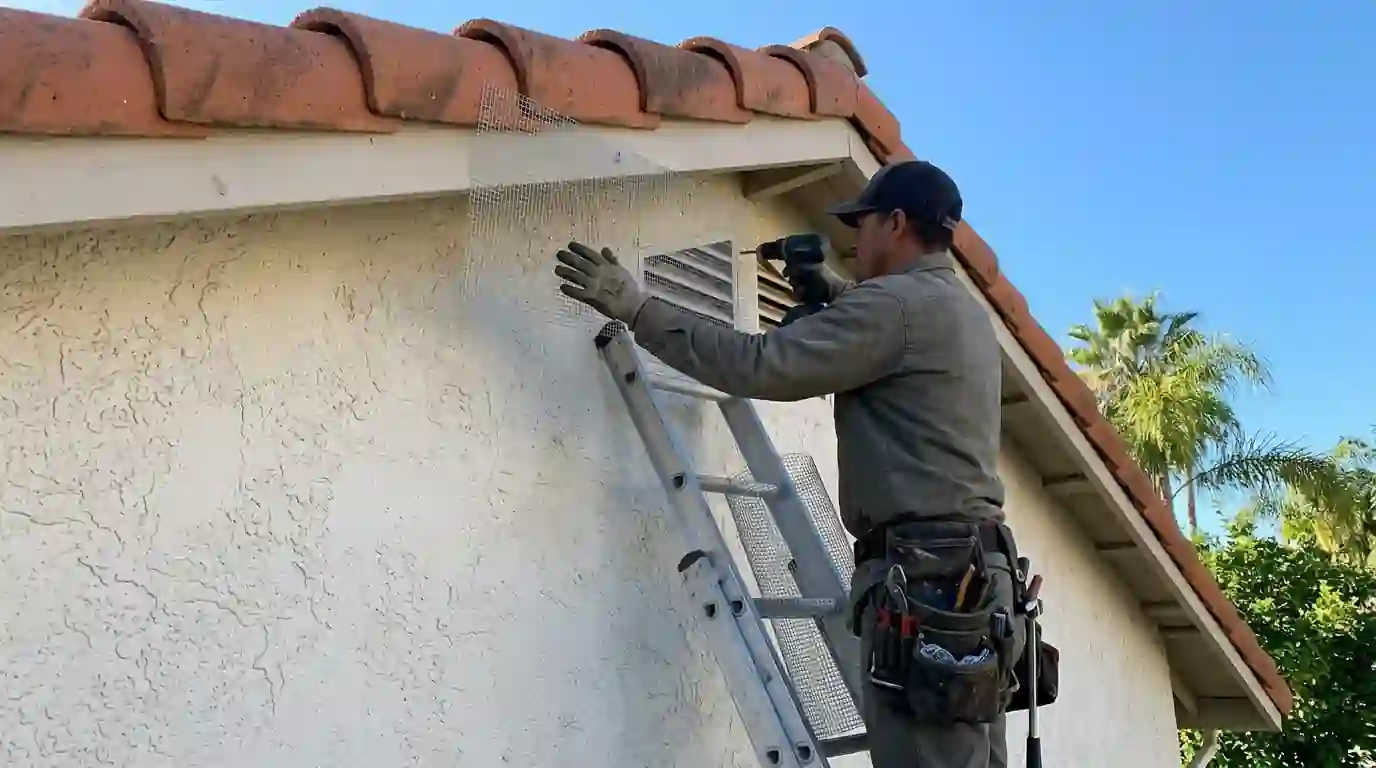
Entry damage is the giveaway when the animal itself stays out of sight. Rats use gaps they find and leave greasy rub marks around them. Squirrels chew their own opening, leaving a ragged hole in fascia or a vent. Raccoons tear and lever, pulling soffit panels and vent covers apart. Bats leave no damage at all, which is part of why people miss them for so long.
What each one actually needs
- Rats: trapping plus sealing. The sealing is what makes it last, since the yard always holds more.
- Squirrels: removal timed around any litter, then rebuilt material at the entry, because screening over chewed wood does not hold.
- Raccoons: humane removal with young checked first, then reinforced repair of whatever they tore open.
- Bats: one-way exclusion devices timed to avoid the maternity season, never trapping, and every gap sealed afterward.
- Birds: nest removal timed around protections, then vent screening.
Why the attic matters beyond the noise
Every one of these animals does something to the space besides occupy it. Rats and squirrels gnaw wiring, which is a genuine fire risk and the main reason attic activity is worth acting on quickly. Raccoons flatten and foul insulation across whole bays. Bats accumulate guano in one spot under the roost, which becomes its own remediation question.
There is also what comes after. When a rodent or bird population leaves or dies off, the mites that fed on it disperse looking for a new host, which is why biting complaints often start a week or two after an attic goes quiet. Proper cleanup is part of closing the job rather than an optional extra.
What not to do while you work it out
Do not seal the hole yet. If something is inside, you have trapped it, and the result is either a new hole chewed through your roof or an animal dying in a wall void. Do not put bait in the attic either; a rat that dies somewhere unreachable becomes a weeks-long odor problem.
Do note the exact times you hear it for two or three nights. That one piece of homework identifies the animal more reliably than anything else a homeowner can do, and it tells whoever comes out where to start.