Short answer
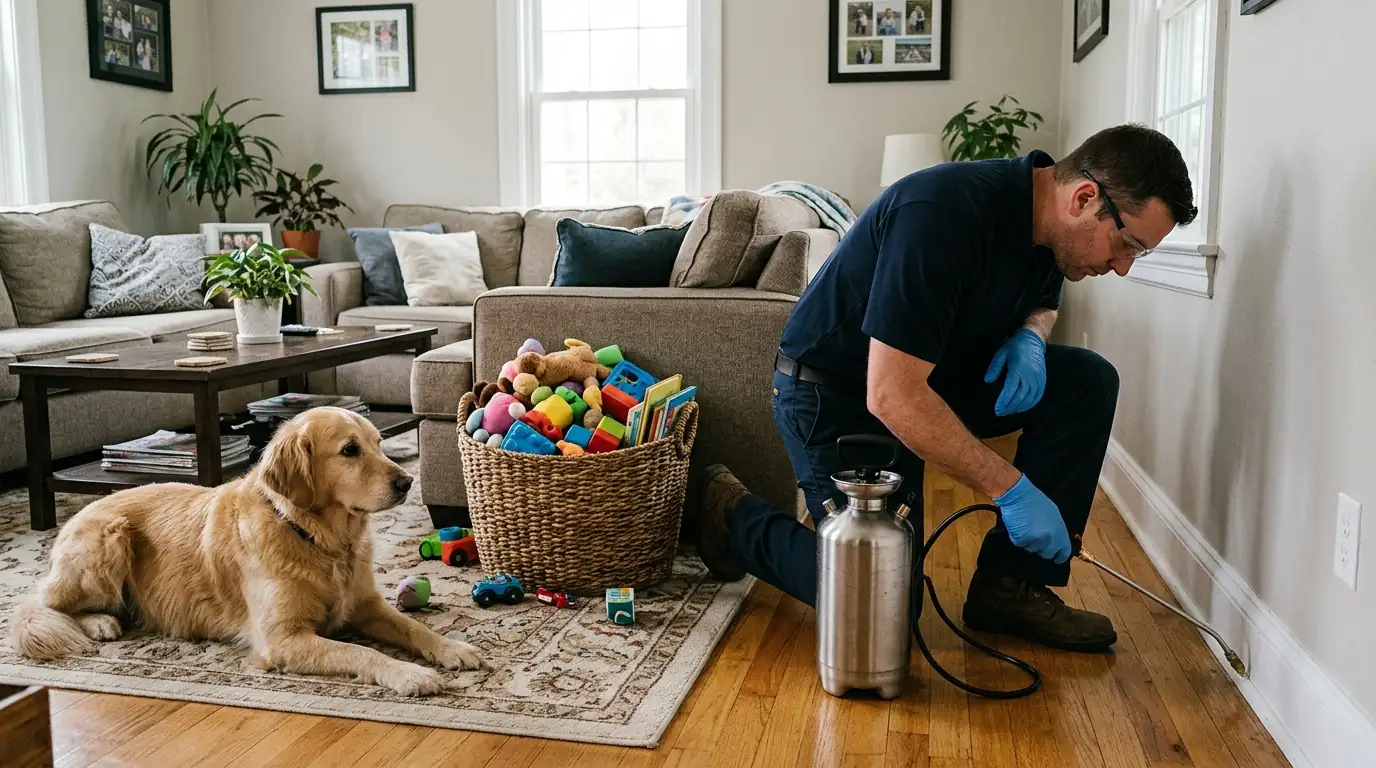
Modern pest work in an occupied home is mostly targeted: gel baits inside cabinet voids, material in cracks and crevices, exterior perimeter bands and secured tamper-resistant stations. Open-surface spraying indoors is largely obsolete. Re-entry is usually once treated surfaces are dry, and any company should tell you that before leaving.
People picture a technician fogging a room because that is what pest control looked like decades ago. It is not how most of this work is done now, and the change was driven as much by results as by safety: bait placed where roaches live works better than spray on a surface they avoid.
Where material actually goes
- Gel baits in hinge pockets, drawer voids and under appliances, in pea-sized dots nobody reaches
- Crack and crevice treatment along baseboard gaps, plumbing penetrations and framing voids
- Exterior perimeter bands on the foundation line, eaves and entry points, outside the living space entirely
- Tamper-resistant stations locked, anchored and placed out of pet traffic for rodent work
- Growth regulators that interrupt insect development and have no equivalent target in mammals
Notice what is not on that list: carpets, counters, toy areas, pet bowls and bedding. Those get kept clear, and if a technician starts treating open surfaces in a home with a toddler, that is a reasonable moment to ask why.
Re-entry timing
For most interior work, re-entry is once treated surfaces are dry, typically under an hour. Exterior band treatments are the same for the yard. Fogging or whole-room applications, which are rare and specific, carry longer windows and should be explained in detail before anyone books.
Rodent work is a different question. In an occupied home with pets, trapping rather than rodenticide is usually the right call indoors, because a rat that dies in a wall void becomes a weeks-long odor problem and because secured stations should sit where a dog cannot work at them.
Why targeted beats broadcast
The shift away from spraying surfaces was not only about safety. Broadcast application puts material where pests do not spend time and where people and pets do, which is the worst of both outcomes. Gel in a hinge pocket is in the one place a roach actually visits and the one place a toddler never will.
That logic runs through all of it: bait on an ant trail, dust in a wall void, stations locked against a fence line, growth regulators that interrupt development rather than coat a room. Less material, placed better, with a stronger result.
Special cases worth flagging
- Fish tanks and reptiles. Tell us before the visit. Tanks get covered and air pumps managed during interior work.
- Birds. More sensitive than mammals to several products, and worth moving during treatment.
- Beehives. Mention them; exterior work gets planned around foraging and blooming plants.
- Pregnancy, asthma and chemical sensitivities. Say so and the plan changes, often toward baiting and exclusion rather than application.
- Edible gardens. Setbacks get stated, and beds often get habitat fixes instead of product.
Questions worth asking any company
Five questions before you book
- What exactly will be applied, and where in my home does it go?
- How long before kids and pets can be back in the treated areas?
- Will anything be applied to open surfaces, carpets or anywhere they can reach?
- Can you work around a fish tank, a bird, a pregnancy or an asthma case?
- Is there a non-chemical option for part of this, like exclusion, trapping or habitat work?
A company that answers those clearly and in plain language is telling you something useful about how it works. One that gets vague is telling you something too.
Preparation on your side
A few things make any visit both safer and more effective. Clear the cabinets and areas that need treating rather than having a technician work around stacked boxes. Put food, dishes and pet bowls away. Cover or move fish tanks and birds. And keep pets secured during the visit itself rather than loose in a yard where someone is placing stations.
On the day, ask for a walk-through of exactly what was treated before the technician leaves. Any company should be able to point at the specific locations and say what went there and when you can be back in the room.
The part nobody mentions
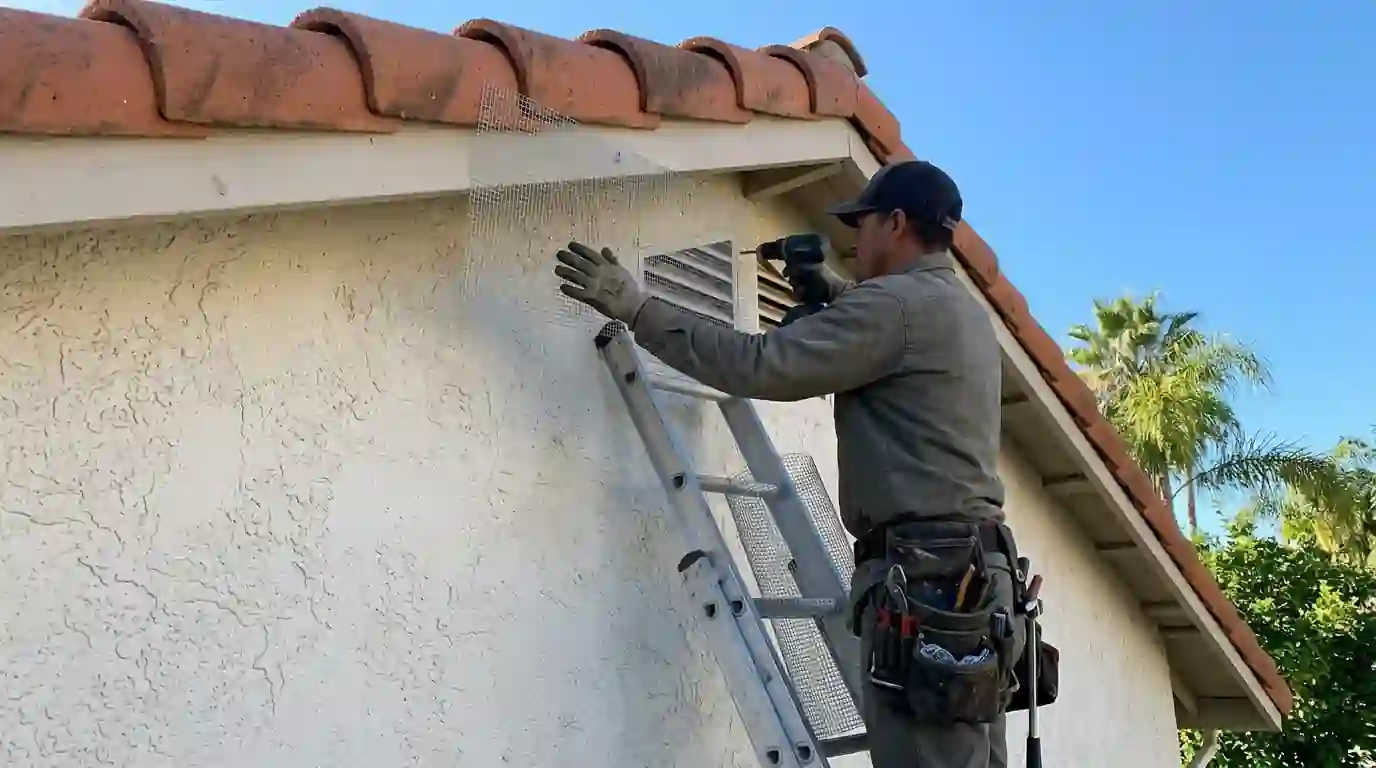
Exclusion and habitat work carry no re-entry question at all. Sealing a gap, screening a vent, pulling mulch back from a wall and fixing a leak are permanent, product-free and often the biggest lever on the problem. On plenty of jobs the right answer is less application rather than a safer version of more.